
Learn more about Kettlebell Suitcase March
Exercise Facts
- Movement Pattern Anti Lateral Flexion, Carry, Core, Gait, Locomotion
- Muscle Group Abs, Erectors, Forearms, Glutes, Hamstrings, Hip Flexors, Obliques, Traps
- Equipment Kettlebell
- Environment Gym, Home
- Skill Level Beginner, Intermediate
- HYROX Station Farmer’s Carry, Run
Detailed How-To Kettlebell Suitcase March
The kettlebell suitcase march is a simple looking carry variation that delivers a serious challenge to your core, hips and grip. Instead of walking quickly with two heavy kettlebells like a farmer’s carry, the kettlebell suitcase march slows everything down and loads only one side of the body at a time. This asymmetrical setup forces your trunk to resist bending sideways while your legs march under control, which makes it a perfect entry point into anti lateral flexion work.
From a Relentless Bravery Fitness perspective, this exercise sits neatly alongside other loaded carries in the rb100.fitness Exercise Library, such as the sandbag front carry and barbell front rack carry. It also pairs well with unilateral hinge patterns like the kettlebell single leg Romanian deadlift, because both movements demand strong hip stability, foot control and an organised trunk position. You can place the kettlebell suitcase march in warm ups, strength blocks or conditioning finishers depending on the load and distance you choose.
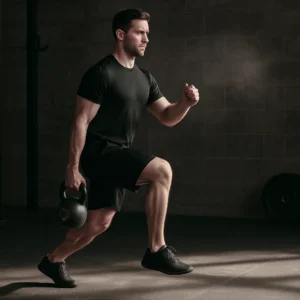
To perform the kettlebell suitcase march, you hold a kettlebell by your side like a suitcase and stand tall with your ribs stacked over your pelvis. As you march on the spot or walk slowly forwards, the kettlebell tries to pull you off to one side. Your job is to keep your shoulders level, your hips square and your ribcage quiet while the legs move underneath you. Each step becomes a mini single leg balance challenge as you briefly support the whole system on one foot.
In real training this movement teaches athletes to carry shopping bags, luggage or sandbags without collapsing into one hip or hanging on their passive structures. For HYROX style sessions and hybrid conditioning days, the kettlebell suitcase march can be used as a lower intensity core focused alternative to heavier farmer’s walks or sled work, especially in deload weeks or as a way to tidy up trunk mechanics.
If you want to read more about loaded carries and anti lateral flexion work, resources like ACE Fitness and Muscle and Strength include useful guides on core training, while MuscleWiki and FitnessBlender show practical progressions for carries and unilateral stability drills. Use those references alongside the Relentless Bravery Fitness exercise library to build a robust, repeatable structure for your loaded carry programming.
Progress the kettlebell suitcase march by increasing distance, time under tension or kettlebell weight, but never at the expense of posture. When you maintain a tall position, even a relatively light kettlebell will quickly feel demanding, especially on the obliques and hip stabilisers.
Primary muscles:
- Obliques: Work hard to resist lateral flexion as the kettlebell pulls you towards one side.
- Abs: Help keep the ribcage stacked over the pelvis and maintain trunk stiffness.
- Glutes: Stabilise the hips and control pelvic position as you move from foot to foot.
- Erector spinae: Support a tall, neutral spine throughout the march.
Secondary and stabiliser muscles:
- Hip flexors: Assist with controlled marching steps and foot placement.
- Forearms and grip: Maintain a firm hold on the kettlebell for the full distance or time.
- Traps and upper back: Keep the shoulder packed and prevent the kettlebell dragging you forwards.
- Hamstrings and calves: Help control each step and provide dynamic stability around the knee and ankle.
Together these muscles make the kettlebell suitcase march a highly efficient way to train core control, balance and loaded gait in a functional, real world pattern.