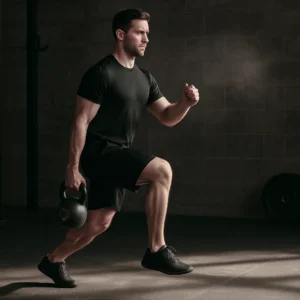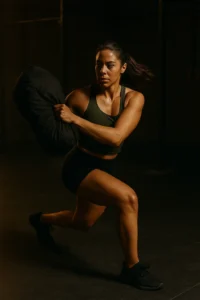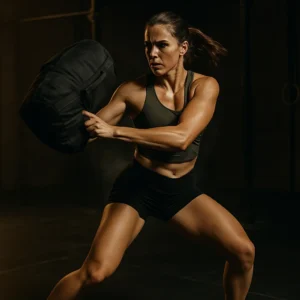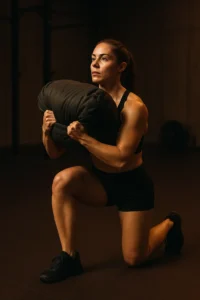

Learn more about Sandbag Ground-to-Shoulder
Exercise Facts
- Movement Pattern Functional Strength, Hinge, Power, Unilateral
- Muscle Group Core, Glutes, Hamstrings, Quads, Traps, Upper Back
- Equipment Sandbag
- Environment Gym, Outdoor
- Skill Level Advanced, Intermediate
Detailed How-To Sandbag Ground-to-Shoulder
The Sandbag Ground-to-Shoulder is a pure test of functional strength, power, and coordination. It mimics real-world lifting mechanics picking up an awkward, shifting load and driving it to shoulder height with precision and control. This movement builds total-body power while reinforcing stability through the hips, core, and shoulders.
To perform, start with the sandbag on the ground between your feet. Stand tall with feet shoulder-width apart, hinge at the hips, and squat slightly to grasp the sides or handles of the bag. Keep your chest lifted and core tight. Drive explosively through your legs and hips to lift the sandbag off the floor, pulling it close to your body as you extend your hips. As the bag rises, rotate it toward one shoulder, guiding it into position with your arms as you catch and absorb the load. Stand tall at the top with the sandbag resting securely on one shoulder. Lower it back to the ground with control, and repeat, alternating shoulders each rep if desired.
The Sandbag Ground-to-Shoulder primarily targets the glutes, hamstrings, quads, upper back, traps, and core, but it also challenges grip strength and unilateral stability. Because the load shifts as it moves, the athlete must continuously adapt, improving both balance and reactive power.
Common mistakes include pulling with the arms instead of the hips, rounding the back, or letting the sandbag swing away from the body. Cue “drive through the hips,” “keep it close,” and “finish tall.”
In Relentless Bravery Fitness, the Sandbag Ground-to-Shoulder embodies real-world readiness strength that transfers beyond the gym, power that’s earned through discipline and control.
Program 4–6 sets of 3–5 reps per side for power and coordination, or use lighter loads for higher-rep conditioning work.