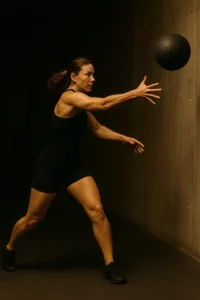

Learn more about Rotational Med Ball Slam
Exercise Facts
- Movement Pattern Core, Plyometric, Power, Rotation
- Muscle Group Core, Hips, Lats, Obliques, Shoulders
- Equipment Medicine Ball
- Environment Gym, Outdoor
- Skill Level Advanced, Beginner, Intermediate
Detailed How-To Rotational Med Ball Slam
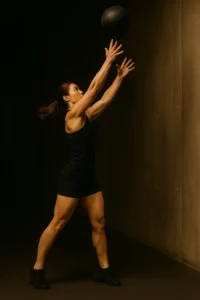
The Rotational Med Ball Slam is a dynamic, full-body exercise that develops rotational strength, power, and coordination. Unlike the traditional overhead slam, this variation adds a transverse-plane movement that engages the obliques, hips, and core through controlled torque. It’s an ideal exercise for athletes who need to generate and transfer rotational power from runners and golfers to fighters and functional fitness competitors.
To perform, stand with your feet shoulder-width apart, holding a medicine ball at hip height. Rotate your torso and load your hips toward one side, keeping your knees slightly bent and your core braced. In one explosive motion, rotate powerfully through your hips and shoulders while driving the ball downward and across your body toward the floor. The motion should resemble throwing the ball into the ground diagonally, not directly downward. Catch or retrieve the ball on the rebound and reset to the starting position before switching sides.
The Rotational Med Ball Slam primarily targets the obliques, lats, shoulders, hips, and core, while reinforcing sequencing between the lower and upper body. This exercise improves athletic movement patterns, coordination, and the ability to express force rotationally a key skill for explosive performance.
Common mistakes include relying too much on the arms, over-rotating the spine, or rounding the back during the slam. Cue “rotate through the hips,” “brace before you throw,” and “slam with intent.”
In Relentless Bravery Fitness, this movement defines controlled aggression channeling rotational energy with precision and intent.
Program 3–5 sets of 6–10 reps per side for power and core development, or add to functional circuits to build athletic endurance and coordination.