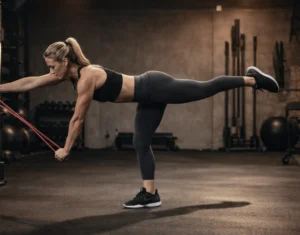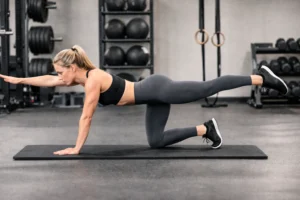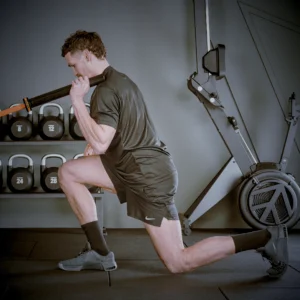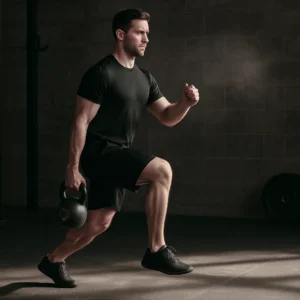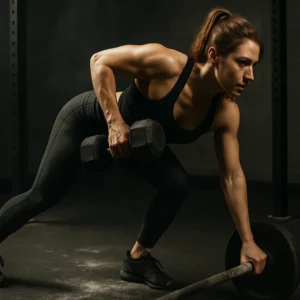

Learn more about Dumbbell Bulgarian Split Deadlift
Exercise Facts
- Movement Pattern Hinge, Lower Body, Stability, Unilateral
- Muscle Group Core, Erectors, Glutes, Hamstrings
- Equipment Bench, Dumbbell
- Environment Gym, Home
- Skill Level Advanced, Intermediate
Detailed How-To Dumbbell Bulgarian Split Deadlift
The Dumbbell Bulgarian Split Deadlift is a single-leg hinge exercise that develops lower-body strength, balance, and stability while targeting the glutes, hamstrings, and core. It combines the posture of a Romanian deadlift with the stance of a Bulgarian split squat, creating a unique challenge for unilateral control and posterior-chain activation.
To perform, set up a bench or platform behind you at knee height. Stand about two feet in front of it and rest the top of your back foot on the bench. Hold a dumbbell in each hand by your sides with a neutral grip. Keeping your front leg slightly bent, hinge at the hips, lowering the dumbbells toward the floor while maintaining a flat back and braced core. Drive through your front heel to return to the starting position.
The elevated rear foot increases range of motion, while the hinge pattern isolates the working leg’s glutes and hamstrings. The movement also challenges stability and anti-rotation control, forcing the athlete to stay balanced and symmetrical throughout the lift.
Common mistakes include bending the front knee too much (turning it into a squat), losing balance by stepping too close to the bench, or rounding the spine. Cue “push hips back,” “keep chest tall,” and “drive through the heel.”
At Relentless Bravery Fitness, this movement reflects mastery through control developing raw strength, balance, and resilience one side at a time.
Program 3–4 sets of 6–8 reps per leg, resting 60–90 seconds between sets. It pairs perfectly with single-leg squats, hip thrusts, or kettlebell swings for hybrid posterior-chain development.