

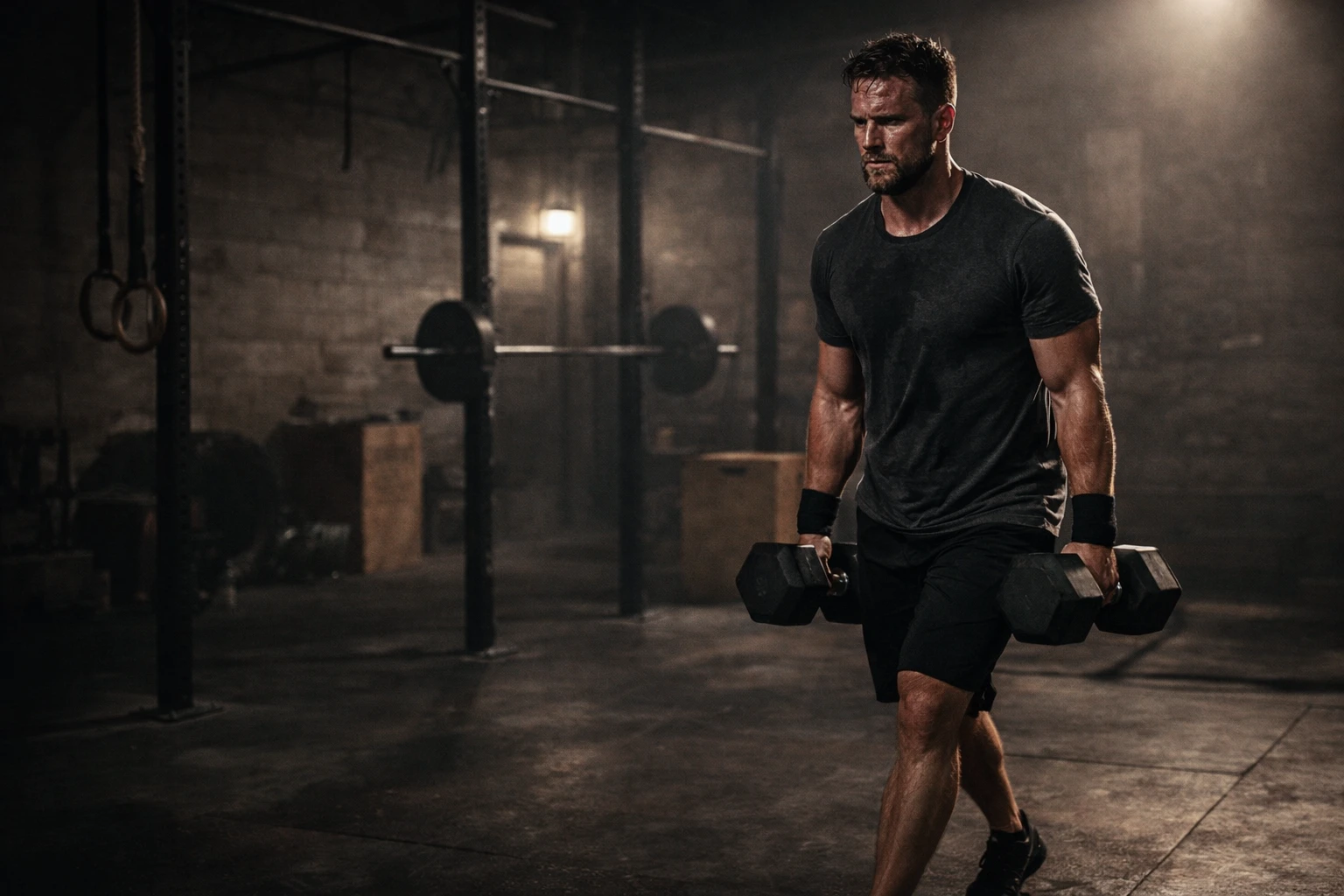
The 100 Metre Carry Challenge Explained
The 100 metre carry challenge is simple on paper and demanding in practice. You will complete 10 rounds of 100 metres of loaded carries, resting as needed between efforts. The goal is not speed. The goal is maintaining posture, control, and intent under load.
Carries sit at the intersection of strength and conditioning. They demand grip strength, trunk stability, posture control, and mental focus while the body is under constant tension. Few movements transfer as well to real-world tasks and hybrid fitness performance.
This challenge builds on the aerobic base from Challenge #1 and the movement quality emphasis from Challenge #2, introducing load without unnecessary complexity.
Why Loaded Carries Matter
Loaded carries expose weaknesses quickly.
When load increases and fatigue accumulates, poor habits show up:
- Collapsing posture
- Over-reliance on the lower back
- Grip failure
- Loss of breathing control
In hybrid racing environments such as HYROX, athletes are repeatedly asked to move weight while already fatigued. Strong carry capacity improves transitions, efficiency, and resilience late in workouts.
Carries also reinforce upright movement patterns that protect the spine and joints when volume increases elsewhere.
Choosing Your Carry Style
This challenge is intentionally flexible. Select a carry style that matches your current ability and equipment access.
Common Carry Options
- Farmer carry with dumbbells or kettlebells
- Front rack carry
- Suitcase carry
- Sandbag bear hug carry
- Mixed carry styles across rounds
Each variation places slightly different demands on posture, grip, and trunk stability.
Inline image prompt:
Bright functional gym environment. Athlete performing front rack carry with kettlebells, elbows high, neutral spine, steady pace. Even lighting, crisp detail, sports performance photography style.
How to Structure the 10 x 100m Carries
Complete each 100 metre effort with intention. Rest as much as needed to maintain quality.
Beginner Example
- Light load
- Farmer carry only
- Full rest between rounds
Intermediate Example
- Moderate load
- Alternating farmer and front rack carries
- Controlled walking pace
Advanced Example
- Heavier load
- Mixed carry styles
- Minimal but intentional rest
You should finish each carry feeling challenged but in control.
Load Selection and Progressions
Load should challenge posture, not compromise it.
Beginner
- Choose a load you could carry for 150 metres if needed
Intermediate
- Load that demands focus but allows consistent posture
Advanced
- Heavier load that requires deliberate breathing and grip control
If grip fails before posture, that is useful feedback. Adjust load rather than forcing completion.
Technical Standards to Maintain
Throughout every carry:
- Stand tall
- Brace the core lightly, not rigidly
- Walk smoothly without rushing
- Breathe rhythmically
If posture collapses or stride shortens excessively, end the effort and rest.
Common Mistakes to Avoid
- Turning carries into a race
- Selecting load based on ego
- Allowing shoulders to round forward
- Holding breath for long periods
Carries reward patience and awareness.
How This Challenge Supports Hybrid Fitness
The 100 metre carry challenge improves:
- Grip endurance for later workout stages
- Trunk stability under fatigue
- Confidence moving with load
- Energy efficiency during transitions
Carries are often treated as accessory work. This challenge places them at the centre, where they belong.
At RB100.Fitness we value movements that transfer beyond the gym. Data does not lie. Athletes who carry well move better everywhere else.
Frequently Asked Questions
Yes. Mixing styles is encouraged if quality stays high.
Yes, but carries should be controlled efforts, walking may be preferred.
It can be revisited every 6 to 12 weeks as strength improves.