
Learn more about Deadlifts
Exercise Facts
- Movement Pattern Hinge
- Muscle Group Glutes, Hamstrings, Lats, Lower Back
- Equipment Barbell
- Environment Gym, Home
- Skill Level Advanced, Intermediate
Detailed How-To Deadlifts
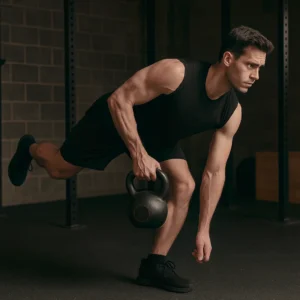
The deadlift is one of the most fundamental strength movements in fitness. It trains the hinge pattern and develops powerful posterior chain muscles — glutes, hamstrings, spinal erectors, and lats. Beyond raw strength, the deadlift has enormous carryover into athletic performance, injury prevention, and everyday function, as lifting from the floor is a primal human action.
To perform a deadlift, an athlete sets up with feet hip-width apart, barbell over the midfoot, and hands gripping just outside the legs. Bracing the core and maintaining a neutral spine, they drive through the legs and hips to lift the bar until standing tall. The movement finishes with shoulders back and hips fully extended.
Deadlifts can be programmed for strength, hypertrophy, or conditioning. Heavy singles and triples develop maximum strength, while moderate rep ranges build muscle mass. Variations like deficit deadlifts, Romanian deadlifts, or trap bar pulls allow different emphases. In an RB100 challenge, completing 100 reps with a light barbell (broken into sets) is a brutal endurance test.
Common errors include rounding the back, jerking the bar off the floor, or hitching at lockout. Cueing “brace, push the floor away, finish tall” reinforces safe execution. Deadlifts require respect but reward consistency with unmatched strength and resilience.