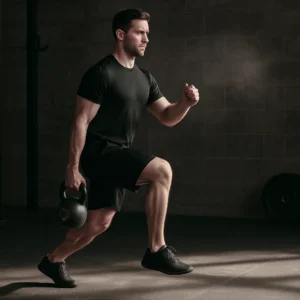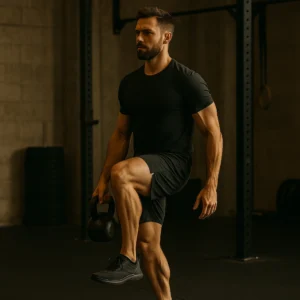

Learn more about Kettlebell Hang Clean
Exercise Facts
- Movement Pattern Front Rack, Hinge, Power, Pull
- Muscle Group Core, Forearms, Glutes, Hamstrings, Lats, Shoulders, Upper Back
- Equipment Kettlebell
- Environment Gym, Home
- Skill Level Advanced, Intermediate
Detailed How-To Kettlebell Hang Clean
The kettlebell hang clean is a dynamic hinge-based power exercise that develops strength, speed and coordination through the entire posterior chain. Starting from a “hang” position just above the knee, the kettlebell hang clean teaches athletes how to create rapid force through the hips and effectively guide the kettlebell into the front rack position. This ballistic movement is a cornerstone of kettlebell training and builds the foundations for more advanced exercises such as the kettlebell clean & jerk and kettlebell snatch.
Because the kettlebell hang clean removes the need for pulling the bell from the floor, it allows athletes to focus purely on hip drive, timing and connection between the lat, core and shoulder. This makes it an excellent accessory movement for hybrid athletes and HYROX competitors who need strong hinges, explosive power and efficient transitions into front rack positions. Movements such as the Kettlebell Front Rack Squat, Dumbbell Thruster and Sandbag Clean complement the kettlebell hang clean well, allowing athletes to build a robust power and strength skill set across the rb100.fitness Exercise Library.
The hang position reduces technical demands compared with full cleans, meaning athletes can accumulate power work without excessive load or complexity. It also reinforces grip strength, shoulder stability and anti-rotational core engagement, since the kettlebell sits on one side of the body. When performed consistently, the kettlebell hang clean improves power output, metabolic conditioning and athletic control during multi-plane movement.
For deeper reference on hinge mechanics and kettlebell handling, external sources such as MuscleWiki, ACE Fitness and Fitness Blender offer helpful coaching frameworks that align with the kettlebell clean pattern:
Primary & Secondary Muscles Worked
The primary muscles involved in the kettlebell hang clean include the glutes and hamstrings, which drive the hip extension that powers the movement. The lats and shoulders guide the kettlebell into the rack position while maintaining stability through the shoulder girdle. Secondary muscles include the core, upper back, traps and forearms, all of which contribute to maintaining posture, stabilising rotation and supporting the kettlebell throughout the movement.
This combination of power, stability and coordination makes the kettlebell hang clean an essential tool for athletes looking to enhance overall athletic performance, improve conditioning and develop explosive hip-driven power.