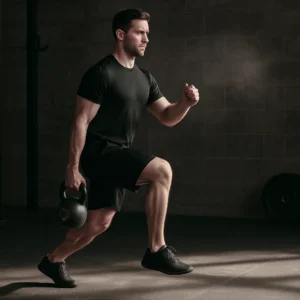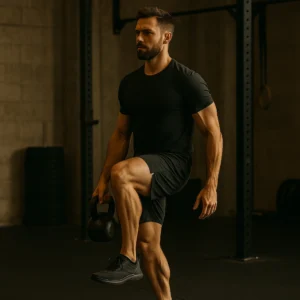

Learn more about Kettlebell Deadlift High Pull
Exercise Facts
- Movement Pattern Hinge, Power, Pull
- Muscle Group Core, Forearms, Glutes, Hamstrings, Shoulders, Traps
- Equipment Kettlebell
- Environment Gym, Home
- Skill Level Beginner, Intermediate
Detailed How-To Kettlebell Deadlift High Pull
The Kettlebell Deadlift High Pull bridges strength and power — combining the foundational hinge of a deadlift with the velocity of an upper-body pull. It’s a dynamic exercise that recruits the glutes, hamstrings, traps, shoulders, and core, teaching how to transfer energy efficiently from the ground up.
To perform, stand with feet shoulder-width apart and the kettlebell between your feet. Hinge at the hips with a neutral spine and firm grip. Drive through your legs and hips to extend powerfully, using that momentum to pull the kettlebell up toward chest height, keeping your elbows high and outside. Control the descent as the bell swings back to the start.
This movement trains hip extension, coordination, and sequencing, making it a staple for developing explosive capacity without the technical complexity of Olympic lifts. The pull component strengthens the traps and shoulders while reinforcing posture and grip endurance.
Common errors include early arm pull, excessive swing, or rounding the back. Cue “drive from the hips,” “elbows lead the way,” and “stay tall at the top.”
At Relentless Bravery Fitness, the Kettlebell Deadlift High Pull represents controlled aggression — the ability to generate force and recover instantly. It’s a key bridge exercise between foundational strength and advanced power movements like cleans and snatches.
Program 4×8–10 for power, 3×15 for endurance, or use it in metabolic conditioning circuits for hybrid athletic development.