
Barbell Zercher Lunge
A single-leg lunge variation holding the barbell in the elbow crease to enhance balance, posture, and total-body stability under load.

Setup
- Rack barbell at waist height; cradle bar in elbow crease; brace core; step back into stance; maintain upright posture with elbows close.
Execution
- Step forward into lunge; lower rear knee close to floor; drive through front heel to stand tall; maintain upright torso and bar stability; alternate legs.
Coaching cues
- Brace hard.
- Elbows high.
- Drive through your heel.
Common faults & fixes
- Leaning forward → keep bar close and chest tall.
- Elbows dropping → engage arms and upper back.
- Wobbling balance → shorten stance and slow tempo.
Regressions
- Goblet lunge, bodyweight lunge, split squat.
Variations
- Zercher reverse lunge, Zercher walking lunge, goblet lunge.
Programming ideas
- 3–4×8–10 per leg for strength; lighter loads for stability or accessory training; integrate with Zercher squats for posture development.
Safety
Use pad or towel for elbow comfort; maintain braced posture; avoid sudden steps or rotation under load.
Competition standards
Full range of motion; rear knee approaches floor; bar held securely in elbow crease; upright torso maintained throughout.
In depth
The Barbell Zercher Lunge is a challenging unilateral movement that develops leg strength, balance, and postural control under load. By holding the barbell in the crook of your elbows, the Zercher position increases core engagement and upper-back stability, forcing the lifter to maintain an upright torso throughout the lunge.
To perform, set a barbell in a rack around waist height. Step close and cradle the barbell in the crease of your elbows, keeping your fists close to your chest and core braced. Step back from the rack and stand tall with feet hip-width apart. Take a controlled step forward into a lunge, lowering your rear knee toward the ground while keeping your torso upright and barbell stable. Drive through the front heel to return to the start position, then repeat on the opposite leg.
The Zercher Lunge targets the quads, glutes, hamstrings, and core, while the upper back and arms act as stabilisers. The forward bar position enhances posture and reinforces bracing technique, making it ideal for improving squat form, midline control, and single-leg stability.
Common mistakes include leaning forward, letting the bar drift away from the body, or collapsing the elbows downward. Cue “brace hard,” “elbows high,” and “drive from the heel.”
In Relentless Bravery Fitness, the Zercher Lunge symbolises composure through challenge — holding the load close and moving with intent. It’s a lift that strengthens both the body and the mindset needed for controlled power.
Program 3–4×8–10 reps per leg for strength, or use lighter weight for stability and postural training.
Keep training
Related exercises

Barbell Zercher Carry
Shared: Arms, Core, Glutes, Hamstrings, Quads, Upper Back, Barbell, Rack, Weight Plates, Front Loaded

Barbell Zercher Squat
Shared: Arms, Core, Glutes, Hamstrings, Quads, Upper Back, Barbell, Rack, Weight Plates, Front Loaded

Barbell Front Rack Lunge
Shared: Core, Glutes, Hamstrings, Quads, Upper Back, Barbell, Rack, Weight Plates, Lunge, Unilateral

Barbell Reverse Lunge
Shared: Core, Glutes, Hamstrings, Quads, Barbell, Rack, Weight Plates, Lunge, Stability, Unilateral

Barbell Split Squat
Shared: Core, Glutes, Hamstrings, Quads, Barbell, Rack, Weight Plates, Lunge, Stability, Unilateral
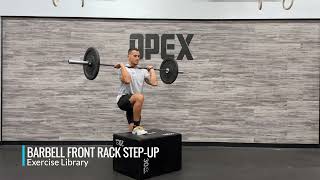
Barbell Front Rack Step-Up
Shared: Core, Glutes, Hamstrings, Quads, Upper Back, Barbell, Rack, Weight Plates, Unilateral