
Barbell Good Morning
A back-loaded hip hinge that trains the hamstrings, glutes and spinal erectors without relying on grip strength.

Setup
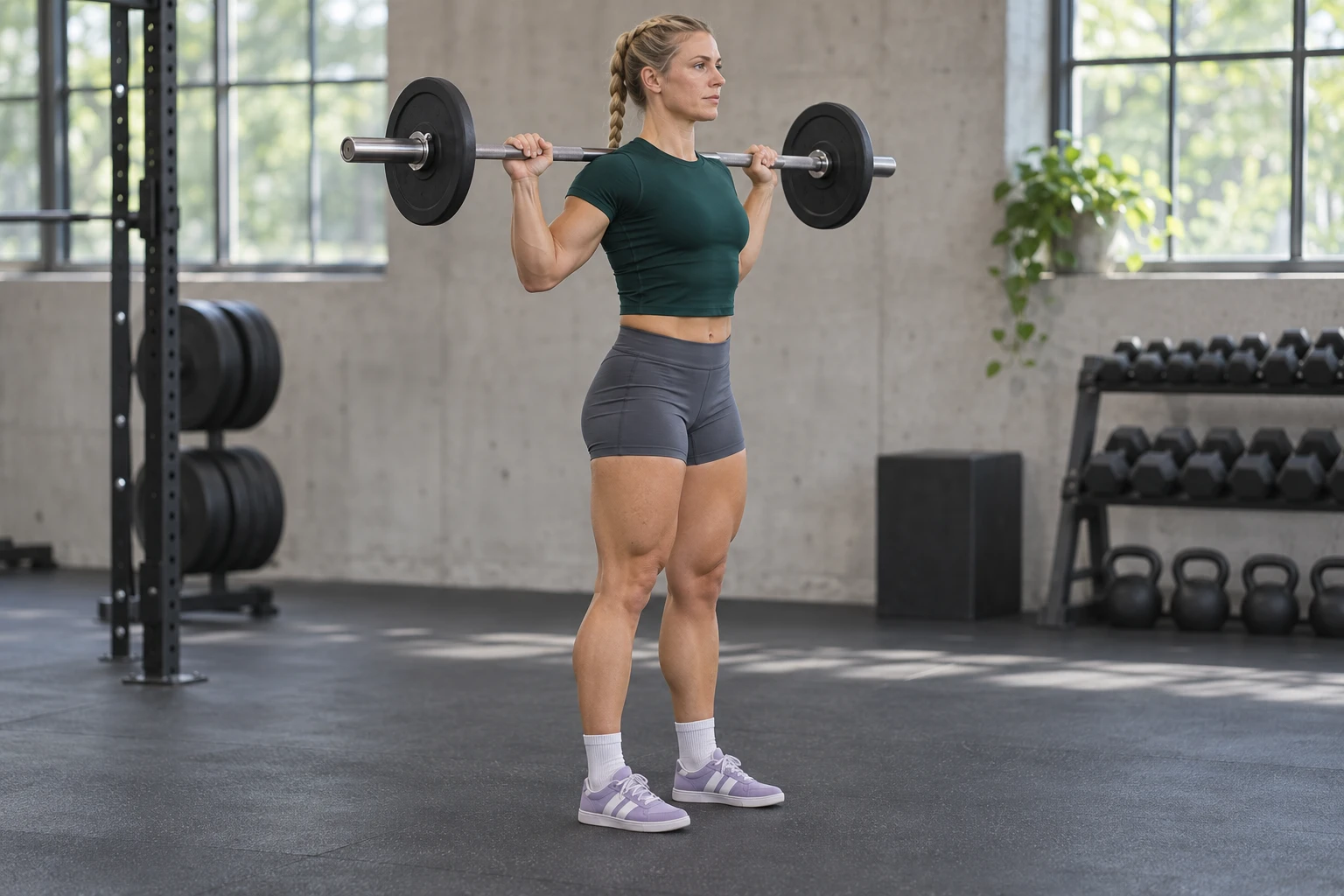
- Set a barbell in a rack just below shoulder height, with safety bars positioned just below your planned bottom position.
- Start with a light training bar or an empty bar you can control comfortably.
- Place the bar across the muscular shelf of your upper back, not directly on your neck, and hold it securely.
- Unrack, take small steps back and stand with feet approximately hip-width apart, knees softly bent and your abdomen braced.
Execution
- Take a breath and brace your trunk before beginning each repetition.
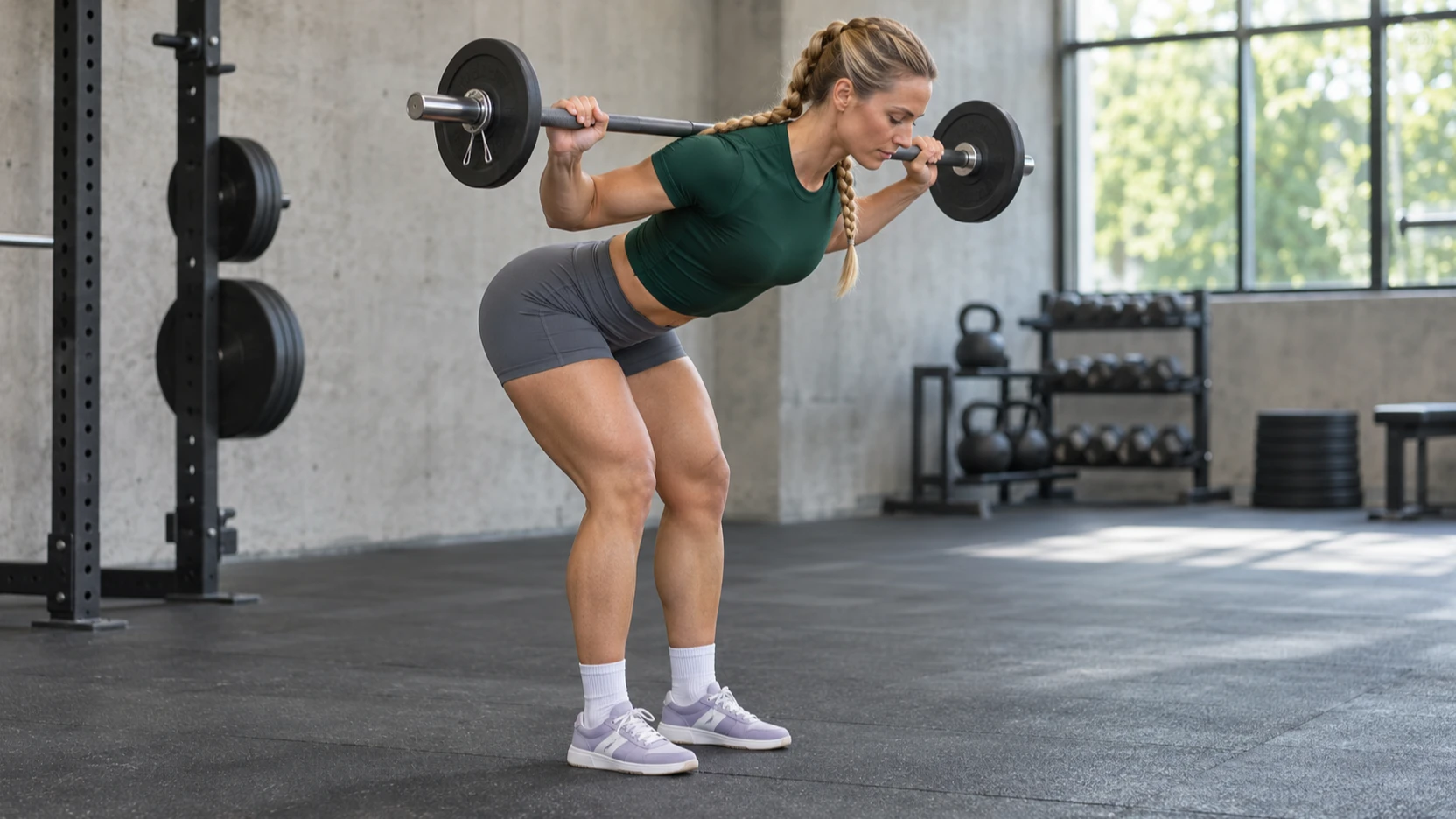
- Push your hips backwards while keeping the knee bend small and relatively constant.
- Lower your torso under control, keeping the bar balanced over your midfoot and your neck aligned with your trunk.
- Stop before your back position changes or you lose balanced pressure through your feet.
- Drive your hips forwards to stand tall without leaning backwards, then reset your breath and brace.
Coaching cues
- Send your hips back, not your knees forwards.
- Keep your whole foot planted.
- Move your torso as one controlled unit.
- Finish tall, without arching your lower back.
Common faults & fixes
- Turning it into a squat: soften the knees once, then focus on moving the hips backwards rather than sitting down.
- Rounding to gain extra depth: shorten the range and reduce the load until your trunk position stays consistent.
- Rocking onto the toes: reduce depth and keep the bar balanced above the middle of your feet.
- Throwing the chest up to finish: return smoothly and stop when your hips and knees are extended.
- Losing the brace between repetitions: pause upright, breathe and rebuild tension before descending.
Regressions
- Practise an unloaded hip hinge towards a wall behind you, using hip contact as feedback.
- Use a lighter training bar if a standard empty bar is too demanding.
- Work through a shorter range, increasing depth only when your balance and trunk position remain consistent.
Variations
- Paused good morning: hold briefly at the bottom of your controlled range before standing.
- Tempo good morning: take three seconds to lower, using less weight to preserve control.
- Resistance-band good morning: stand securely on a suitable loop band and position it across your upper back, away from your neck.
Programming ideas
- Technique practice: perform 2–3 sets of 6–8 light repetitions, resting long enough to reset your brace.
- Strength accessory: use 3 sets of 6–10 controlled repetitions after your main lift, leaving 2–3 repetitions in reserve.
- Hybrid scheduling: initially place it away from your hardest running session and avoid pairing unfamiliar loads or volumes with demanding intervals.
Safety
Use a rack with appropriately positioned safety bars and avoid maximal attempts while learning. End the set if you cannot maintain your brace, balance or secure bar position. Stop the exercise for sharp or increasing pain, dizziness, numbness or tingling. Do not force depth to reach a visual target. Existing back, hip or other medical conditions need clinician review before using this movement; this guidance is educational, not individual medical advice.
In depth
Why use the barbell good morning in hybrid training?
The good morning develops hip-extension strength while your trunk resists folding under a back-loaded bar. For hybrid athletes, it offers posterior-chain accessory work without adding more grip fatigue alongside carries and pulling exercises. It supports general strength development rather than replacing running practice or HYROX station work.
Use it in a strength session once you can hinge confidently without load. Keep repetitions deliberate and prioritise consistent positioning over heavier weights. If your main lift has already fatigued your lower back enough to affect control, reduce the load or move good mornings to another session.
+How is a good morning different from a Romanian deadlift?
+How low should you go in a barbell good morning?
+Should HYROX athletes use good mornings in conditioning circuits?
Keep training
Related exercises

Kettlebell Single-Leg Romanian Deadlift
Shared: Core, Erectors, Glutes, Hamstrings, Hip Hinge

Barbell Zercher Squat
Shared: Core, Glutes, Hamstrings, Barbell, Rack, Weight Plates, Strength

Box Squat (Various Heights)
Shared: Core, Glutes, Hamstrings, Barbell, Strength

Dumbbell Bulgarian Split Deadlift
Shared: Core, Erectors, Glutes, Hamstrings

Sandbag Bear Hug Squat
Shared: Core, Erectors, Glutes, Hamstrings

Sandbag Zercher Lunge
Shared: Core, Erectors, Glutes, Hamstrings