

Aerobic Base
Aerobic Base is the level of aerobic fitness that allows an athlete to sustain steady effort, recover efficiently, and support higher-intensity training.
Your aerobic base is built by spending time training at comfortable, steady intensities. It allows you to move for longer periods without excessive fatigue and recover faster between harder efforts.

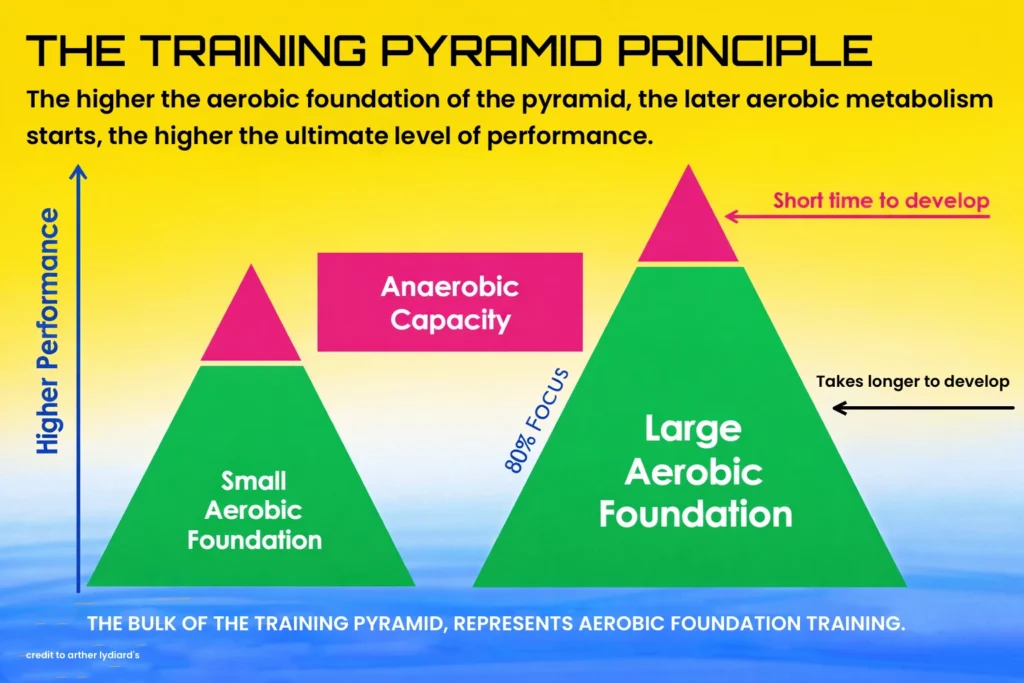
Deeper explanation
The aerobic base is developed primarily through low to moderate intensity training that targets the aerobic energy system. This type of work improves heart function, increases capillary density, enhances mitochondrial efficiency, and improves the body’s ability to use fat as fuel.
A strong aerobic base supports all higher-intensity training by reducing overall stress on the body. Athletes with a well-developed aerobic base can train more frequently, recover faster, and maintain better movement quality across long sessions.
Why it matters
Aerobic base underpins endurance, consistency, and longevity in training. Without it, higher-intensity work becomes harder to sustain and recovery suffers.
For hybrid athletes, a strong aerobic base allows smoother transitions between efforts, better breathing control, and improved resilience across long race formats.
Programming use
Aerobic base training is typically programmed through Zone 2 sessions such as steady runs, cycling, rowing, or long mixed-modality efforts performed at a conversational pace.
Most training programmes dedicate a significant portion of weekly volume to aerobic base development, especially in early phases or during recovery-focused blocks.
HYROX / hybrid context
In HYROX-style racing, aerobic base determines how well athletes can sustain movement across long courses and recover between functional stations.
Athletes with a strong aerobic base can manage heart rate more effectively, reduce time lost between efforts, and maintain consistent output throughout the event.
Examples
• 60-minute steady run maintaining relaxed breathing
• Long rowing session focused on efficiency and rhythm
• Weekly volume block prioritising Zone 2 training
Quick answers & tooltips
-
Is aerobic base cardio fitness?
Yes. It reflects foundational aerobic endurance and efficiency.
-
Does aerobic base help recovery?
Yes. It improves circulation and recovery between efforts.
Common mistakes & fixes
Training too hard too often
Many athletes skip aerobic base work in favour of intensity. Fix this by deliberately slowing down and extending session duration.
Underestimating low-intensity training
Easy sessions feel unproductive but deliver long-term gains. Trust consistency over intensity.
Neglecting aerobic work during competition phases
Aerobic base still matters in-season. Maintain it with shorter, regular low-intensity sessions.
FAQ
How long does it take to build an aerobic base?
Meaningful improvements usually take several weeks, with larger gains developing over months of consistent training.
Is aerobic base the same as Zone 2 training?
Zone 2 training is a primary method used to build the aerobic base, but other low-intensity work can contribute.
Do strength athletes need an aerobic base?
Yes. An aerobic base supports recovery, work capacity, and overall training tolerance.