
Seated Cable Row
A cable-based horizontal pull that trains the back and arms while challenging you to keep your trunk steady.
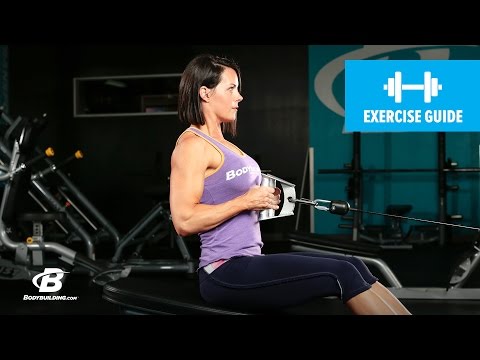
Setup
- Use a seated low-row cable station with a secure seat, footplates and a suitable rowing handle.
- Select a light starting load and check that the attachment and cable are secure.
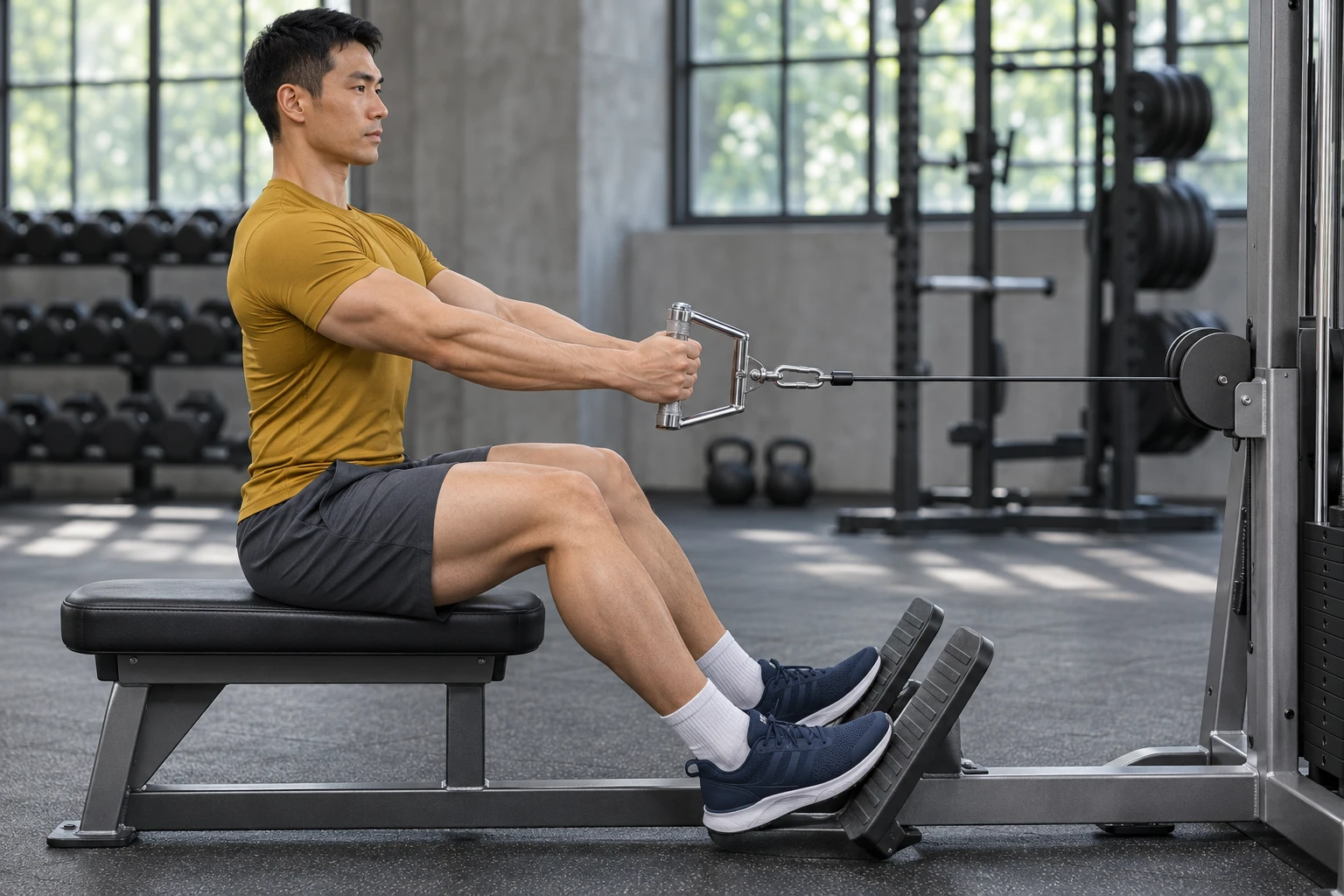
- Place your feet firmly on the footplates, with your knees slightly bent rather than locked.
- Take the handle and sit tall with your arms extended, ribs above your pelvis and the cable under tension.
Execution
- Brace your trunk gently and begin pulling without pushing yourself backwards through your feet.
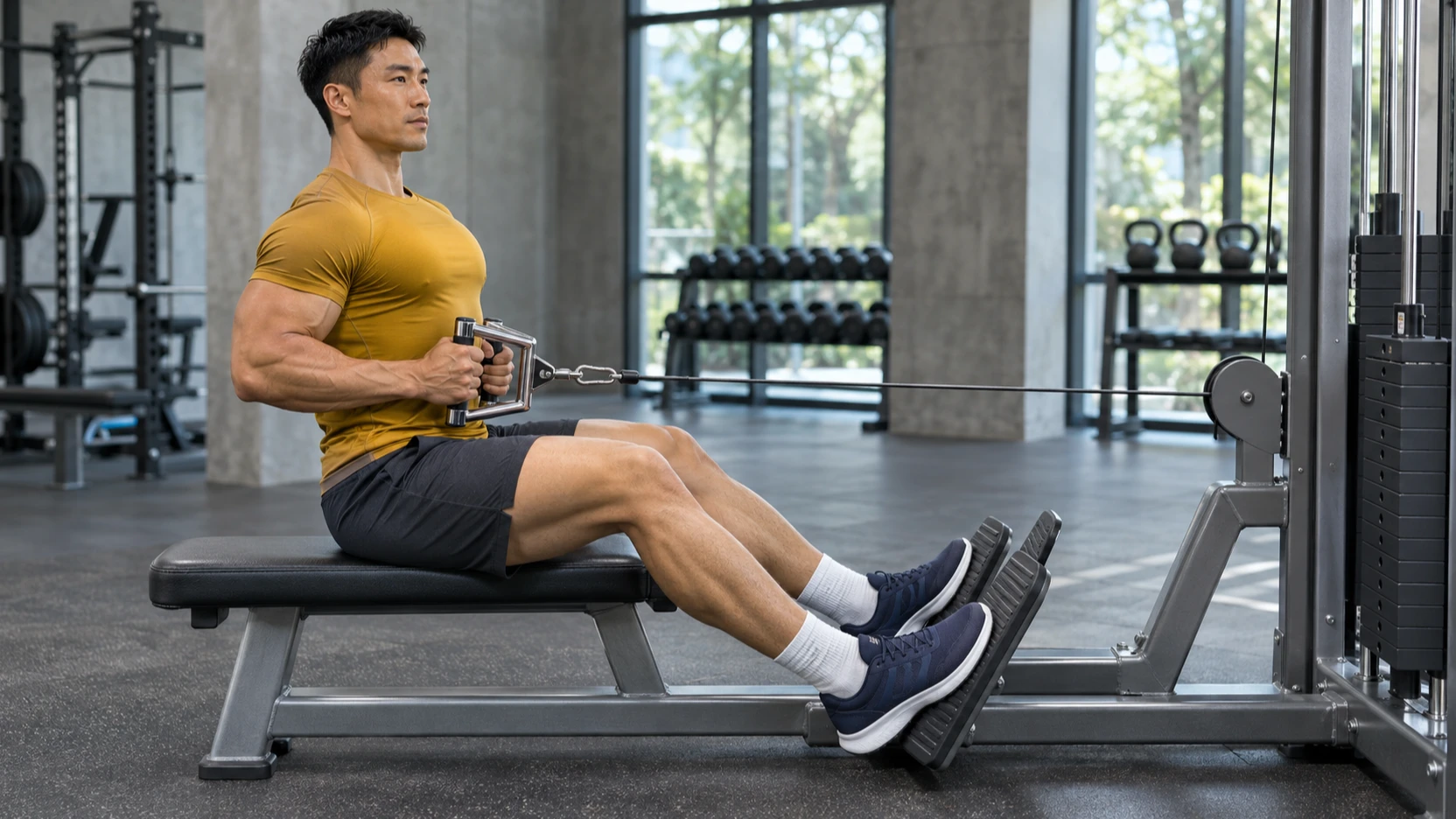
- Drive your elbows back, keeping them relatively close to your sides and your wrists straight.
- Bring the handle towards your lower ribs or upper abdomen, allowing your shoulder blades to draw back naturally.
- Pause briefly without shrugging, lifting your chest excessively or leaning back.
- Return the handle smoothly until your arms are straight, allowing your shoulder blades to glide forwards while your trunk stays steady.
Coaching cues
- Keep the same torso angle from start to finish.
- Move your elbows back; do not curl the handle towards your chest.
- Keep your neck long and your shoulders away from your ears.
- Reach through your shoulders, not by rounding your lower back.
Common faults & fixes
- Rocking backwards to move the weight: reduce the load and pause briefly at the finish of each repetition.
- Shrugging towards your ears: lighten the stack and keep your neck relaxed as your elbows travel back.
- Rounding the lower back on the return: shorten the reach and maintain your starting torso position.
- Bending your wrists to finish the pull: keep your knuckles in line with your forearms and stop before wrist position changes.
Regressions
- Reduce the load until you can complete each repetition without torso movement.
- Use a shorter, comfortable range if the full reach causes you to lose trunk position; build range gradually without pain.
- Use a chest-supported seated cable-row station, where available, to reduce the demand on maintaining an unsupported torso position.
Variations
- Paused seated cable row: hold the finishing position for one to two seconds without shrugging.
- Slow-return seated cable row: take three seconds to straighten your arms while maintaining trunk position.
- Single-arm seated cable row: use a single handle and keep your chest facing forwards rather than rotating with the pull.
Programming ideas
- For strength support, perform 3 sets of 8–12 controlled repetitions, resting 90–120 seconds between sets.
- For technique practice, use 2–3 light sets of 10 repetitions with a brief pause at the finish.
- Place rows after your main strength work, leaving roughly two good repetitions in reserve; avoid exhausting your grip before priority sled-pull practice.
Safety
Check the cable, attachment and foot support before starting. Do not jerk the handle or let the weight stack crash between repetitions. End the set when you can no longer keep your torso steady or control the return. Stop for sharp pain, numbness, dizziness or a slipping grip. Existing shoulder, elbow or back conditions need clinician review before loading; this guidance is educational, not medical advice.
In depth
Why use the seated cable row?
The seated cable row develops horizontal pulling strength with an adjustable load and a straightforward setup. Unlike a bent-over row, it does not require you to maintain a standing hip hinge. That makes it a useful back-training option when you want to limit additional demands on legs already working hard through running, lunges and sled work.
When should hybrid athletes programme it?
Use it as an accessory after your main lifts or in a separate upper-body session. Prioritise controlled repetitions over moving the heaviest stack possible. Increase the load by the smallest available increment once every repetition meets the same standard. Treat it as strength support for sled pulling, not a substitute for practising the rope and footwork.
+How far should you pull the handle?
+Should your shoulder blades move during a seated cable row?
+Can seated cable rows replace HYROX sled-pull practice?
Keep training
Related exercises

Inverted Row
Shared: Biceps, Lats, Rhomboids, Horizontal, Pull

Renegade Row
Shared: Biceps, Lats, Rhomboids, Pull

Dumbbell Seal Row
Shared: Lats, Rhomboids, Horizontal, Pull

Cable Lat Pulldown: How Do You Build Pulling Strength?
Shared: Lats, Biceps, Cable Machine, Pull

Barbell Bent-Over Row
Shared: Lats, Rhomboids, Pull

Dumbbell Meadows Row
Shared: Biceps, Lats, Pull