
Challenge · 2026
100-Second Heel Dig: Can You Hold Steady?
Complete the 100-second heel dig by lying on your back and pressing both heels into the floor for ten controlled 10-second holds. Keep your hips down, breathe normally and rest between efforts. This short hamstring challenge needs no weights, and you can reduce the pressure or shorten each hold.
By Richard Branson · · Updated
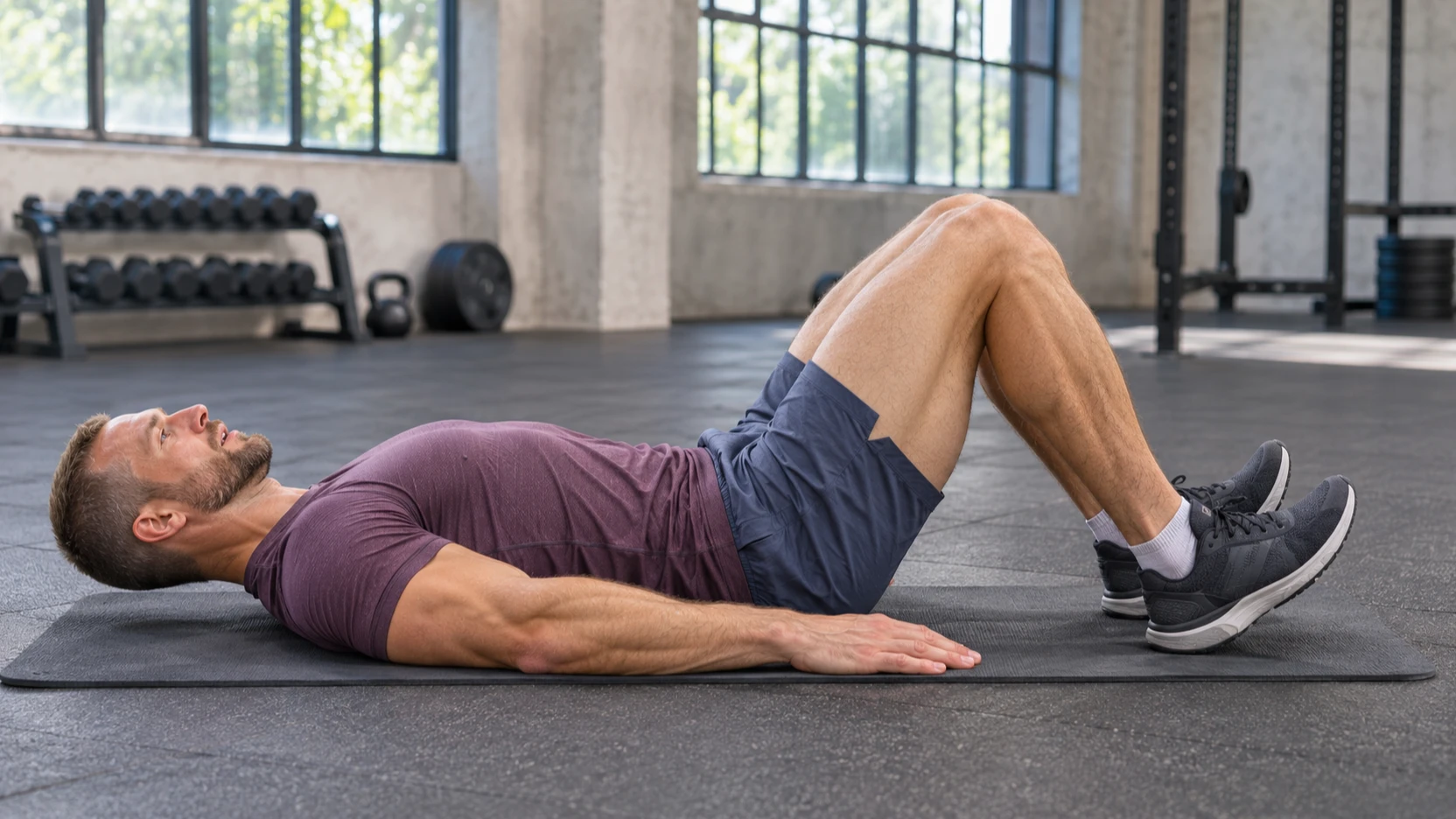
The challenge: can you complete the 100-second heel dig?
RB100 daily challenge — 4 May 2026. Accumulate 100 seconds of heel digs as ten 10-second holds, resting for 10 seconds between them. The aim is steady hamstring tension rather than maximum force. Your pelvis stays on the floor throughout: there is no lifting, bouncing or sliding.

How to do it: what are the exact steps?
- Lie on your back with your knees bent and feet hip-width apart. Rest your head and arms comfortably on the floor.
- Lift your toes slightly so your heels remain in contact with the floor. Choose a comfortable heel position rather than forcing a particular knee angle.
- Practise two gentle 5-second presses, relaxing fully between them. These are preparation and do not count towards your total.
- Press both heels down and gently try to drag them towards your bottom without letting them move. Keep your hips grounded.
- Hold that moderate effort for 10 seconds while breathing normally. Release fully and rest for 10 seconds.
- Repeat until you have completed ten working holds: 100 seconds of active tension. Take extra rest whenever needed.
- Record your total holding time, set length and any scaling used.
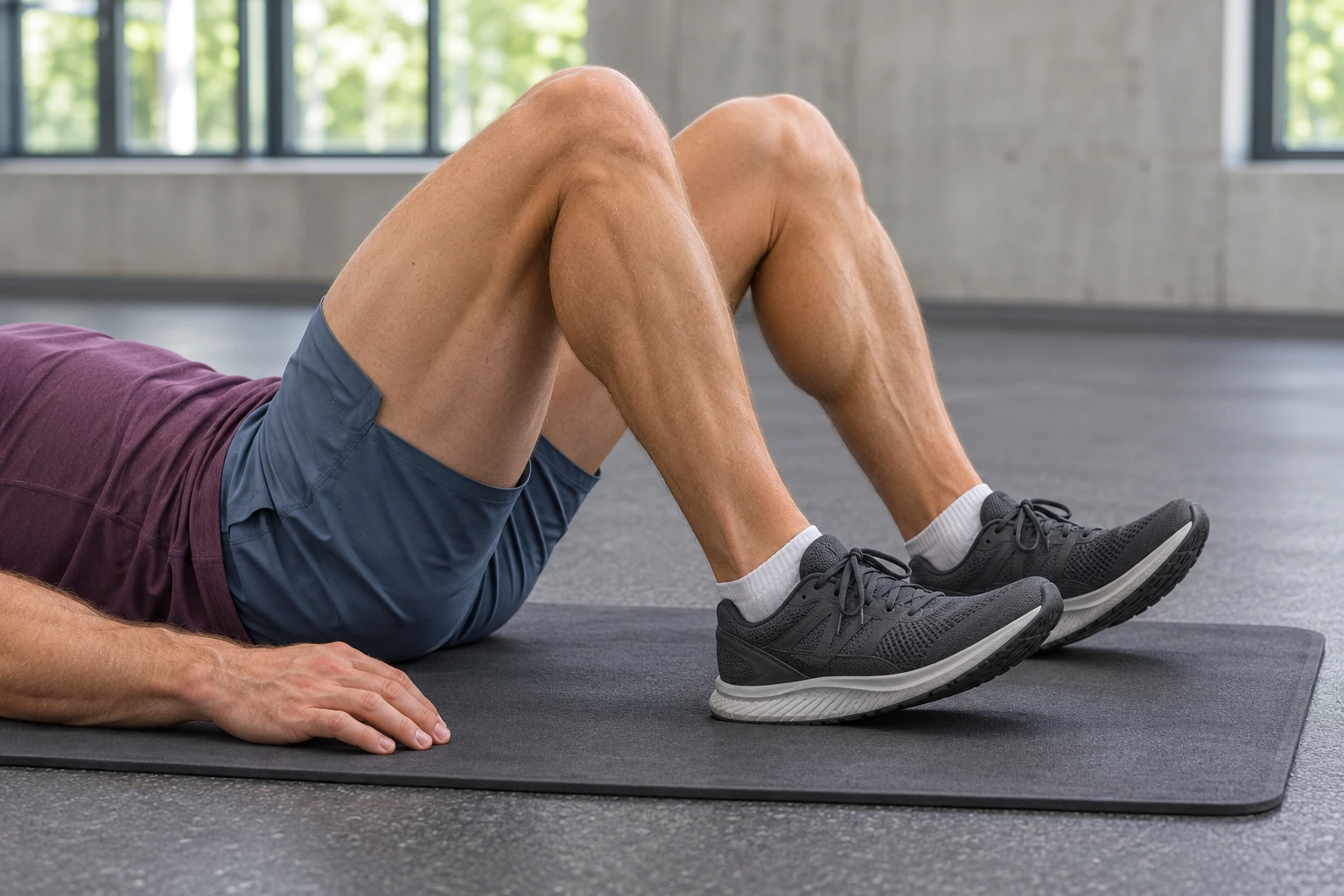
Scale it: how can you adjust the effort?
Make it easier by pressing more gently or using twenty 5-second holds with at least 10 seconds of rest between them. Adjust your heel position slightly if the starting angle feels awkward, then practise again before counting. If getting down to or up from the floor is difficult, use a firm chair secured against a wall: keep your bottom seated and apply the same gentle heel-down, pull-back action. For a firmer effort, increase pressure slightly without lifting your hips or holding your breath. More force is optional, not the target.
Coaching tips: what should you feel, and when should you stop?
Look for muscular effort at the back of your thighs. Keep your jaw, shoulders and toes relaxed; the movement should be almost invisible. If your heels slide, release and improve their grip before restarting. Stop the hold for cramping, sharp pain, pain behind the knee, tingling or dizziness. Do not count time spent lifting your hips or losing position. End the session if symptoms persist or return. If you have an existing hamstring or knee condition, ask your clinician whether this exercise is appropriate before attempting it.