
Challenge · 2026
100-Second Crab Walk: Can You Stay in Control?
Complete the 100-second crab walk by accumulating controlled movement in short bouts, resting whenever your position starts to slip. Move on your hands and feet with your chest facing upwards and hips clear of the floor. The aim is steady coordination and support, not speed or distance.
By Richard Branson · · Updated
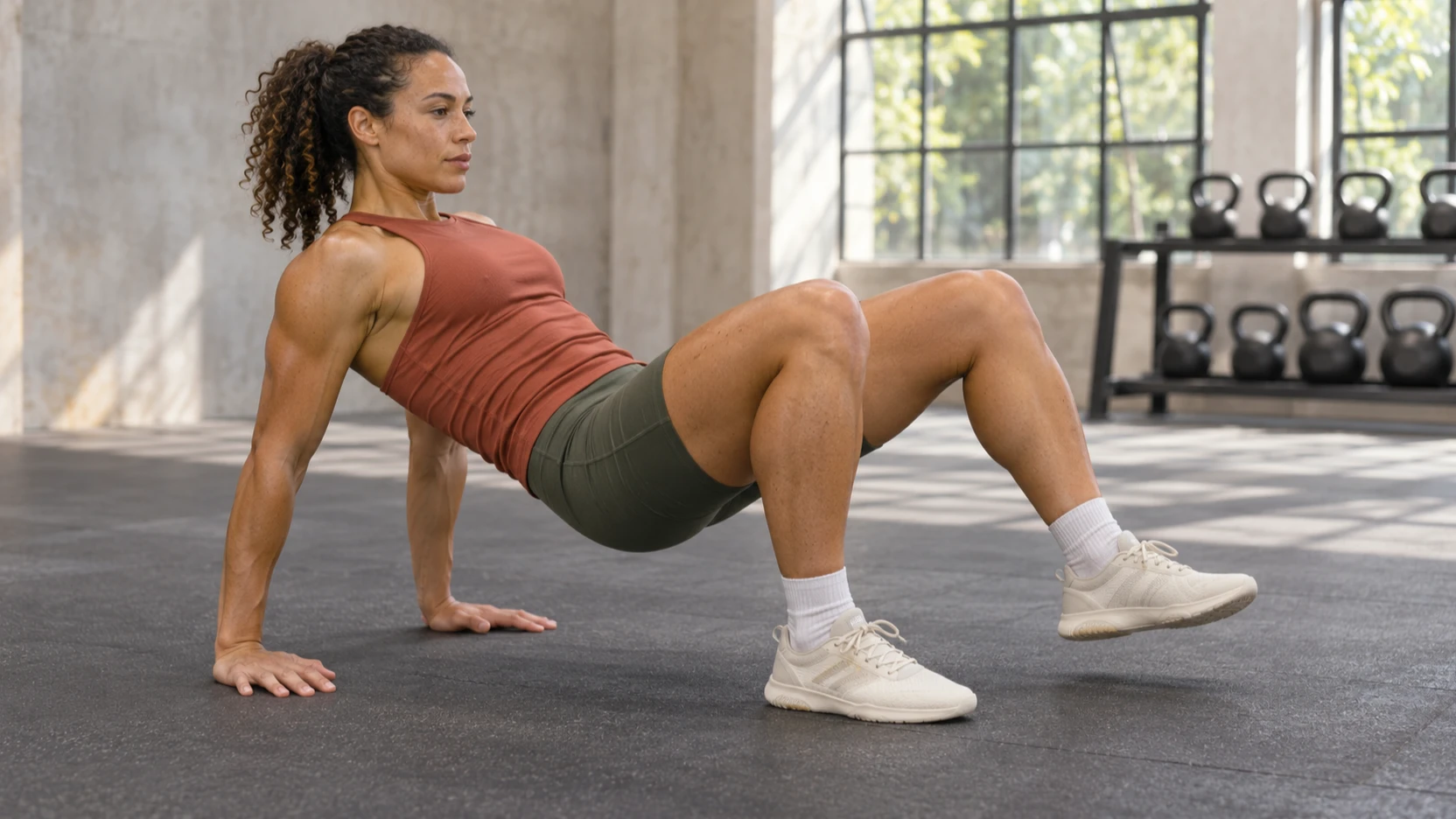
The challenge: can you complete the 100-second crab walk?
Your RB100 daily challenge for 7 May 2026 is to accumulate 100 seconds of crab walking. This chest-up floor movement asks your arms to support you while your hands and feet coordinate small travelling steps. Keep your hips just clear of the ground; this is not a race or a high bridge. Start with ten bouts of 10 seconds and take enough rest to reset properly.

How to do it: what are the exact steps?
- Clear the floor and check that your hands and footwear will not slip. Set a timer where you can see or hear it without twisting your neck.
- Prepare with gentle wrist movements, shoulder circles and a brief, comfortable test of the supported position.
- Sit with knees bent and feet flat, roughly hip-width apart. Place your palms behind your hips, fingers towards your feet or slightly outwards, whichever feels comfortable.
- Press through your palms and feet to lift your hips a little. Keep your arms straight without forcing your elbows backwards.
- Start the timer. Take a small step with one hand and the opposite foot, then repeat with the other pair. Keep each placement deliberate.
- Travel a few steps, then reverse direction. End the bout after 10 seconds, or sooner if you lose control. Lower your hips and pause the timer.
- Rest until you can repeat the position comfortably. Continue until your moving bouts total 100 seconds, then log your bouts and any modifications.
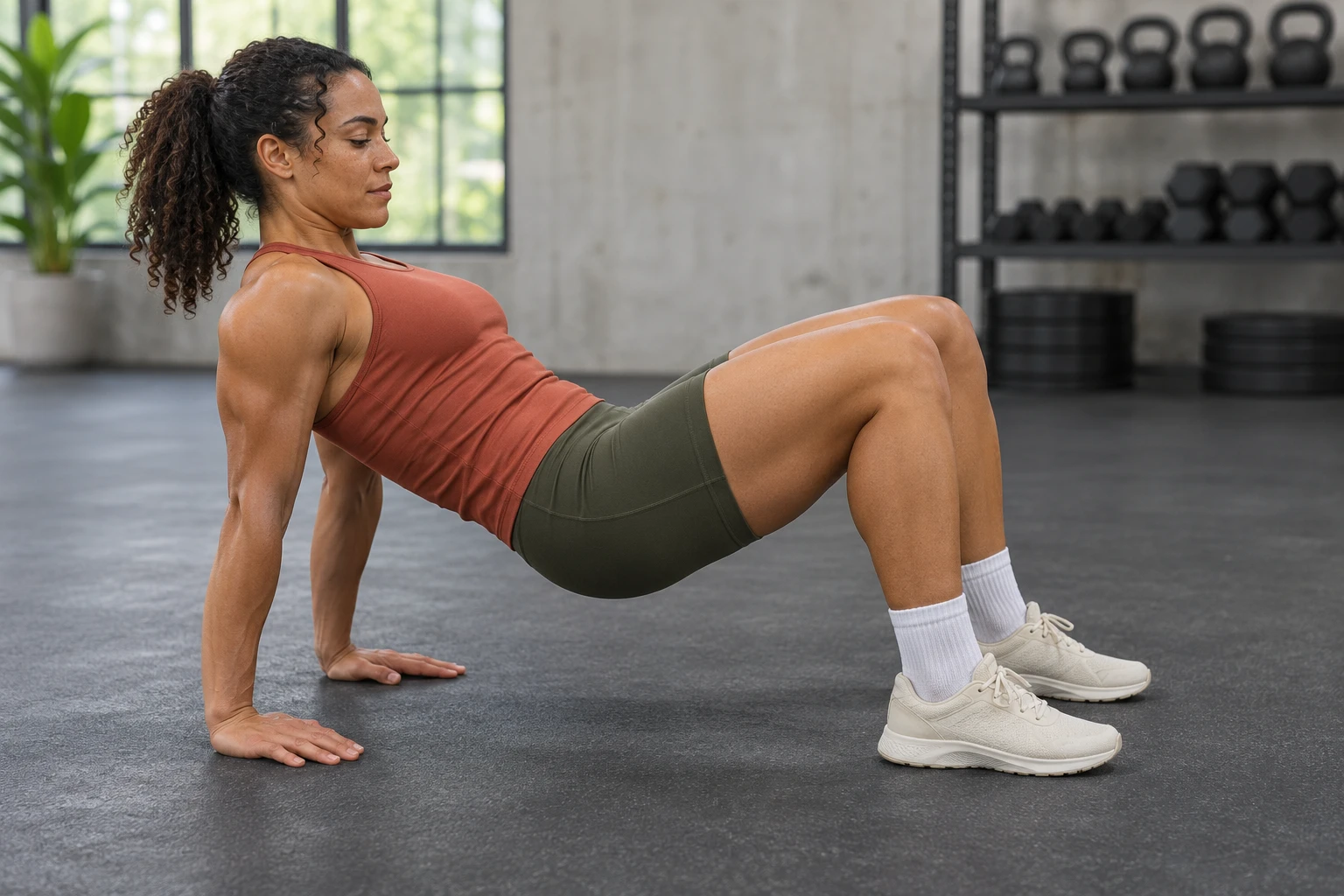
Scale it: how can you make the movement manageable?
Use five-second bouts, smaller steps and longer rests to reduce the demand. If travelling is too difficult but supporting yourself is comfortable, keep both hands and feet planted and accumulate short, low reverse-tabletop holds instead. Label that result as a scaled hold rather than a completed walking score. If the standard version feels manageable, lengthen individual bouts without rushing or adding weight.
Coaching tips: what should you feel and when should you stop?
Keep your steps quiet, palms spread and breathing steady. Let your hips stay low rather than lifting them by arching your lower back. Avoid craning your head to watch your feet. Muscular effort is expected; joint pain is not. End the bout when your hips touch down, your shoulders sag or you cannot place a hand securely. Stop the challenge for wrist, shoulder or back pain, numbness or dizziness. Do not use a shorter bout to work through those symptoms.