Challenge · 2026
100 Hip Hinges: Move with Control
Today’s RB100 challenge is 100 hip hinges using only your bodyweight. Complete 10 sets of 10, sending your hips backwards before standing tall. Rest between sets and shorten the movement if needed. The aim is repeatable technique, not speed: keep your knees soft and finish each rep without leaning backwards.
By Richard Branson · · Updated
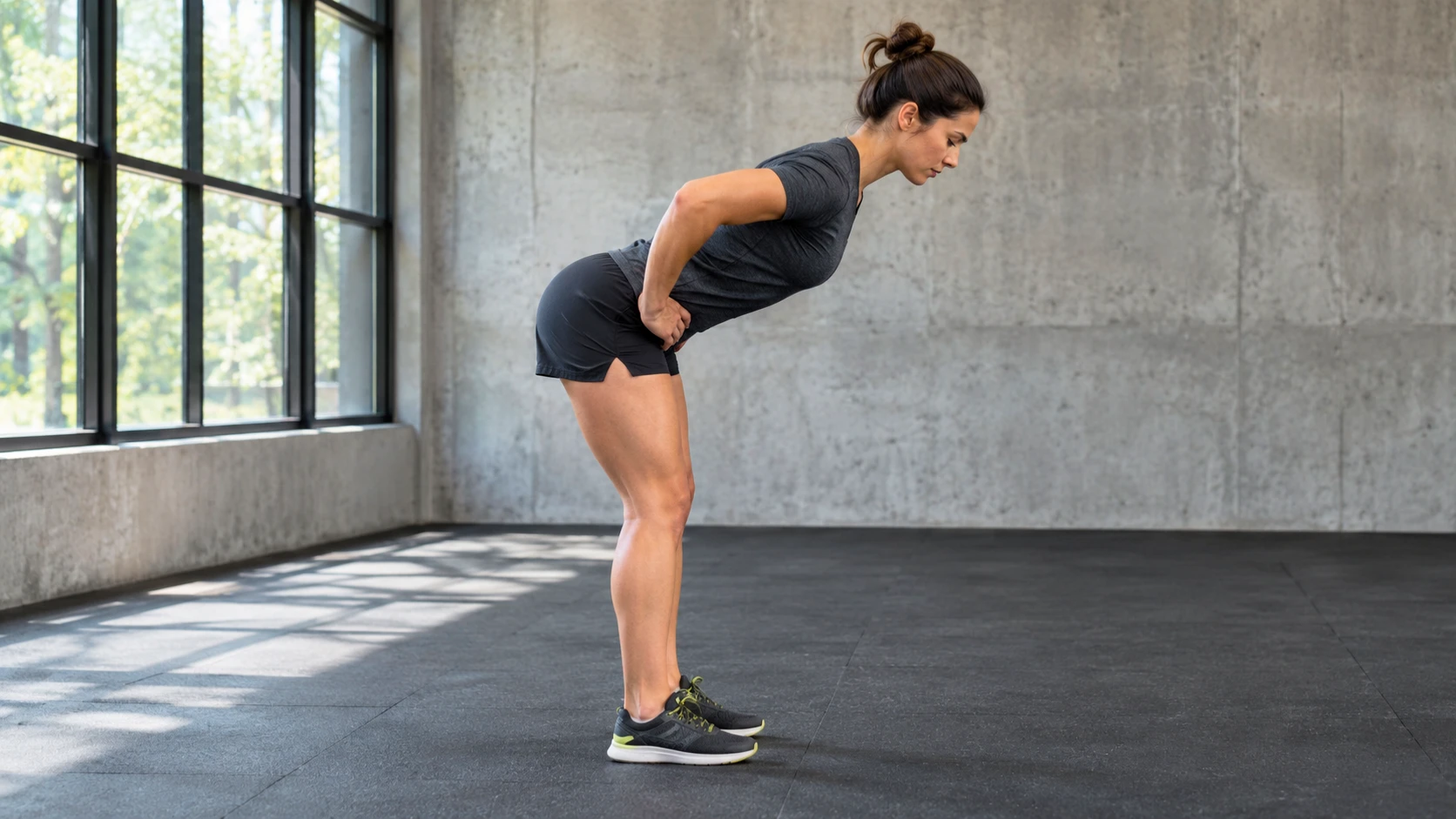
The challenge: can you complete 100 hip hinges?
For 12 October 2026, your RB100 daily challenge is a bodyweight movement-control test: 10 sets of 10 hip hinges. No jumping, lifting or racing. Send your hips backwards, then return to standing with the same steady rhythm on every rep. Take roughly two seconds to hinge and one second to stand. Your final set should look like your first.

How to do it: what are the exact steps?
- Clear enough space to move your hips backwards. Stand with feet about hip-width apart and your weight spread across your heels and the bases of your big and little toes.
- Prepare with an easy march and five shallow practice hinges. These practice reps do not count towards the 100.
- Soften your knees, place your hands on your hip creases and gently brace your trunk without holding your breath.
- Push your hips backwards over roughly two seconds. Let your torso tip forwards while keeping your back in a comfortable, steady position.
- Stop at a depth you can control, then bring your hips forwards to stand tall over roughly one second. Do not lean backwards at the top. This is one rep.
- Complete 10 reps, then rest for 15–30 seconds, or longer if needed to regain control.
- Repeat for 10 sets in total. Record your controlled reps and any changes to range, set size or tempo.
Scale it: how can you adjust the movement?
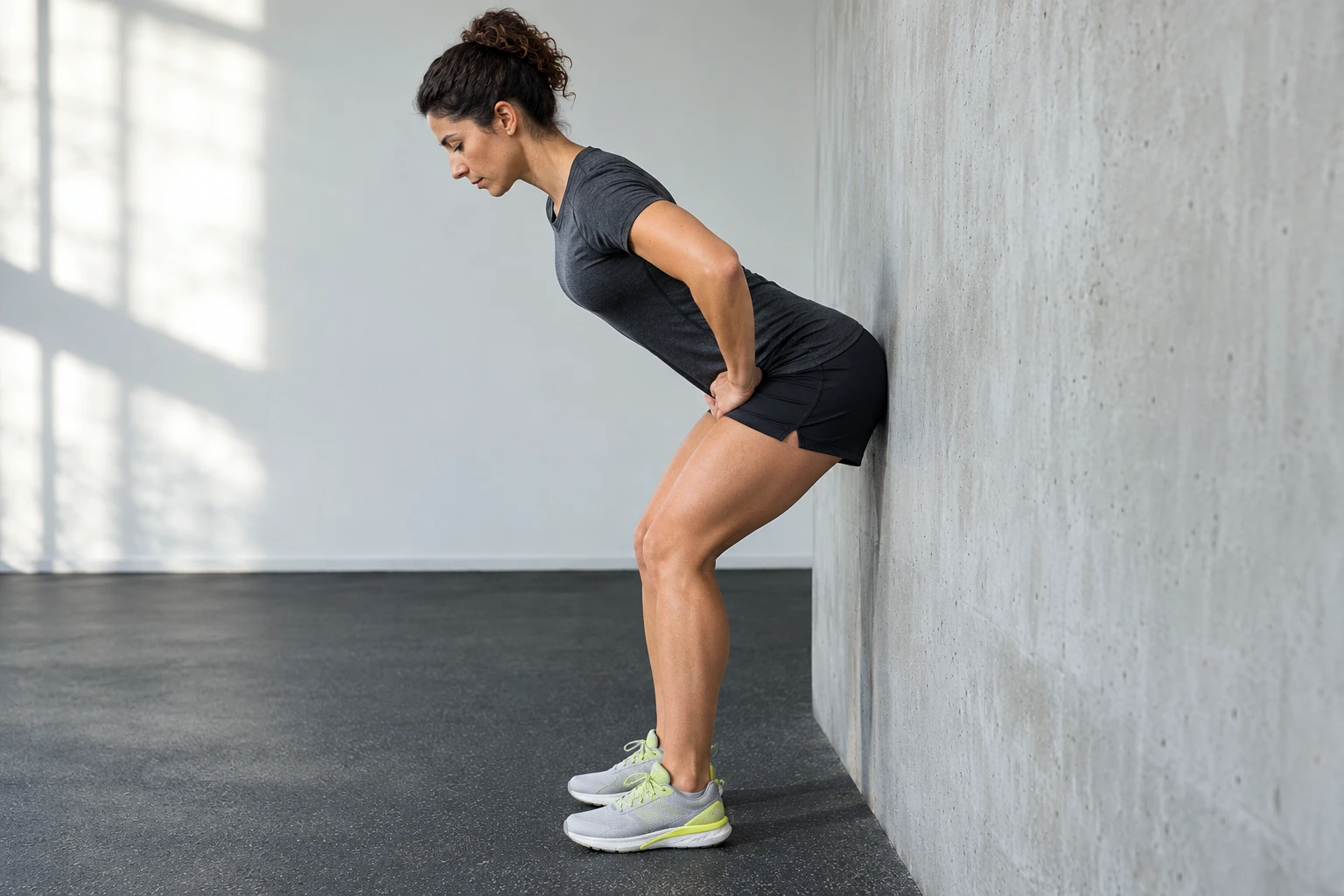
Make it easier with a shallower hinge and sets of five. For feedback, stand with your back a short distance from a wall and gently reach your bottom towards it; move closer if reaching it makes you lose balance. Keep your feet planted. If 100 is too much today, finish at 30 or 50 controlled reps and log that total. For more challenge, lower over three seconds and pause briefly before standing. Keep the movement unweighted.
Coaching tips: what should you feel, and when should you stop?
Think “hips back” rather than “chest down”. Keep a small knee bend without turning each rep into a squat, and let your gaze follow your torso so you are not craning your neck. Gentle hamstring tension is enough; reaching the floor is not the goal. Pause the set if your back starts rounding or you cannot stand without leaning backwards. Reduce the range or end the challenge if control does not return. Stop for sharp or increasing pain, dizziness or loss of balance. If an existing medical condition affects your ability to hinge, seek clinician guidance before attempting the test.