
Challenge · 2026
100-Second Towel Squeeze Challenge
Today's RB100 towel squeeze challenge is to accumulate 100 seconds of controlled gripping using a rolled hand towel. Complete five 20-second holds, resting between sets. Keep your wrists straight, breathe normally and use moderate pressure. It is a simple, seated or standing test of grip endurance, not maximum strength.
By Richard Branson · · Updated
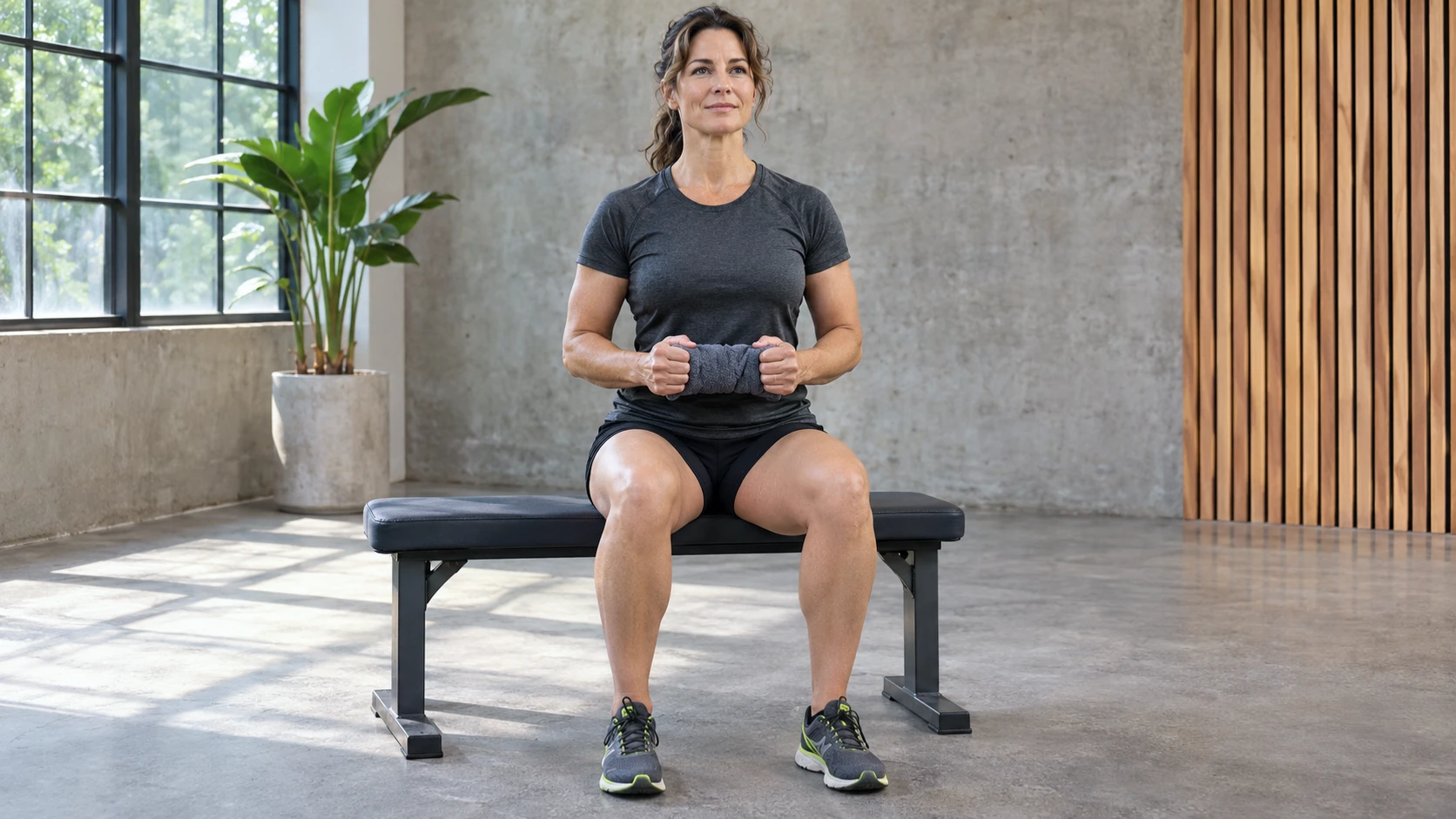
The challenge: what is today's towel squeeze challenge?
For 8 October 2026, your target is 100 seconds of towel squeezing, split into five 20-second holds. Grip with both hands at the same time, then fully release between sets. You can sit or stand, making this a compact option for home or the gym. The towel stays still: there is no pulling, twisting or wringing.
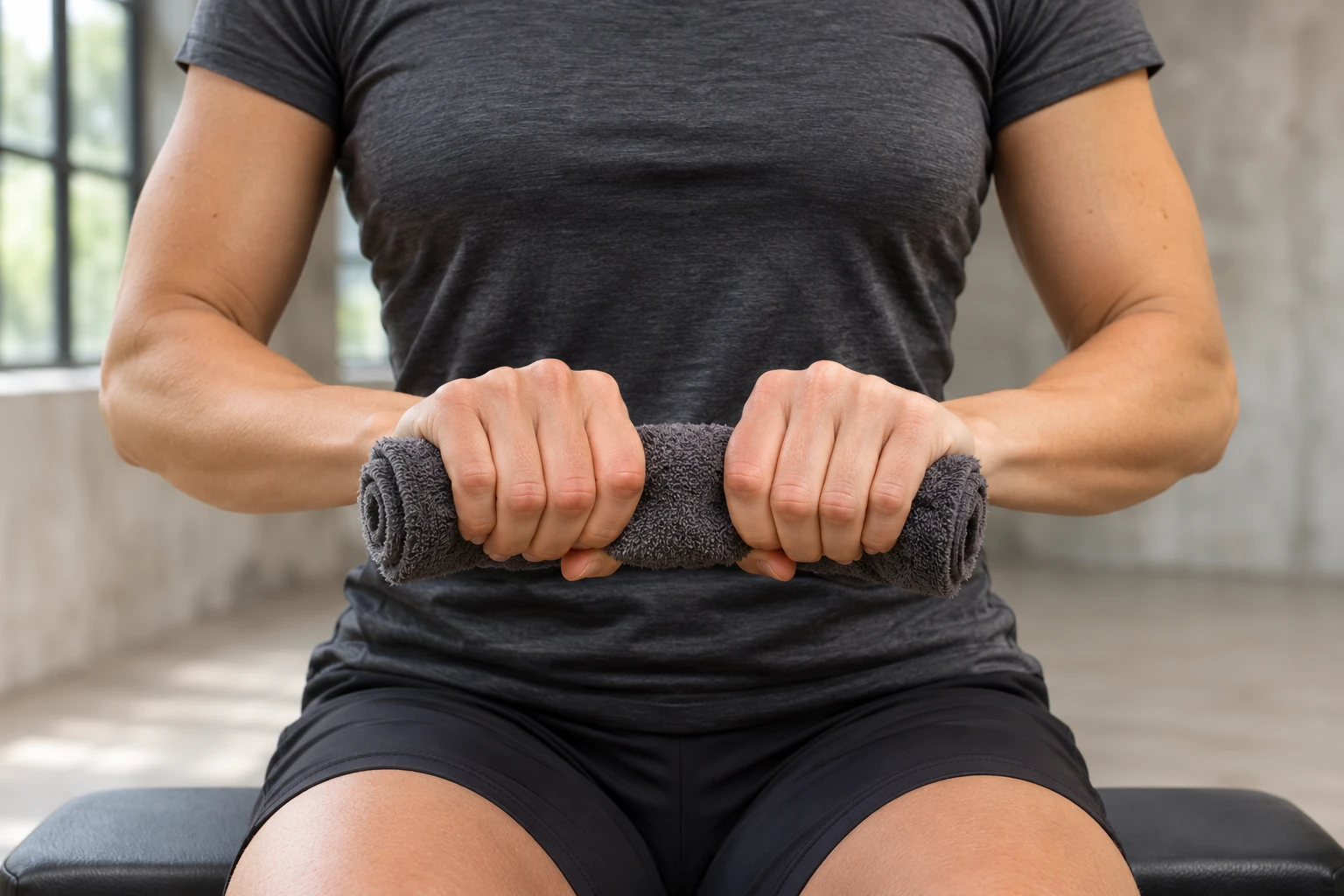
How to do it: what are the exact steps?
- Prepare by gently opening and closing your hands 10 times. Roll a dry hand towel lengthways into a cylinder that fits comfortably in your palms.
- Sit on a stable chair with your feet supported, or stand comfortably. Hold the towel with your hands roughly shoulder-width apart and elbows close to your sides.
- Keep each wrist in line with its forearm. Wrap your fingers and thumbs around the towel without digging your nails into your palms.
- Start the timer and squeeze with moderate effort for 20 seconds. Keep breathing normally and avoid shrugging your shoulders.
- Release completely and rest for 20 seconds. Gently open your hands before the next hold.
- Repeat for five holds in total: 5 × 20 seconds = 100 working seconds. Record your completed time and any adjustments.
Scale it: how can you adjust the holds?
Make it easier by using lighter pressure or completing 10 holds of 10 seconds, resting 10–20 seconds between them. Adjust the towel thickness if your fingers cannot wrap comfortably around it. Sitting with your forearms supported on your thighs can reduce the demand on your shoulders. If 100 seconds is too much today, stop at a comfortable total and log it honestly. For progression, first complete all five holds with consistent pressure rather than squeezing harder.
Coaching tips: what should you feel, and when should you stop?
Aim for steady effort through your hands and forearms, not whole-body tension. Keep your jaw relaxed and avoid bending your wrists as fatigue builds. End a hold when you cannot maintain position or normal breathing. Stop the challenge for sharp pain, numbness, tingling or cramping; do not push through symptoms. If you have an injury or medical condition affecting your hands or wrists, seek clinician guidance before attempting it. This is a training challenge, not a rehabilitation prescription.