
Challenge · 2026
100 Seated Knee Extensions: Sit Tall
Today’s RB100 challenge is 100 seated knee extensions: 50 per leg, completed in five controlled rounds. Sit on a sturdy chair, straighten one knee, pause and lower before switching sides. Use a comfortable range and take breaks whenever needed. Your target is consistent movement, not the fastest finish.
By Richard Branson · · Updated
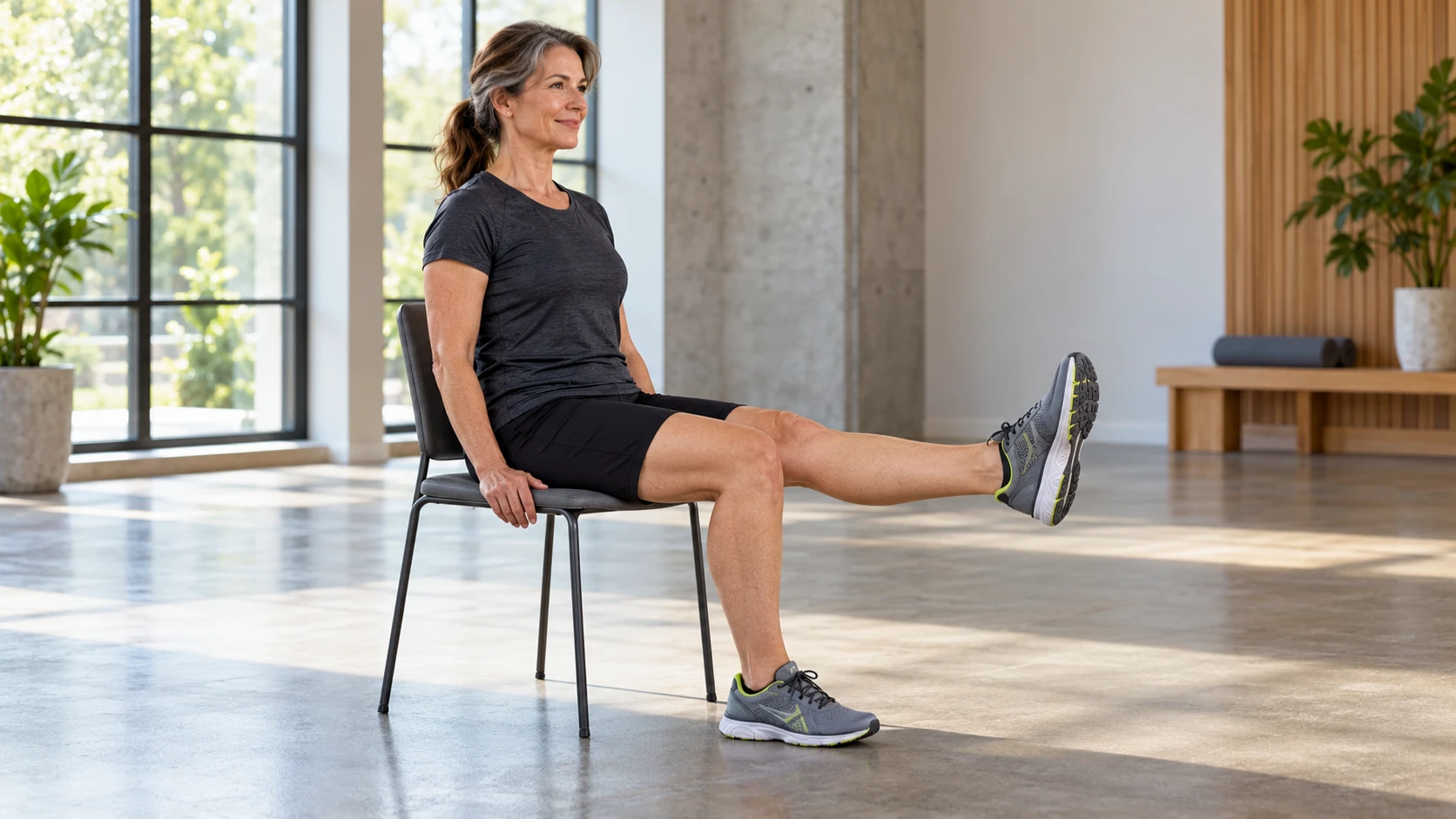
The challenge: can you complete 100 seated knee extensions?
For 5 October 2026, take a seat and make every rep deliberate. Complete five rounds of 20 alternating knee extensions, giving you 10 reps per leg each round. This is a controlled, chair-based test rather than a race. Aim to keep your final round as steady as your first, without swinging your feet or leaning backwards to finish.

How to do it: what are the exact steps?
- Set your chair on a firm, non-slip surface. Sit upright with your thighs supported, knees able to bend freely over the front edge and both feet flat on the floor.
- Practise six gentle alternating repetitions, three per leg. These preparation reps do not count towards your 100.
- Lightly hold the sides of the seat. Keeping your thigh resting on the chair, lift your right foot by straightening your knee through a comfortable range. Do not force it straight.
- Take roughly one second to lift, pause for one second, then lower for two seconds until your foot returns to the floor. That is one rep.
- Repeat on the left. Continue alternating until you have completed 20 reps: 10 on each side.
- Rest for 30 seconds, or longer if needed. Repeat until you have completed five rounds and 100 challenge reps.
Scale it: how can you keep the movement manageable?
Start with a smaller, pain-free range if a higher lift feels uncomfortable. Break the target into 10 sets of 10 alternating reps, resting between sets. If control still fades, finish at 40 or 60 total reps and record that honestly; 100 is a target, not an obligation. For a modest progression, extend the top pause to two seconds without adding weight or forcing extra range.
Coaching tips: what should you feel, and when should you stop?
Expect effort in the front of your thighs. Keep your shoulders relaxed, breathe normally and let the knee move without lifting the whole thigh off the seat. Avoid snapping into the straight-leg position. Pause the set if you start swinging, bouncing or leaning back; resume only when you can regain control. Stop the challenge for sharp or increasing pain, catching, numbness or dizziness. Do not push through joint discomfort to reach the total. If you have an existing knee condition or recent surgery, ask your clinician whether this movement and volume are appropriate.