
Challenge · 2026
100 Finger Spreads: Can You Keep Control?
Complete 100 finger spreads by opening your hands, gently separating your fingers and returning to a relaxed position. Work through five sets of 20, with both hands moving together for one rep. This equipment-free RB100 challenge tests controlled hand movement rather than grip strength or speed.
By Richard Branson ·
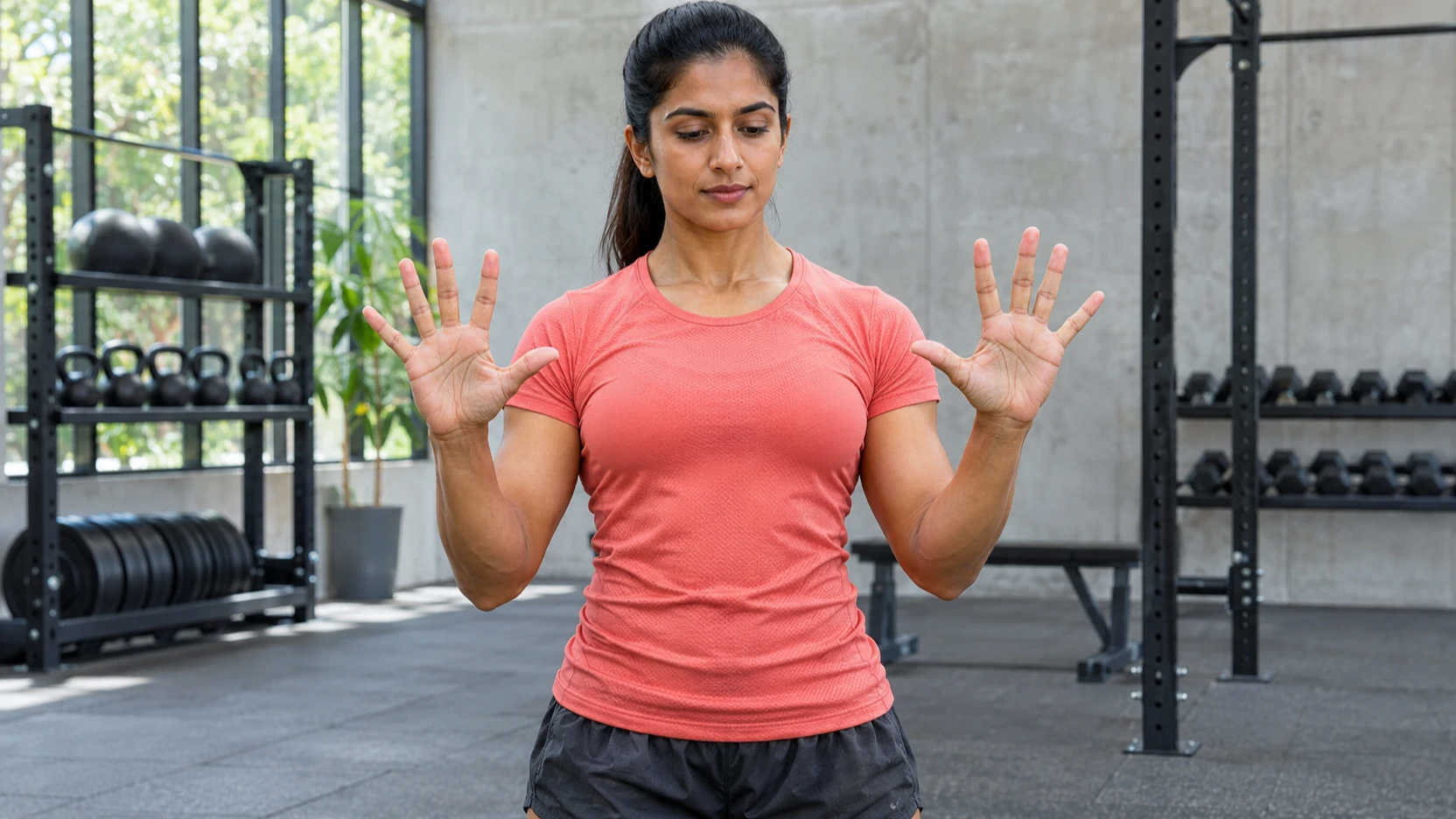
The challenge: can you complete 100 finger spreads?
Your RB100 daily challenge for 20 November 2026 is five sets of 20 finger spreads. No squeezing, weights or maximum-effort holds: the task is to separate your fingers gently, then bring them back together with control. Keep the same comfortable movement from the first repetition to the last. This is a small, low-load coordination task, not a test of maximum grip strength.

How to do it: what are the exact steps?
- Sit or stand comfortably with your shoulders relaxed. Bend your elbows and hold your hands in front of you, or rest your forearms on a table with your hands free to move.
- Keep your wrists straight and your fingers comfortably extended, without forcing the joints straight. Start with your fingers loosely together.
- Spread your fingers apart and move your thumbs gently away from your index fingers. Use only the range you can reach without strain.
- Bring your fingers and thumbs back to the starting position without making a fist. Both hands completing this cycle together equal one rep.
- Take roughly one second to spread and one second to return. Complete 20 reps, then rest for 15–30 seconds.
- Repeat for five sets in total: 20, 40, 60, 80, then 100 reps. Record your total and whether you needed smaller sets.
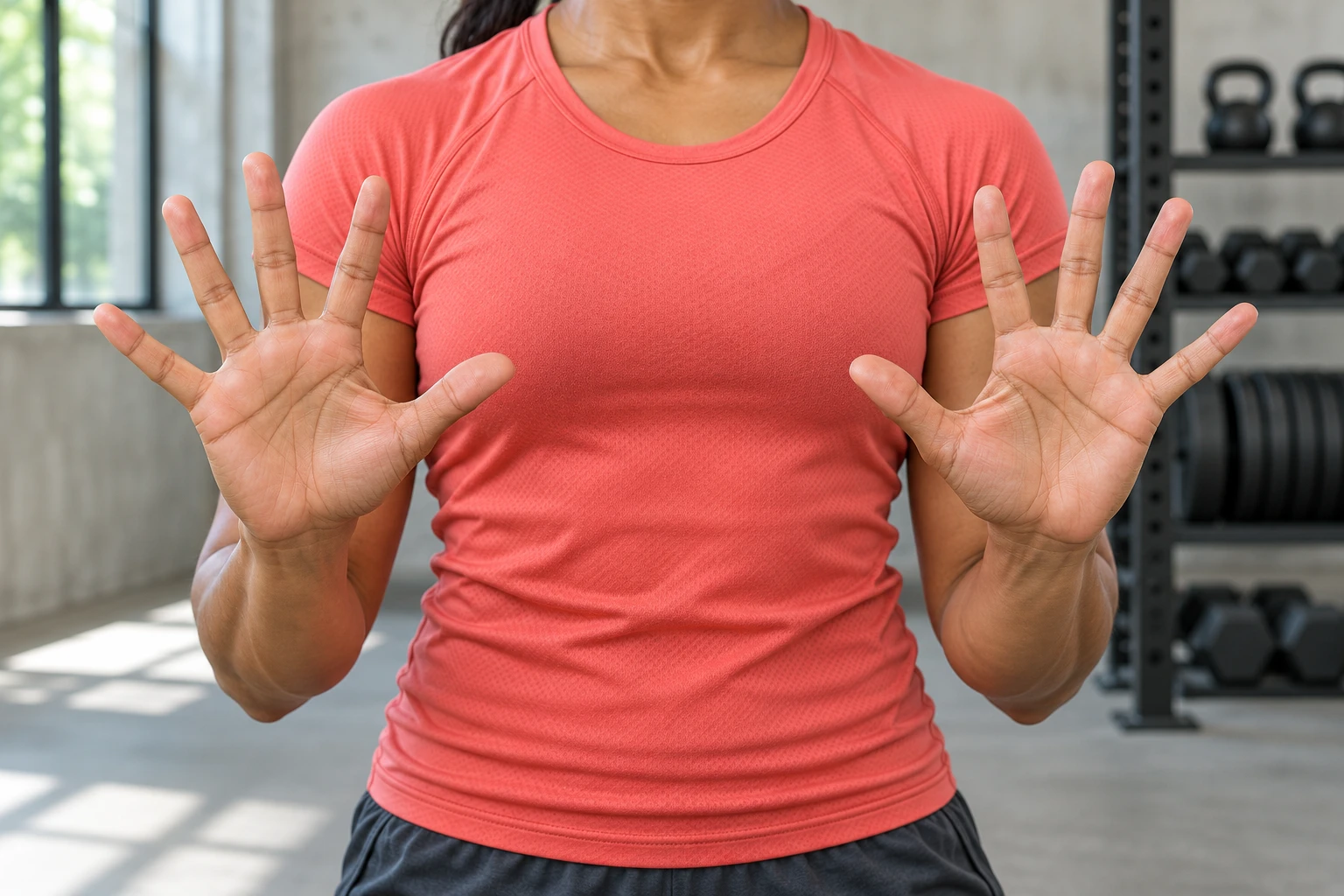
Scale it: how can you adjust the movement?
Make it easier with ten sets of ten, longer rests or a smaller finger spread. Support your forearms if holding your arms up creates unnecessary fatigue. If coordinating both hands is difficult, complete each 20-rep set with one hand and then the other; each hand still completes 100 repetitions. If 100 is too much today, choose a lower total and log it honestly. For more control without extra load, pause briefly in the open position rather than stretching wider.
Coaching tips: what should you watch for?
Let the fingers do the work: avoid lifting your shoulders, bending your wrists or snapping your hands open. Individual fingers may move by different amounts; do not pull them apart with your other hand. Rest when your range becomes noticeably smaller or your movement turns jerky. Stop for sharp pain, tingling, numbness or cramping rather than chasing the total. If an existing hand or wrist condition affects movement, have a clinician review whether this challenge is suitable before attempting it.