
Challenge · 2026
100-Second Chest Stretch: Can You Stay Relaxed?
Accumulate a 100-second chest stretch in five gentle 20-second holds using a doorway. Keep your elbows below shoulder height, breathe normally and ease out between rounds. This is a controlled mobility challenge, not a flexibility contest: choose a position that creates a mild stretch without shoulder discomfort.
By Richard Branson ·
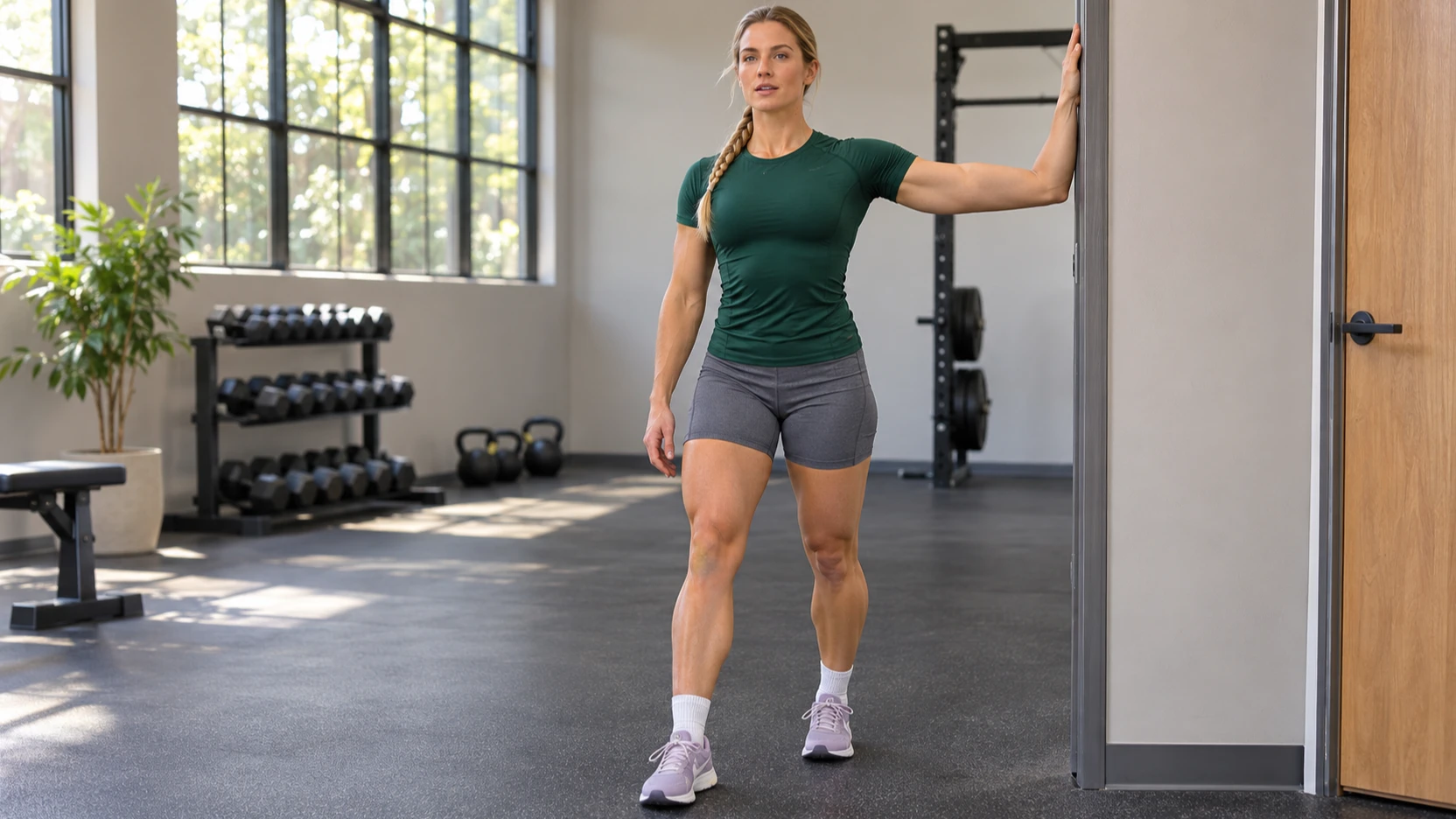
The challenge: can you keep your 100-second chest stretch gentle?
Your RB100 daily challenge for 14 May 2026 is five 20-second doorway chest stretches. Rest for 10–20 seconds between holds. The target is 100 seconds of mild, controlled stretching with normal breathing. This is a mobility task, not a strength hold or a test of maximum range. Finish each round feeling able to ease out smoothly.

How to do it: what are the exact steps?
- Check that the floor is clear and the door cannot swing into you. Place your timer where you can see or hear it.
- Stand in the doorway with one foot slightly forward. Place your forearms against the frame, keeping your elbows bent and a little below shoulder height.
- Keep your ribs over your pelvis. Gently shift your body forwards until you feel a mild stretch across your chest; avoid arching your lower back.
- Try a brief practice hold, then release. If the position feels comfortable, start your first timed 20-second hold.
- Breathe normally throughout. Step back to release the stretch, lower your arms and rest for 10–20 seconds.
- Repeat until you have completed five 20-second holds: 100 seconds total. Pause the timer whenever you leave the stretch.
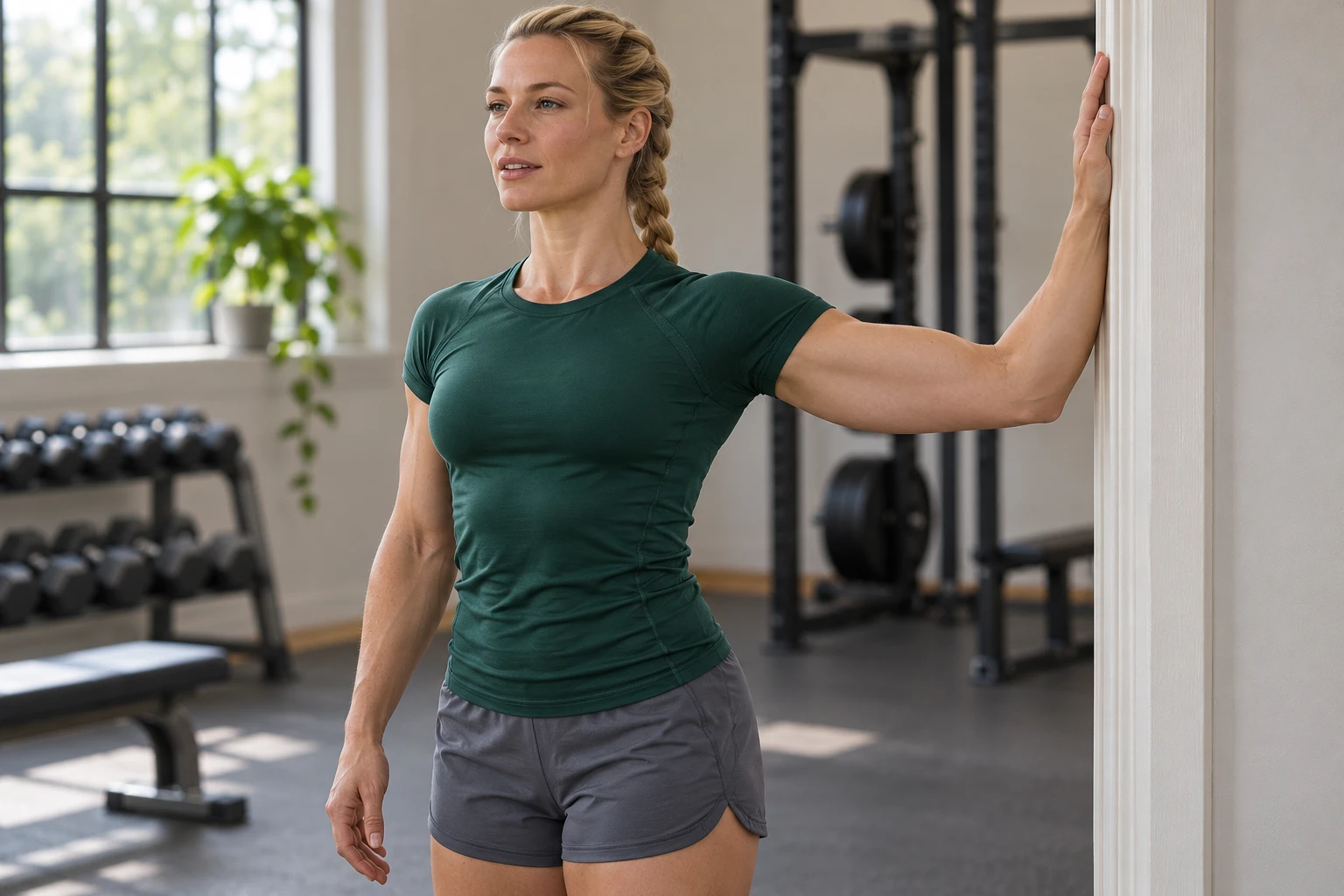
Scale it: how can you make the position more manageable?
Reduce the forward shift first: a smaller stretch still counts. You can also split the target into ten 10-second holds. If the doorway is too wide or the two-arm position feels awkward, use a wall and stretch one side at a time. Support one forearm with the elbow below shoulder height, then gently turn your chest away. Complete five 10-second holds on each side, alternating sides. To progress, improve your breathing and consistency rather than forcing a deeper stretch. Stop below 100 seconds if you cannot find a comfortable setup.
Coaching tips: what should you feel, and when should you stop?
Keep your neck relaxed, shoulders away from your ears and weight supported through your feet rather than hanging from your arms. Do not bounce or hold your breath. A mild chest stretch is enough; shoulder pinching is not the target. Release immediately for sharp pain, tingling, numbness or a feeling of shoulder instability. Do not resume if symptoms persist. If you have a diagnosed shoulder condition or recent surgery, this general challenge is educational only: ask your clinician whether the movement is appropriate before attempting it.