

The core is one of the most misunderstood muscle groups in training. Online, ab workouts are often designed more for visual effect than for biomechanical reality. Cable crunches with wild technique, shaky hanging leg raises, unstable kneeling variations and complex band setups dominate social media feeds, yet most of these exercises lack the stability or loading needed to build a genuinely strong midsection.
Eugene Teo’s breakdown of core training is refreshing because it is rooted in simple principles that work in every gym, not just in studios with specialised equipment. His message is clear. Effective ab training is not about novelty. It is about stability, tension and progression.
In this article, we will explore how to build ab workouts that actually do something, whether your goal is strength, hypertrophy, athletic performance or improved movement quality.
Why Most Ab Work Is Just Vibes
Many people assume they are training their core effectively because the exercise looks technical or feels intense. But intense and effective are not the same thing.
Take the cable crunch, one of the most popular ab movements online. On paper it makes sense. It loads spinal flexion and allows adjustable resistance. In practice, most lifters unintentionally shift their hips backwards during the descent. This reduces stability and changes the mechanics of the movement.
Even when done well, the body can “escape” the load when fatigue sets in. Without a stable anchor for the hips and legs, the cable crunch often turns from an ab exercise into a hip-dominant hinge with partial spinal flexion.
This is the core problem with many ab movements. Lack of stability means lack of tension. Lack of tension means lack of stimulus.
To train the core effectively, you must remove escape routes.
What Your Core Actually Does
Before selecting exercises, it helps to understand the four primary functions of the core:
- Spinal flexion – Curling the ribcage towards the pelvis, as in sit-ups and crunches.
- Anti-extension – Preventing the spine from arching excessively, as in planks and rollouts.
- Rotation – Turning the torso through controlled spinal and ribcage movement.
- Anti-rotation – Resisting unwanted twisting forces, as in Pallof presses or offset carries.
A complete core program should include a mixture of these functions across the week. The mistake most people make is trying to attack all four in a single high-rep circuit. Ab training benefits from focused sets, precise control and progressive overload, just like any other muscle group.
Why Stability Is The Missing Link
Eugene’s biggest criticism of popular core exercises is that they provide too many opportunities to cheat unintentionally. When your body can shift position under fatigue, the tension leaves the target muscle.
For example:
- Kneeling cable crunches allow hip shift
- Hanging leg raises allow swinging
- Unanchored decline crunches allow partial range shortcuts
- Swiss ball crunch variations allow mid-rep repositioning
The fix is simple.
Anchor the body. Force the spine to do the work. Eliminate escape routes.
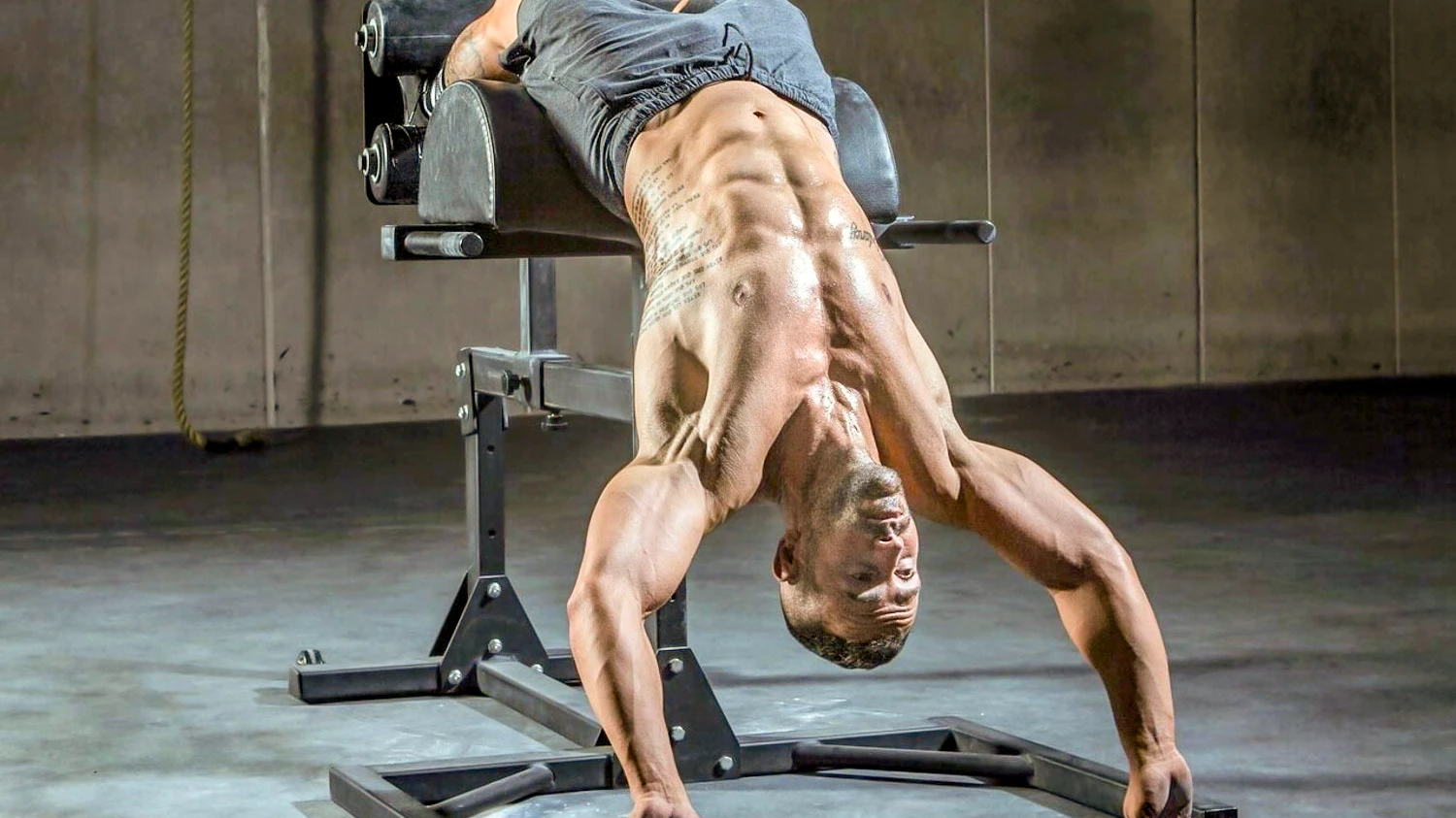
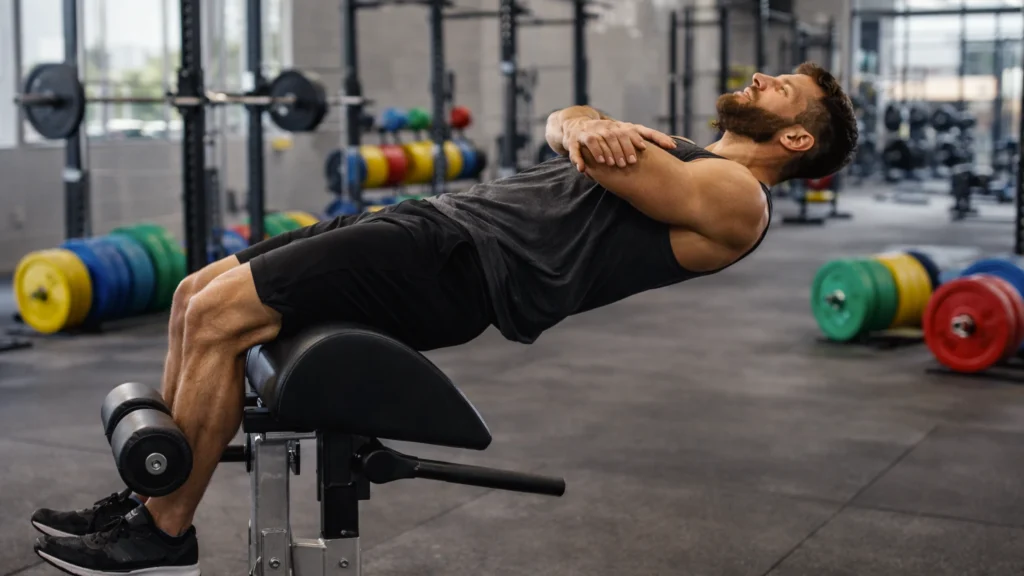
This is why Eugene prefers exercises like GHD sit-ups, anchored bench variations and hyperextension crunches. These movements lock the hips or legs into place, making the spine responsible for both the eccentric and concentric phases.
Eugene’s Core Training Framework
Eugene simplifies core training into two effective categories:
1. Stable base plus full spinal movement
This includes movements where the hips are anchored, allowing the spine to fully flex and extend under load.
Examples:
- GHD sit-up
- Anchored bench crunch
- Hyperextension reverse crunch
- Resistance band sit-up from an anchored position
- Anchored long-lever crunch variations
These movements strengthen the rectus abdominis through full-range spinal flexion and extension.
2. Stable spine plus limb movement
This includes movements where the torso remains rigid while the arms or legs create leverage.
Examples:
- Ab wheel rollout
- Bodyweight plank variations
- Dead bug variations
- Anti-extension cable walkouts
- Swiss ball stir-the-pot (controlled)
- Pallof press variations
These develop deep core stability through anti-extension and anti-rotation.
Both categories matter. One builds contractile strength and hypertrophy. The other builds control, stability and resilience.
How To Progress Core Training Like Any Other Muscle Group
Many people train their core with endless reps and no progression. The result is predictable. No change.
For real results, you need to treat the core like any other muscle group.
Here are the variables to track:
1. Load
Add weight via:
- Dumbbells
- Plates
- Bands
- Cable pulleys
- Weighted vests
2. Range of motion
Gradually increase the depth of spinal extension or the reach of arm and leg movements.
3. Tempo
Slow eccentrics significantly increase time under tension.
4. Reps and sets
Most effective ab work sits in the 8 to 15 rep range with 2 to 4 quality sets.
5. Frequency
Two or three sessions per week is ideal for most athletes.
6. Exercise selection
Rotate between flexion-focused, anti-extension and anti-rotation movements.
Principle-Based Exercise Recommendations
Below is a simple, Eugene-approved approach for different goals.
Goal: Ab Hypertrophy
Focus on loaded spinal flexion with anchored hips.
Sample exercises:
- GHD sit-up
- Anchored decline dumbbell crunch
- Weighted hyperextension reverse crunch
- Banded anchored sit-up
- Cable crunch with maximal hip stability
Goal: Core Strength and Rigidity
Focus on anti-extension and anti-rotation.
Sample exercises:
- Ab wheel rollout
- High-tension planks with load
- Pallof press variations
- Cable walkouts
- Offset kettlebell carries
Goal: Functional Athletic Control
Blend controlled spinal flexion with anti-extension and rotation.
Sample exercises:
- Dead bug variations
- Stir-the-pot
- Sprinter sit-up variations
- Landmine anti-rotation drills
- Single-arm farmer’s carries
What To Do If You Do Not Have Specialised Equipment
Many gyms do not have GHDs, back extension benches or dedicated sit-up stations. Eugene offers three solutions.
Option 1: Use a hyperextension bench
Lock your hips securely and perform controlled spinal flexion.
Option 2: Use a standard flat or incline bench
Anchor your feet under the bench, a dumbbell or a rack. Adjust distance to target abs over hip flexors.
Option 3: Use the floor with band assistance
Anchor a resistance band low, wrap it around your chest or shoulders and perform controlled sit-ups with a full spinal roll.
These options recreate the stable base you need for effective tension.
Quick Answers: What Most Lifters Want To Know
No, but they require strict hip stability to remain effective. Most people perform them with excessive hip movement, which reduces tension.
Two or three focused sessions per week is enough for most people.
No. Visibility is driven by body fat. Strength is driven by load, tension and progression.
Yes, provided nutrition supports fat loss and training intensity creates muscular development.