
Nordic Hamstring Curl
A kneeling hamstring exercise using a controlled forwards lowering phase, secured ankles and hand assistance to build strength through knee flexion.

Setup
- Kneel on a padded exercise mat with your knees approximately hip-width apart.
- Have a capable training partner kneel behind you and firmly secure your lower legs just above the ankles, keeping your feet against the floor.
- Agree a stop signal and test the hold with a small forwards lean before attempting a repetition.
- Position your shoulders over your hips and knees, with your hips extended and abdomen gently braced.
- Keep clear floor space in front of you and hold your hands ready to catch your body.
Execution
- Lean forwards from your knees, keeping your shoulders, hips and knees in a straight line.
- Resist the lowering phase with your hamstrings rather than letting your body drop.
- Lower only as far as you can maintain control without folding at the hips or arching your lower back.
- Place your hands on the floor before control is lost and bend your elbows to cushion the landing.
- Push through your hands to assist the return to upright, then reset before the next repetition.
Coaching cues
- Move as one long line from knees to shoulders.
- Keep your hips open; do not sit back towards your heels.
- Fight the lowering phase, but catch yourself early.
- Use enough arm assistance to make every return controlled.
Common faults & fixes
- Hips folding backwards: shorten the lean and squeeze your glutes gently to maintain alignment.
- Dropping suddenly near the floor: catch earlier and finish the set when you cannot control your chosen range.
- Lower back arching: bring your ribs over your pelvis and reduce the lowering distance.
- Ankles lifting or the partner losing position: stop immediately and re-establish a secure hold before continuing.
Regressions
- Use a shallow forwards lean and return before reaching the point where control breaks down.
- Place your hands down earlier and use more arm support during the final lowering phase and return.
- Build initial hamstring capacity with hamstring walkouts before progressing to assisted Nordic repetitions.
Variations
- Eccentric-only Nordic: perform the controlled lowering phase, then use your hands and hips to reset without attempting an unassisted curl upwards.
- Paused Nordic: hold briefly at a shallow, controllable lean before using assistance to return.
- Full Nordic curl: lower and return without hand assistance only when you can maintain alignment throughout.
Programming ideas
- Introduction: try 2 sets of 3 assisted repetitions once weekly, resting around 2 minutes between sets.
- Progression: build towards 2–3 sets of 4–6 controlled repetitions, increasing range or reducing assistance before adding more volume.
- Hybrid placement: use after primary strength exercises rather than in a timed circuit, and reduce the dose if soreness disrupts running technique or subsequent sessions.
Safety
Use sufficient knee padding and a reliable ankle hold. Do not improvise an anchor with loose weights or unstable furniture. Stop for sharp pain, knee pressure that padding does not resolve, hamstring cramping, slipping ankles or an uncontrolled descent. Keep your hands free to catch yourself and finish the set before fatigue compromises that catch. Existing knee or hamstring conditions require clinician review; this guidance is educational, not a rehabilitation prescription.
In depth
Why use the Nordic hamstring curl?
Running and hybrid training benefit from dedicated hamstring strength work alongside squats, lunges and hinges. The Nordic adds a distinct knee-focused challenge: your hamstrings resist knee extension as your body lowers. Even a short, assisted range can be demanding, so control matters more than reaching the floor.
When should you include it?
Use it as a strength accessory when you have a secure ankle hold and enough space to catch yourself safely. Introduce it during a normal training week rather than immediately before a race. Keep the initial dose small and judge progression by consistent technique and how well you recover for your next run.

+Do I need to lower all the way to the floor?
+How is this different from a Romanian deadlift?
+Where should Nordic curls fit around running?
Keep training
Related exercises

Tempo Back Squat
Shared: Core, Glutes, Hamstrings, Controlled Eccentric, Strength
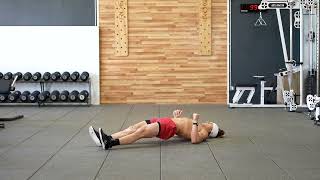
Hamstring Walkout
Shared: Hamstrings, Glutes, Core, Bodyweight, Exercise Mat, Strength

Barbell Zercher Squat
Shared: Core, Glutes, Hamstrings, Strength

Box Squat (Various Heights)
Shared: Core, Glutes, Hamstrings, Strength

Burpee Broad Jump
Shared: Core, Glutes, Hamstrings, Bodyweight

Single-Leg Lateral Skater Hop to Stick
Shared: Core, Glutes, Hamstrings, Bodyweight