
Hamstring Walkout
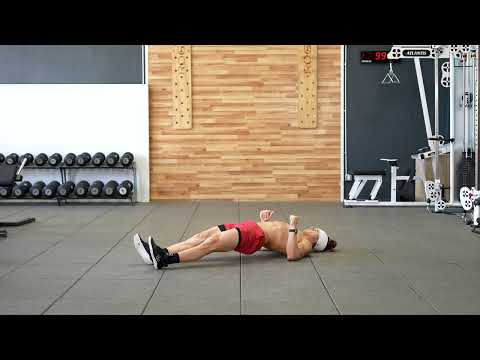
Hold your hips off the floor while taking small heel steps out and back, keeping your pelvis steady throughout.
Setup
- Lie on your back on a mat with your knees bent and feet approximately hip-width apart.
- Place your heels close enough to your hips to establish a comfortable bridge position.
- Rest your arms on the floor, brace your trunk and keep your ribs down.
- Press through your heels and lift your hips until your shoulders, hips and knees form a roughly straight line.
Execution
- From the bridge, lift your toes slightly so your heels remain the main contact points.
- Take small, alternating heel steps away from your hips while keeping your pelvis level.
- Walk only as far as you can without your hips dropping or your lower back arching; keep a slight bend in your knees.
- Reverse the movement with small heel steps until you return to your starting bridge position.
- Count the full outward-and-return journey as one repetition, then lower your hips or continue with control.
Coaching cues
- Small steps, steady hips.
- Keep your ribs down rather than lifting through your lower back.
- Press each heel into the floor as though dragging it towards you.
- Finish the walkout before you lose your bridge position.
Common faults & fixes
- Hips sag as the legs straighten: shorten the walkout and rebuild range gradually.
- Lower back arches to keep the hips high: exhale, brace and hold a slightly lower bridge.
- Pelvis rocks with each step: reduce step length and move more slowly.
- Feet slide rather than step: use a non-slip surface and briefly unweight each heel.
Regressions
- Practise a static two-leg glute bridge before adding heel movement.
- Take just one small step out with each heel, then return.
- Lower your hips and reset between repetitions rather than holding the bridge continuously.
Variations
- Tempo walkout: slow each heel step while maintaining a level pelvis.
- Paused walkout: hold the furthest controlled position briefly before walking back.
- Outward-only walkout: walk your heels away, lower your hips and reset your feet before the next repetition.
Programming ideas
- Accessory strength: perform 2–3 sets of 3–6 complete walkouts, resting 60–90 seconds between sets.
- Warm-up: use 1–2 sets of 2–3 short-range repetitions without chasing fatigue.
- Home training: pair with a squat and a trunk exercise for a simple lower-body accessory session.
Safety
Use a stable, non-slip surface and begin with a short range. Stop the set if you cannot maintain pelvic control. If your hamstrings cramp, lower your hips and rest rather than forcing another repetition. Stop for sharp pain; seek individual guidance if managing a hamstring or lower-back injury.
In depth
The hamstring walkout adds knee movement to a held bridge. Your hamstrings work as your legs lengthen and shorten, while your glutes and trunk help keep your pelvis steady.
For hybrid and HYROX athletes, it offers equipment-light accessory work alongside running, hinges and lunges. It complements heavier strength training rather than replacing it.
Use controlled sets after your main strength work or in a short home session. Keep warm-up sets easy, and avoid introducing fatiguing walkouts immediately before a demanding run.
Keep training
Related exercises

Box Squat (Various Heights)
Shared: Core, Glutes, Hamstrings, Posterior Chain, Strength

Barbell Hip Thrust
Shared: Core, Glutes, Hamstrings, Posterior Chain

Barbell Zercher Squat
Shared: Core, Glutes, Hamstrings, Strength

Kettlebell Single-Leg Romanian Deadlift
Shared: Core, Glutes, Hamstrings, Posterior Chain

Tempo Back Squat
Shared: Core, Glutes, Hamstrings, Strength

Burpee Broad Jump
Shared: Core, Glutes, Hamstrings, Bodyweight