
Dumbbell Step-Over
A lower-body strength and balance exercise performed by stepping over a raised surface with dumbbells.

Setup
- Hold dumbbells at sides, stand facing a bench or box.
Execution
- Step up with one foot, drive through heel, step over and down with control.
Coaching cues
- Heel down. Stay tall. Control every step.
Common faults & fixes
- Pushing off back leg → drive from lead heel. Losing balance → reduce step height.
Regressions
- Bodyweight step-over or lower platform height.
Variations
- Front rack step-over, single dumbbell version.
Programming ideas
- 3×10 per leg for strength, 100 alternating reps for endurance.
Safety
Ensure platform stability and clear space for movement.
Competition standards
Full foot contact at top, upright posture, smooth transitions.
In depth
The Dumbbell Step-Over is a controlled lower-body exercise that develops strength, balance, and coordination across each leg. It builds the quads, glutes, and hamstrings while improving ankle stability and single-leg control — critical for both performance and injury prevention.
To perform, hold a pair of dumbbells by your sides and stand facing a bench or plyo box. Step up with one foot, pressing through the heel until both feet are on top of the surface. Then step down with the opposite foot, maintaining control throughout. Repeat in the opposite direction.
This simple yet challenging movement enhances unilateral balance, coordination, and proprioception, reinforcing even strength between legs. It’s particularly effective in building endurance in the legs and hips — essential for hybrid and HYROX-style athletes who need both power and control over repeated reps.
Common mistakes include pushing off the trailing leg too much, losing core tension, or stepping onto a surface that’s too high. Cue “press through the lead heel,” “stand tall at the top,” and “move with control.”
In Relentless Bravery Fitness, the Dumbbell Step-Over symbolises consistent effort — every rep requiring balance, focus, and intent. It’s an ideal accessory for lower-body strength days or conditioning circuits.
For programming, use 3×10 per leg for strength, or alternate continuously for 100 total reps as a coordination endurance test.
Keep training
Related exercises
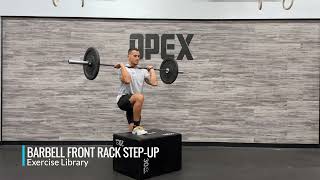
Barbell Front Rack Step-Up
Shared: Core, Glutes, Hamstrings, Quads, Bench, Plyo Box, Balance, Squat, Unilateral

Barbell Step-Up
Shared: Core, Glutes, Hamstrings, Quads, Bench, Plyo Box, Balance, Squat, Unilateral

Bulgarian Split Squat
Shared: Core, Glutes, Hamstrings, Quads, Bench, Dumbbells, Balance, Squat, Unilateral

Barbell Bulgarian Split Squat
Shared: Core, Glutes, Hamstrings, Quads, Bench, Balance, Squat, Unilateral

Dumbbell Front Rack Walking Lunge
Shared: Core, Glutes, Hamstrings, Quads, Dumbbells, Conditioning, Unilateral

Single-Leg Box Jump
Shared: Core, Glutes, Hamstrings, Quads, Plyo Box, Balance, Unilateral