
Bulgarian Split Squat
A single-leg squat variation that develops strength, balance, and mobility.

Setup
- Stand in front of a bench, rear foot elevated.
Execution
- Lower back knee toward floor, drive through front heel to stand.
Coaching cues
- Chest tall. Heel down. Smooth control.
Common faults & fixes
- Overstride → move closer to bench. Knee cave → drive outward.
Regressions
- Bodyweight only, lower foot height.
Variations
- Front rack, goblet, barbell, or tempo split squat.
Programming ideas
- 3×8–10 per leg for strength; 100 total reps for endurance.
Safety
Keep front heel grounded and hips level.
Competition standards
Front thigh parallel at bottom; upright torso throughout.
In depth
The Bulgarian Split Squat is one of the most effective single-leg strength exercises, combining balance, stability, and coordination into a powerful lower-body movement. It targets the quads, glutes, and hamstrings while engaging the core to maintain posture and alignment.
To perform, stand about two feet in front of a bench or platform and place the top of one foot behind you. Lower your back knee toward the ground while keeping your front foot flat and your torso upright. Drive through the front heel to return to standing.
This movement isolates each leg independently, exposing imbalances that can hide during bilateral lifts like squats or leg presses. It improves knee stability, hip control, and athletic performance — essential for runners, HYROX competitors, and functional athletes.
Common mistakes include overstriding, leaning forward excessively, or letting the front knee cave inward. Cue “chest tall,” “knee over foot,” and “drive through the heel.”
The Bulgarian Split Squat works well for both strength and endurance programming. For power, use dumbbells or a barbell; for conditioning, perform higher reps or add tempo control.
In Relentless Bravery Fitness training, 100 alternating reps are a mental and physical test of balance, control, and resilience.
Keep training
Related exercises

Barbell Bulgarian Split Squat
Shared: Core, Glutes, Hamstrings, Quads, Barbell, Bench, Balance, Squat, Unilateral
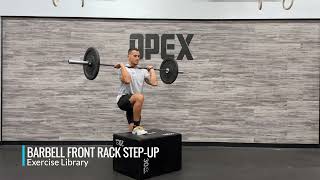
Barbell Front Rack Step-Up
Shared: Core, Glutes, Hamstrings, Quads, Barbell, Bench, Balance, Squat, Unilateral

Barbell Step-Up
Shared: Core, Glutes, Hamstrings, Quads, Barbell, Bench, Balance, Squat, Unilateral

Dumbbell Step-Over
Shared: Core, Glutes, Hamstrings, Quads, Bench, Dumbbells, Balance, Squat, Unilateral

Barbell Front Rack Lunge
Shared: Core, Glutes, Hamstrings, Quads, Barbell, Squat, Unilateral

Barbell Lateral Lunge
Shared: Core, Glutes, Hamstrings, Quads, Barbell, Squat, Unilateral