
Dumbbell Lateral Raise
A controlled shoulder-isolation exercise that trains the side deltoids without requiring heavy loads.

Setup
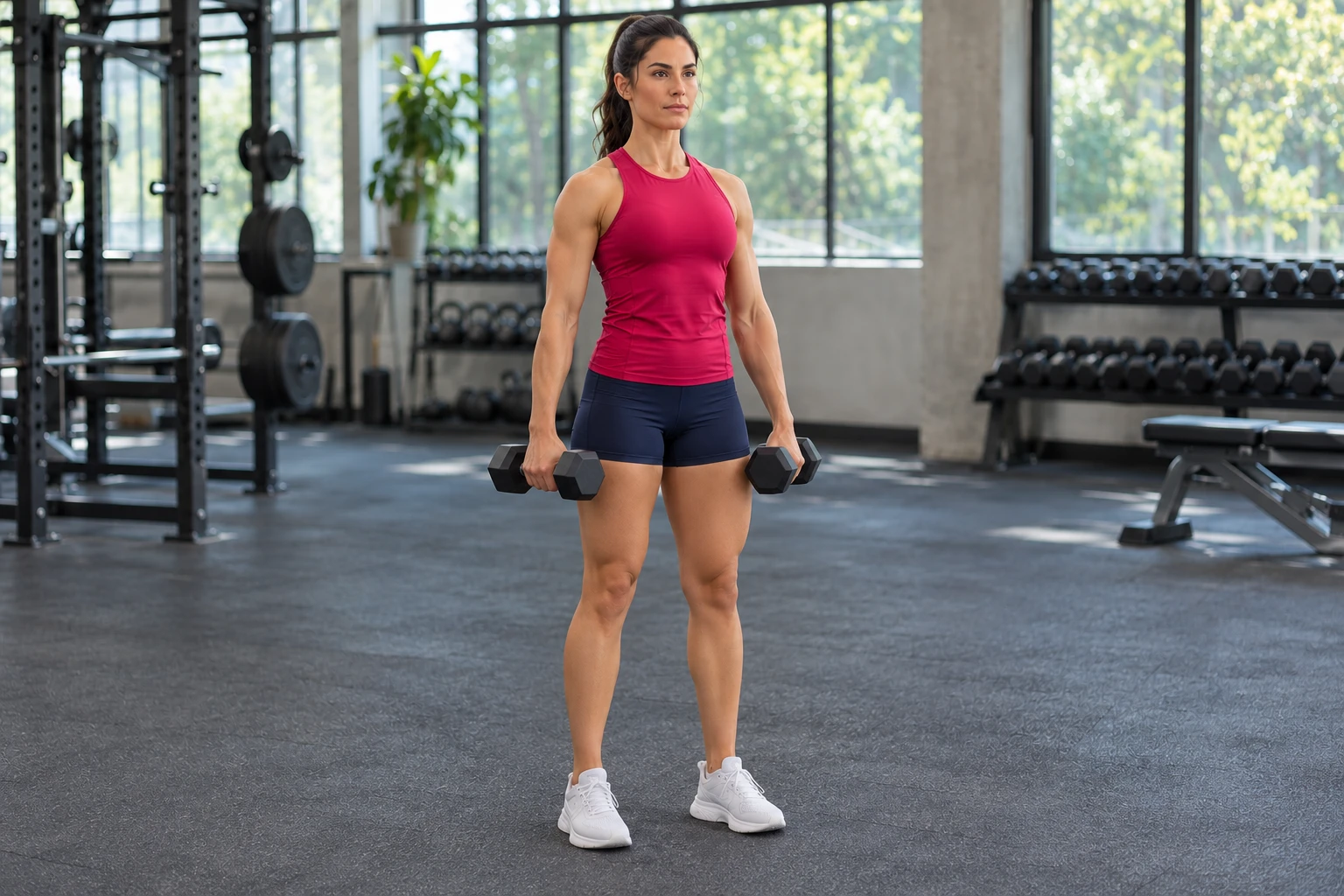
- Choose two light dumbbells and stand with enough space to lift your arms out to the sides.
- Set your feet about hip-width apart, with soft knees and your weight evenly distributed.
- Hold the dumbbells beside your thighs, palms facing inwards, and soften your elbows slightly.
- Keep your ribs over your pelvis and your neck relaxed before starting.
Execution
- Raise your upper arms out to the sides and slightly forwards, rather than directly behind the line of your torso.
- Maintain the same slight elbow bend while your elbows and hands rise together.
- Stop around shoulder height, or earlier if that is the limit of your comfortable, controlled range.
- Lower the dumbbells smoothly over roughly two seconds without letting them drop.
- Return to the starting position and repeat without bouncing your legs or swinging your torso.
Coaching cues
- Lift wide, not high.
- Keep your hands roughly level with, or just below, your elbows.
- Let your shoulder blades move naturally; do not force them down and back.
- Keep your thumbs neutral or slightly upwards rather than tipping them towards the floor.
- Make the final repetition look like the first.
Common faults & fixes
- Swinging the weights: reduce the load and pause briefly at the bottom before each repetition.
- Leaning backwards: gently brace your trunk and shorten the set before posture changes.
- Shrugging abruptly to start the lift: use lighter dumbbells and initiate a smooth outward arm movement; some shoulder-blade upward rotation is normal.
- Increasing elbow bend as fatigue builds: keep the bend consistent and end the set when you can no longer maintain it.
- Dropping the weights on the descent: lower the load until you can control the full return.
Regressions
- Practise the arm path without weights, stopping at a comfortable height.
- Use lighter dumbbells while keeping the same controlled lifting and lowering technique.
- Shorten the lifting range temporarily if you cannot maintain control near shoulder height; do not use this to push through pain.
Variations
- Seated dumbbell lateral raise: sit upright on a stable bench to reduce assistance from the legs.
- Single-arm dumbbell lateral raise: train one side at a time while keeping your torso still.
- Cable lateral raise: use a low pulley for a different resistance profile, starting with a light load.
Programming ideas
- After your main strength work, perform 2–3 sets of 10–15 repetitions, resting 60–90 seconds between sets.
- Start with one session per week if you already have substantial pressing and wall-ball volume; add a second only if recovery remains good.
- Increase repetitions within your chosen range before adding the smallest available weight increase.
- Keep roughly two controlled repetitions in reserve and avoid fatiguing your shoulders immediately before demanding overhead training.
Safety
Stop the set for sharp or increasing shoulder pain, catching, numbness or sudden weakness. Also stop when swinging or uncontrolled lowering replaces the intended movement. Do not force shoulder height or deliberately turn your thumbs down. Persistent symptoms, a recent shoulder injury or an existing medical condition need clinician review before continuing or adapting the exercise.
In depth
Why use the dumbbell lateral raise?
The lateral raise targets the side deltoids through shoulder abduction: lifting your arms away from your body. Unlike an overhead press, it does not involve pressing through the elbows. That makes it a straightforward accessory when you want focused shoulder work without adding another heavy compound lift.
When does it fit into hybrid training?
Place lateral raises near the end of a strength session, after the lifts and skills that matter most to your programme. For HYROX athletes, they complement rather than replace event practice. Start conservatively when wall balls and pressing already feature heavily, and prioritise controlled repetitions over heavier dumbbells.
+How heavy should dumbbell lateral raises be?
+Should you raise the dumbbells above shoulder height?
+Are lateral raises useful for HYROX athletes?
Keep training
Related exercises

Dumbbell Floor Press
Shared: Shoulders, Dumbbells, Strength

Dumbbell Incline Press
Shared: Shoulders, Dumbbells, Strength

Dumbbell Clean & Press
Shared: Shoulders, Dumbbells

Dumbbell Deadlift to High Pull
Shared: Shoulders, Dumbbells

Dumbbell Front Rack Walking Lunge
Shared: Shoulders, Dumbbells

Dumbbell Hang Clean & Press
Shared: Shoulders, Dumbbells