
Dumbbell Deadlift to High Pull
A compound movement combining a deadlift and high pull to develop total-body power and coordination.
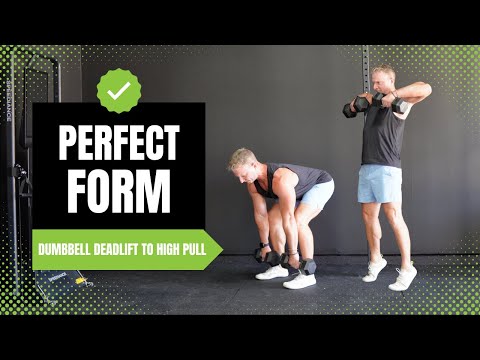
Setup
- Stand with dumbbells on the floor outside feet, chest up, core braced.
Execution
- Drive through hips to stand tall, then pull dumbbells high with elbows leading; lower under control.
Coaching cues
- Hips first. Elbows high. Control the drop.
Common faults & fixes
- Pulling early → wait for hip drive. Rounded back → brace core and lift chest.
Regressions
- Dumbbell deadlift, upright row.
Variations
- Kettlebell version, single-arm high pull.
Programming ideas
- 4×6 for power, 10×10 for conditioning.
Safety
Keep spine neutral; avoid jerking the arms.
Competition standards
Full hip extension, elbows above wrists at top, smooth control.
In depth
The Dumbbell Deadlift to High Pull is a total-body power exercise that blends a strong hip hinge with an aggressive upper-body pull. It’s a transitional movement that improves explosive drive, coordination, and fluidity between the hinge and pull phases a key skill for functional fitness and hybrid athletes.
To perform, stand with dumbbells on the floor just outside your feet. Hinge at the hips with a flat back and grip the weights firmly. Drive through your legs and hips to extend powerfully, using that momentum to pull the dumbbells up toward chest height, keeping your elbows high and outside. Lower the weights under control to the floor and repeat for the next rep.
This movement strengthens the glutes, hamstrings, traps, shoulders, and core, while improving timing and sequencing between the lower and upper body. It builds the foundation for more advanced power lifts such as cleans and snatches.
In Relentless Bravery Fitness, the Dumbbell Deadlift to High Pull represents precision through movement training athletes to link strength and speed seamlessly. It’s often used in hybrid conditioning sessions where explosive mechanics meet endurance.
Common mistakes include excessive arm pulling, poor hip extension, or rounding the back. Cue “drive from the hips,” “elbows high,” and “control the descent.”
For programming, use 4×6–8 for power development or perform 10×10 for conditioning and rhythm under fatigue.
Keep training
Related exercises

Dumbbell Snatch
Shared: Core, Glutes, Hamstrings, Shoulders, Traps, Dumbbells, Hinge, Power, Pull

Barbell Clean
Shared: Core, Glutes, Hamstrings, Shoulders, Traps, Hinge, Power, Pull

Barbell Power Clean
Shared: Core, Glutes, Hamstrings, Shoulders, Traps, Hinge, Power, Pull

Kettlebell Clean & Jerk
Shared: Core, Glutes, Hamstrings, Shoulders, Traps, Hinge, Power, Pull

Kettlebell Deadlift High Pull
Shared: Core, Glutes, Hamstrings, Shoulders, Traps, Hinge, Power, Pull

Kettlebell Snatch
Shared: Core, Glutes, Hamstrings, Shoulders, Traps, Hinge, Power, Pull