
Cable Crunch
A kneeling cable exercise that loads controlled trunk flexion to develop abdominal strength.

Setup
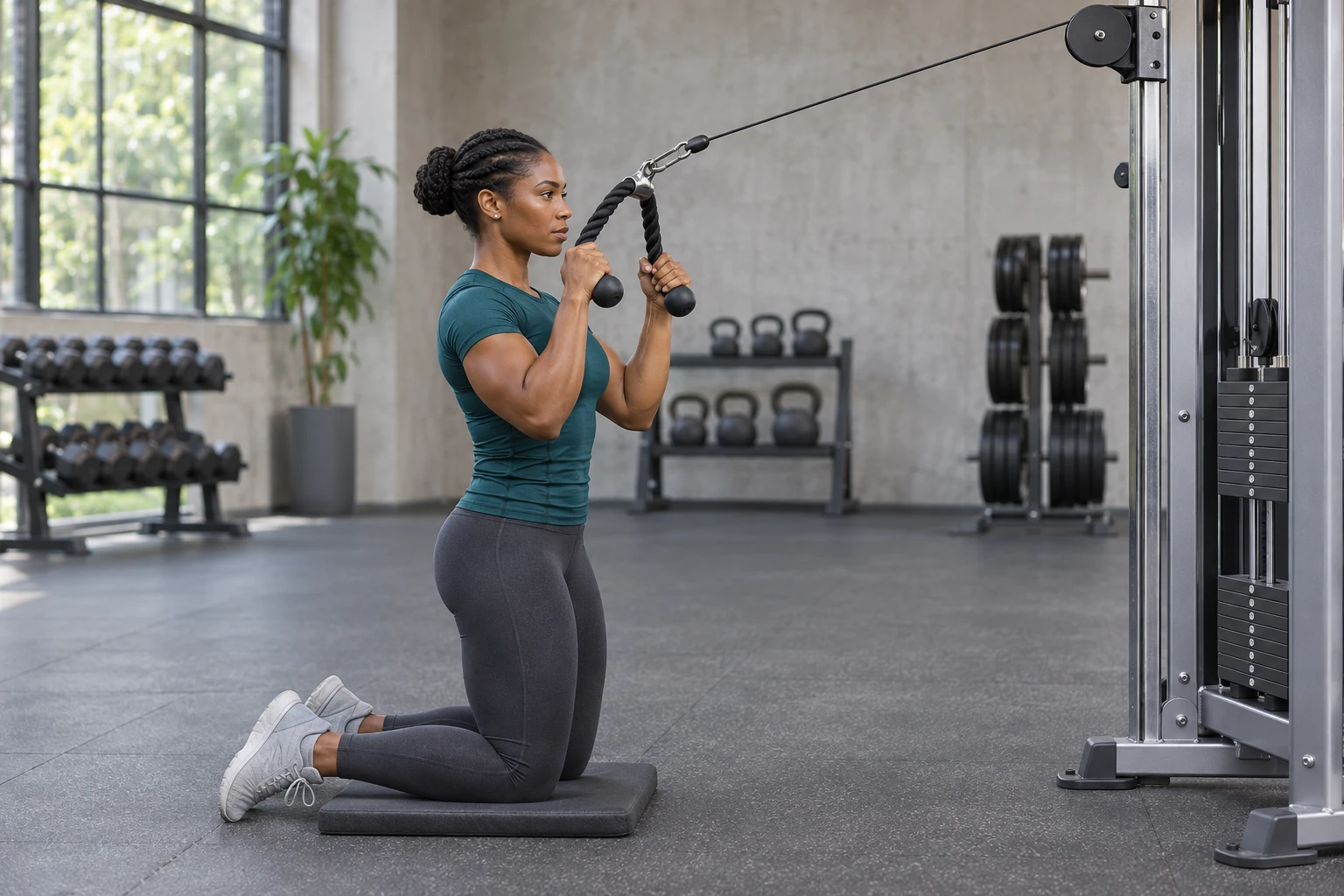
- Attach a rope to a high pulley and select a light starting load.
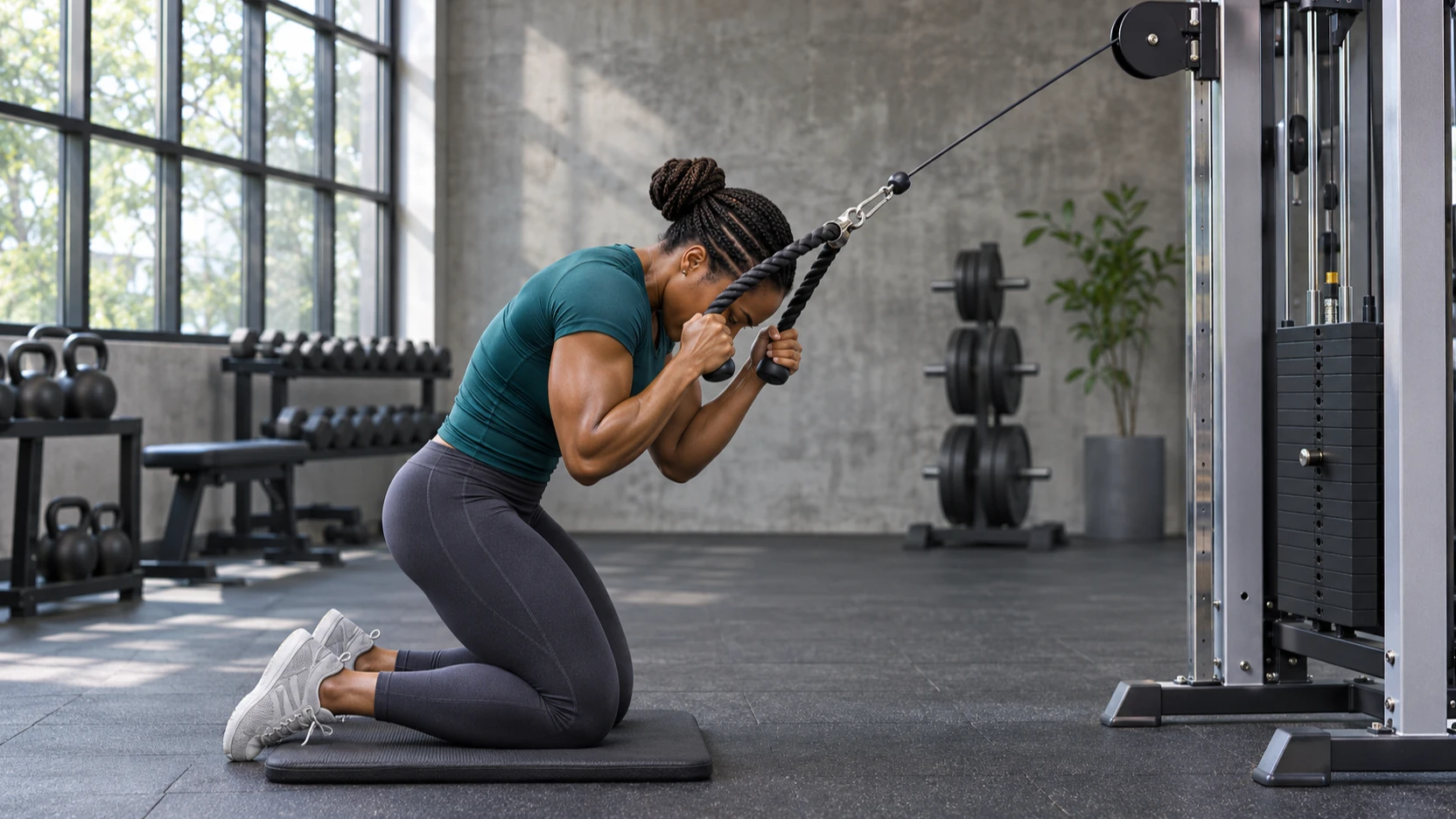
- Kneel facing the machine, far enough away for the cable to remain under tension throughout the movement.
- Hold the rope ends beside your temples without pressing them into your neck.
- Position your hips above or slightly behind your knees, with a comfortable, consistent bend at the hips.
Execution
- Start with your trunk comfortably extended, without deliberately arching your lower back.
- Exhale as you curl your trunk, bringing your lower ribs towards your pelvis.
- Keep your hands beside your head and your hips mostly still rather than sitting towards your heels.
- Pause briefly at the bottom of your controlled range; your elbows do not need to touch the floor.
- Uncurl slowly to the starting position without allowing the stack to slam down or pull you backwards.
Coaching cues
- Curl your ribs towards your pelvis.
- Let your hands hold the rope, not drive the movement.
- Keep your hips quiet.
- Finish where your controlled curl ends.
- Return slowly rather than releasing the tension.
Common faults & fixes
- Sitting back towards your heels: reduce the load and keep your pelvis in roughly the same position throughout each repetition.
- Bowing forwards with a rigid trunk: focus on shortening the distance between your ribs and pelvis rather than hinging at the hips.
- Pulling the rope down with your arms: keep your hands beside your temples and maintain a consistent elbow position relative to your head.
- Jerking into the bottom position: use a lighter load and add a brief pause at the end of the curl.
- Overarching on the return: finish in a comfortable starting position rather than chasing extra extension.
Regressions
- Reduce the cable load until you can curl without rocking backwards or pulling with your arms.
- Use a shorter, comfortable range while practising controlled trunk movement.
- Practise a bodyweight floor crunch to learn the rib-to-pelvis action before adding cable resistance.
Variations
- Paused cable crunch: hold the curled position briefly without shifting your hips.
- Slow-return cable crunch: take around three seconds to uncurl while keeping the movement smooth.
- Standing cable crunch: use a high pulley and a stable standing position, keeping the same controlled trunk-curling action.
Programming ideas
- Strength accessory: perform 2–3 sets of 8–12 controlled repetitions after your main lifts, stopping with around two good repetitions in reserve.
- Lighter accessory work: perform 2 sets of 12–15 repetitions without rushing or allowing technique to deteriorate.
- Progression: once every repetition reaches your chosen range with steady hips, increase the load by the smallest available increment.
Safety
Check that the rope attachment is secure and keep clear of the moving weight stack. End the set when you can no longer control the return or keep your hips steady. Stop the exercise for sharp, increasing or radiating pain, or neck discomfort that persists after adjusting your position. If you have an existing spinal condition or symptoms affected by bending, seek clinician review before adding loaded spinal flexion; this guidance is educational, not medical advice.
In depth
Why use the cable crunch?
The cable crunch trains your abdominals through controlled trunk flexion, adding a different demand from planks and loaded carries. The adjustable resistance makes it straightforward to progress without turning every set into a high-repetition test.
When should hybrid athletes programme it?
Place it after your main strength work or in a short accessory session. Keep demanding abdominal sets away from the start of sessions where fresh trunk control matters, such as heavy lifting or loaded carries. Use it to complement your wider programme, not replace HYROX station practice.
+Should your back move during a cable crunch?
+How heavy should a cable crunch be?
+Is the cable crunch useful for HYROX training?
Keep training
Related exercises
Kettlebell Suitcase Deadlift to March
Shared: Abs, Obliques, Core

Kettlebell Suitcase March
Shared: Abs, Obliques, Core
Landmine Anti-Rotation Press (Pallof Press Variation)
Shared: Abs, Obliques, Core

Landmine Reverse Lunge to Press
Shared: Abs, Obliques, Core

Cable Woodchop
Shared: Obliques, Abs, Cable Machine

Dead Bug
Shared: Abs, Obliques