

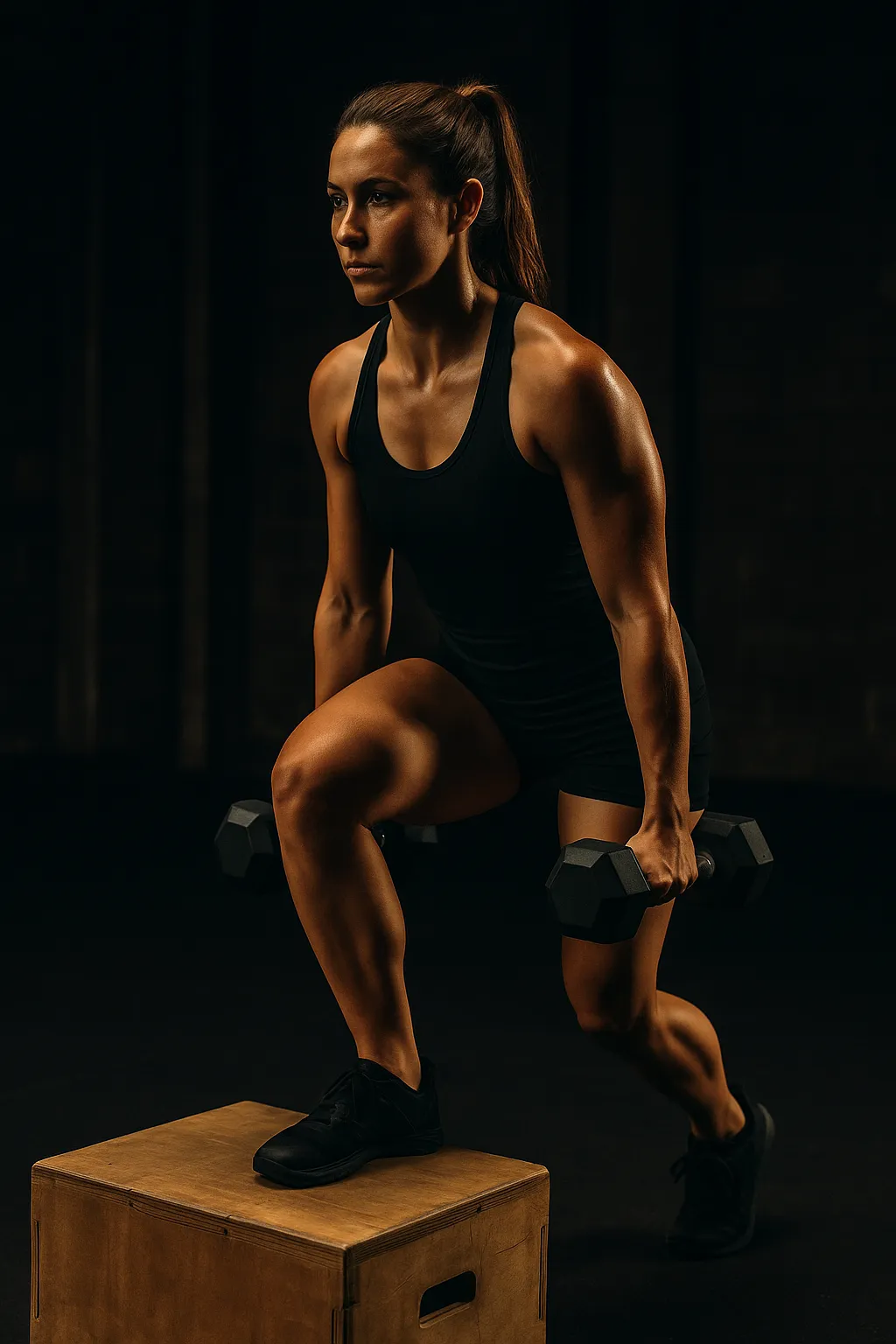
Some of the best fitness tests are deceptively simple. The 100 weighted step-up challenge is one of them.
Whether you’re training for mountain trails, sport performance, or just want rock-solid legs and lungs — this is a go-to movement. It’s scalable, effective, and totally unforgiving. You’ll get stronger, leaner, and more resilient with every rep.
“Want strong legs and lungs? Step up, don’t look down.” — RB100.Fitness
The Challenge
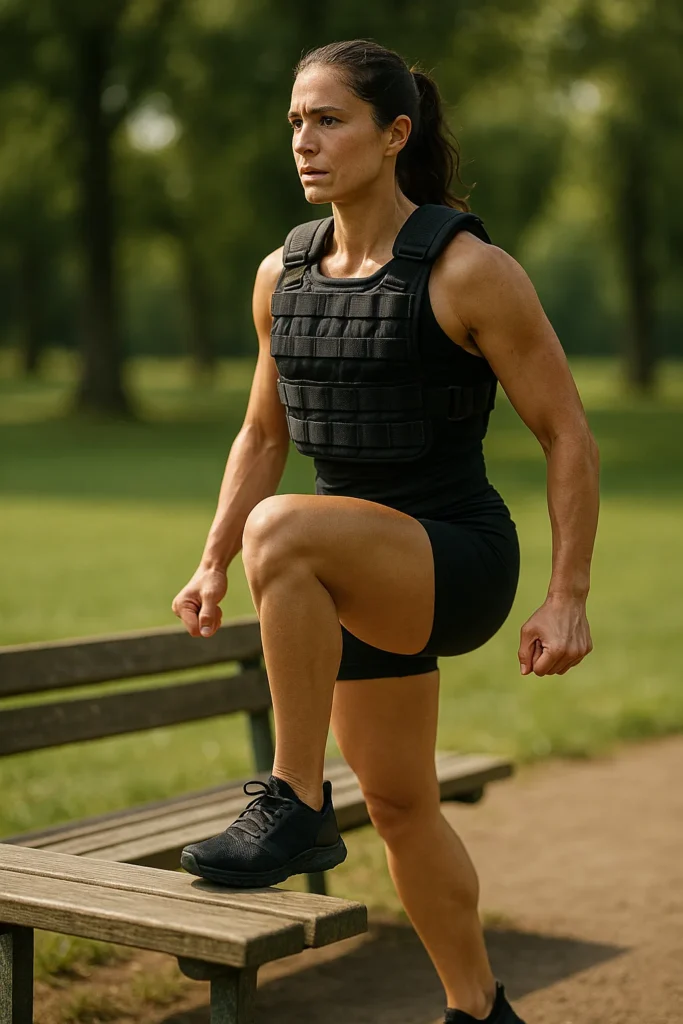
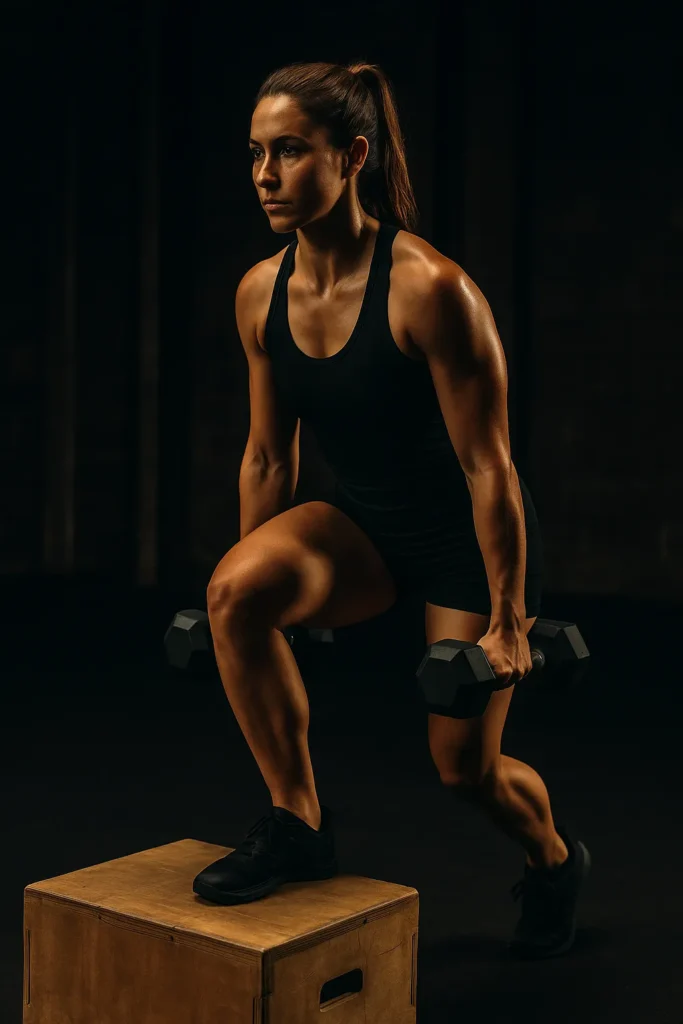
Complete 100 total weighted step-ups:
- Use a platform height of 16–24 inches (40–60 cm).
- Alternate legs every rep or do 10–20 reps per side before switching.
- Use dumbbells, kettlebells, or a weighted vest.
Beginner Option: Bodyweight only — 100 reps still hits hard.
Advanced Option: Add 10–20kg and time your total duration.
Why Step-Ups?
Step-ups are a staple for good reason:
- Unilateral strength for balance and coordination
- Targets glutes, quads, hamstrings, and calves
- Boosts grip, posture, and joint stability under fatigue
- Doubles as a conditioning challenge when unbroken
This is a favourite among military prep programs, CrossFit athletes, and trail runners.
Programming Options
- 10 sets of 10 reps with rest between
- 50 reps per leg, unbroken
- EMOM: 10 reps every minute for 10 minutes
Related Challenges
Learn More