
Challenge · 2026
100 Supported Rows: Can You Stay Square?
Complete 100 supported rows with a light dumbbell or securely closed water bottle: five rounds of 10 repetitions per arm. Keep your supporting hand on a stable surface and pull without twisting your torso. This challenge tests controlled pulling endurance, not speed. Reduce the load or shorten each set whenever technique slips.
By Richard Branson · · Updated
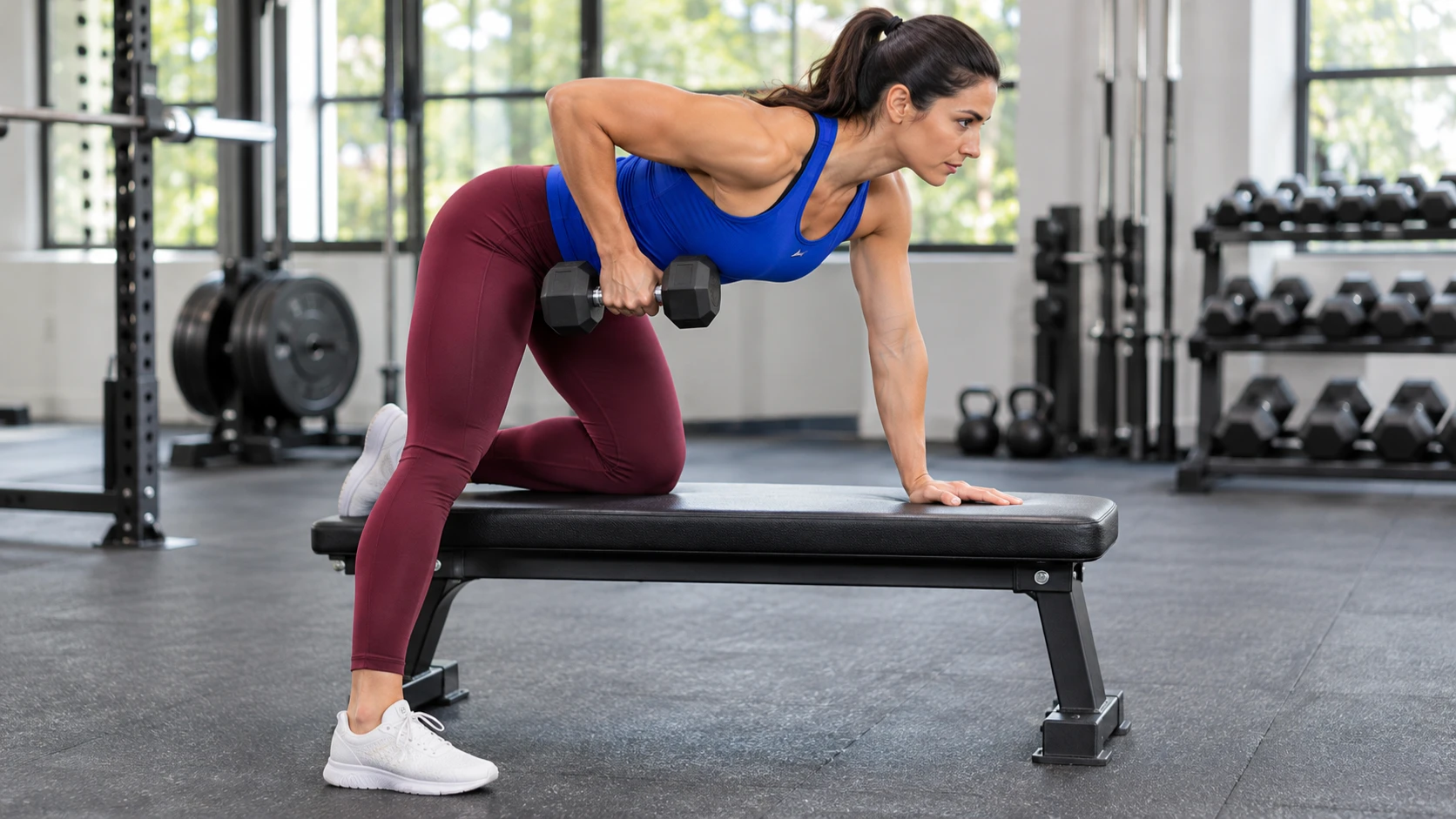
The challenge: can you complete 100 supported rows?
Your RB100 daily challenge for 5 March 2026 is 100 supported rows: 50 per arm, split into five rounds. This is a single-arm strength movement, not a rowing-machine test. Use a manageable load and make the final repetition look like the first. Rest as needed rather than rushing to finish.

How to do it: what are the exact steps?
- Check that your support cannot slide or tip. Clear the floor around your feet and choose a load you can lift comfortably without straining.
- Prepare with five unloaded practice rows per arm. These do not count towards your 100.
- Place your left hand on the support and hold the weight in your right hand. Set your feet apart, soften your knees and hinge forwards until your weighted arm can hang clear of the floor.
- Keep your back comfortably neutral and your chest facing the floor. Pull your right elbow towards your hip, keeping it close to your side. Stop before your shoulder rolls forwards or your torso turns.
- Lower under control to a comfortable straight-arm position. Allow roughly one second to pull and two seconds to lower. Complete 10 repetitions.
- Swap hands and repeat for 10 repetitions on the left. That is one round of 20. Rest for 20–40 seconds, or longer if needed.
- Complete five rounds for 100 repetitions. Alternate which arm starts each round and log your load, repetitions and any changes to the plan.
Scale it: how can you make the rows manageable?
Start with a partly filled water bottle or an empty hand if loading makes you twist. For shorter sets, complete 10 rounds of five repetitions per arm: the total remains 100. If the volume is too much today, stop at 40 or 60 controlled repetitions and record that honestly. To progress, keep the same light load and add a brief pause at the top rather than chasing heavier weights.
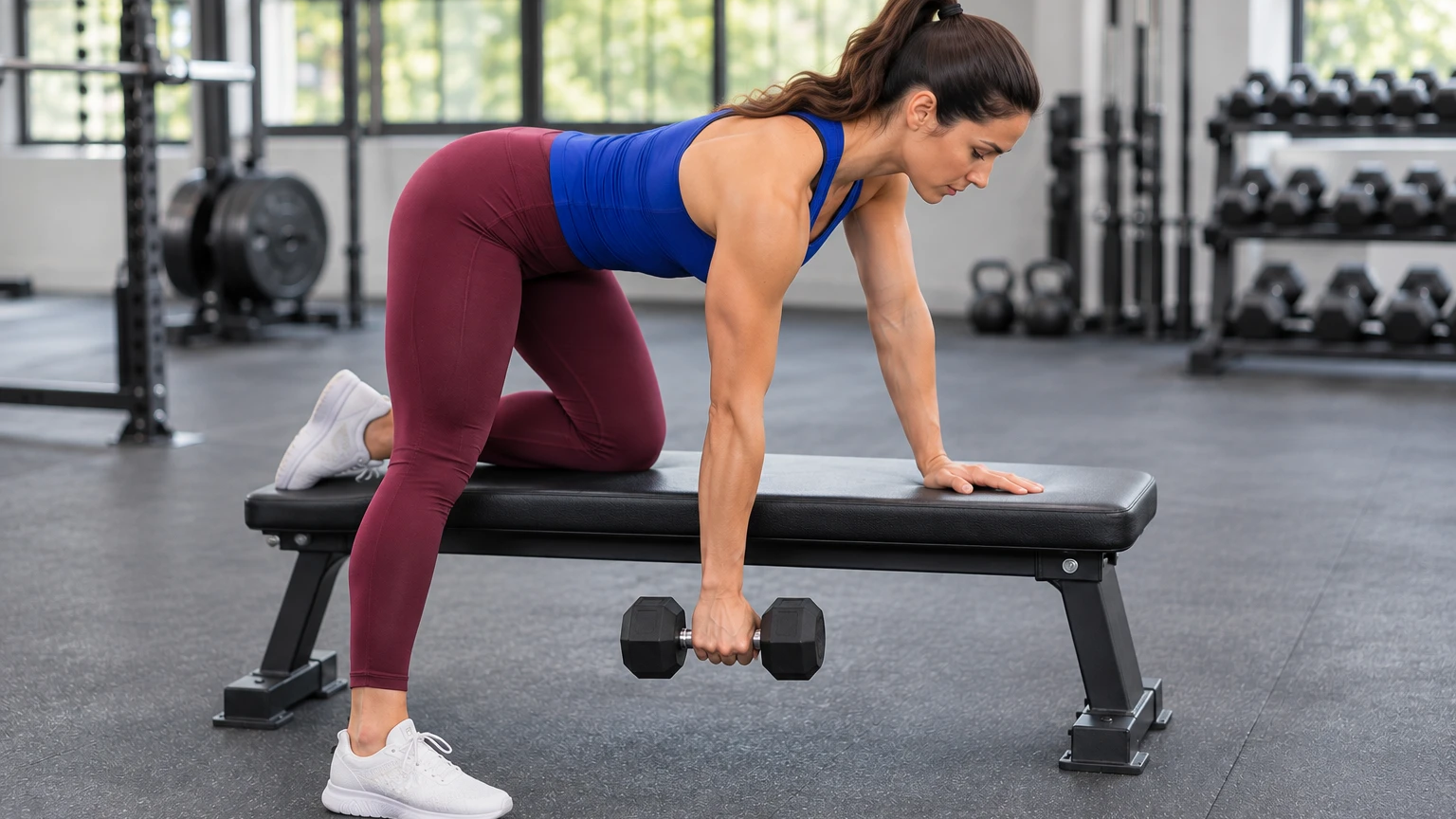
Coaching tips: how do you keep each repetition controlled?
Keep your neck in line with your back, your supporting hand planted and your hips square. Let your shoulder blade move naturally rather than pinning it back. Breathe out as you pull and in as you lower; avoid holding your breath. End the set if you need to jerk the weight or rotate to lift it. Stop the challenge for sharp pain, dizziness, numbness or a slipping support. If an existing medical condition affects exercise, seek clinician guidance before attempting this test.