
Challenge · 2026
100 Bird Dogs: Can You Keep Your Back Still?
For RB100’s daily challenge on 2 March 2026, complete 100 bird dogs, alternating opposite arms and legs for 50 reps per side. Work in small sets, keep your trunk steady and rest whenever your position slips. This equipment-free control test rewards smooth movement rather than speed, with shorter-reach options available.
By Richard Branson ·
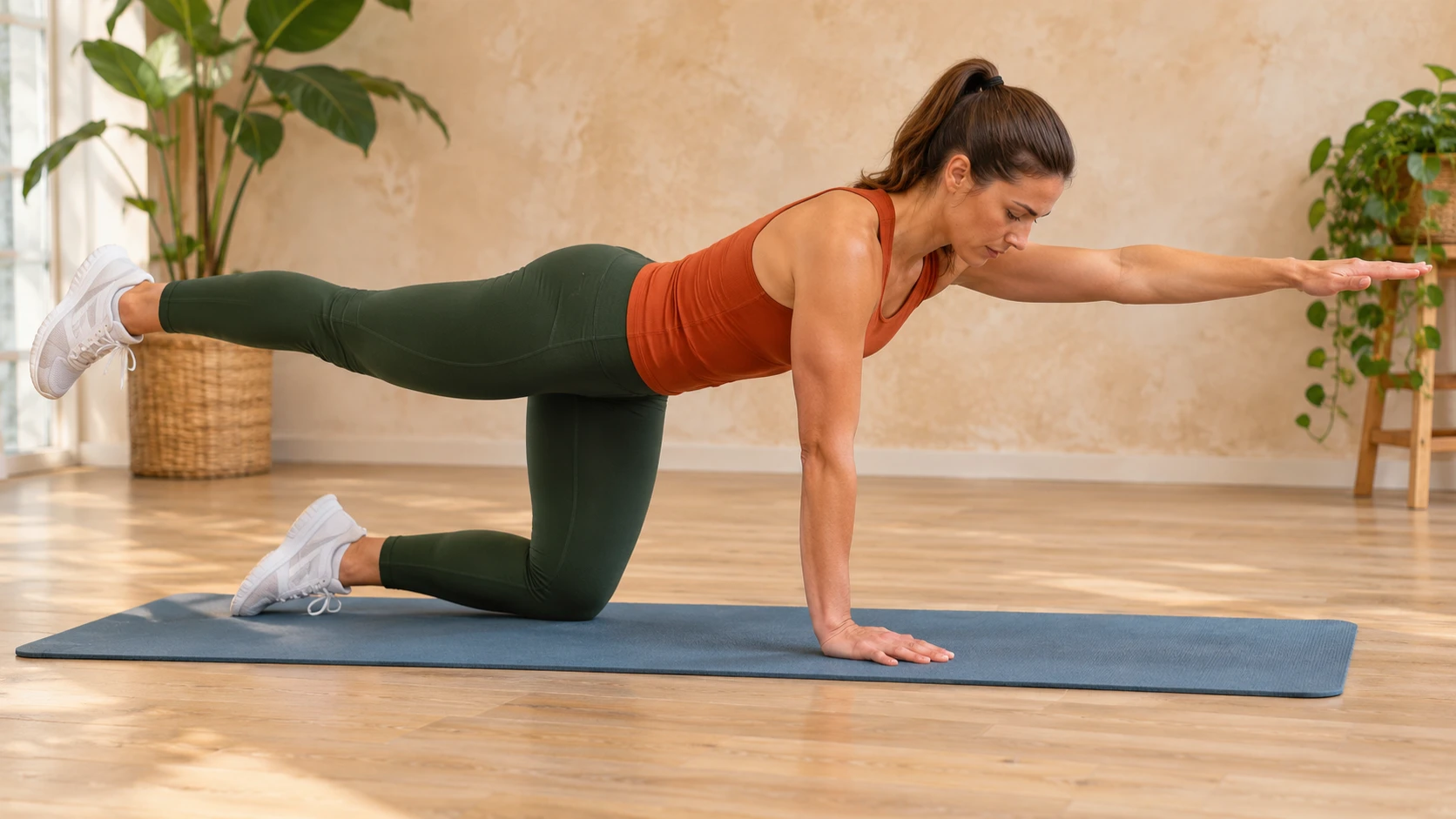
The challenge: can you complete 100 bird dogs?
Today’s RB100 challenge for 2 March 2026 is 100 alternating bird dogs: 10 sets of 10 reps, with five reps per side in each set. From hands and knees, reach one arm forwards and the opposite leg backwards without twisting your trunk. There is no race against the clock. The test is whether you can maintain the same controlled position from your opening set to your final rep.

How to do it: what counts as one rep?
- Prepare with four easy practice reps per side, using a short reach. These do not count towards your 100.
- Set your hands beneath your shoulders and knees beneath your hips. Spread your fingers, look towards the floor and gently brace your middle while breathing normally.
- Reach your right arm forwards and left leg backwards. Take roughly one second to extend, keeping your pelvis facing the floor.
- Pause for two seconds, then take roughly one second to return your hand and knee beneath you. That complete movement counts as one rep.
- Repeat with your left arm and right leg. Continue alternating until you reach 10 reps: five on each side.
- Rest for 15–30 seconds, or longer if needed to regain control. Repeat for 10 sets in total, giving you 100 reps and 50 per side.
- Record your completed reps and chosen variation. If you lose position, reset before continuing rather than rushing to recover the count.
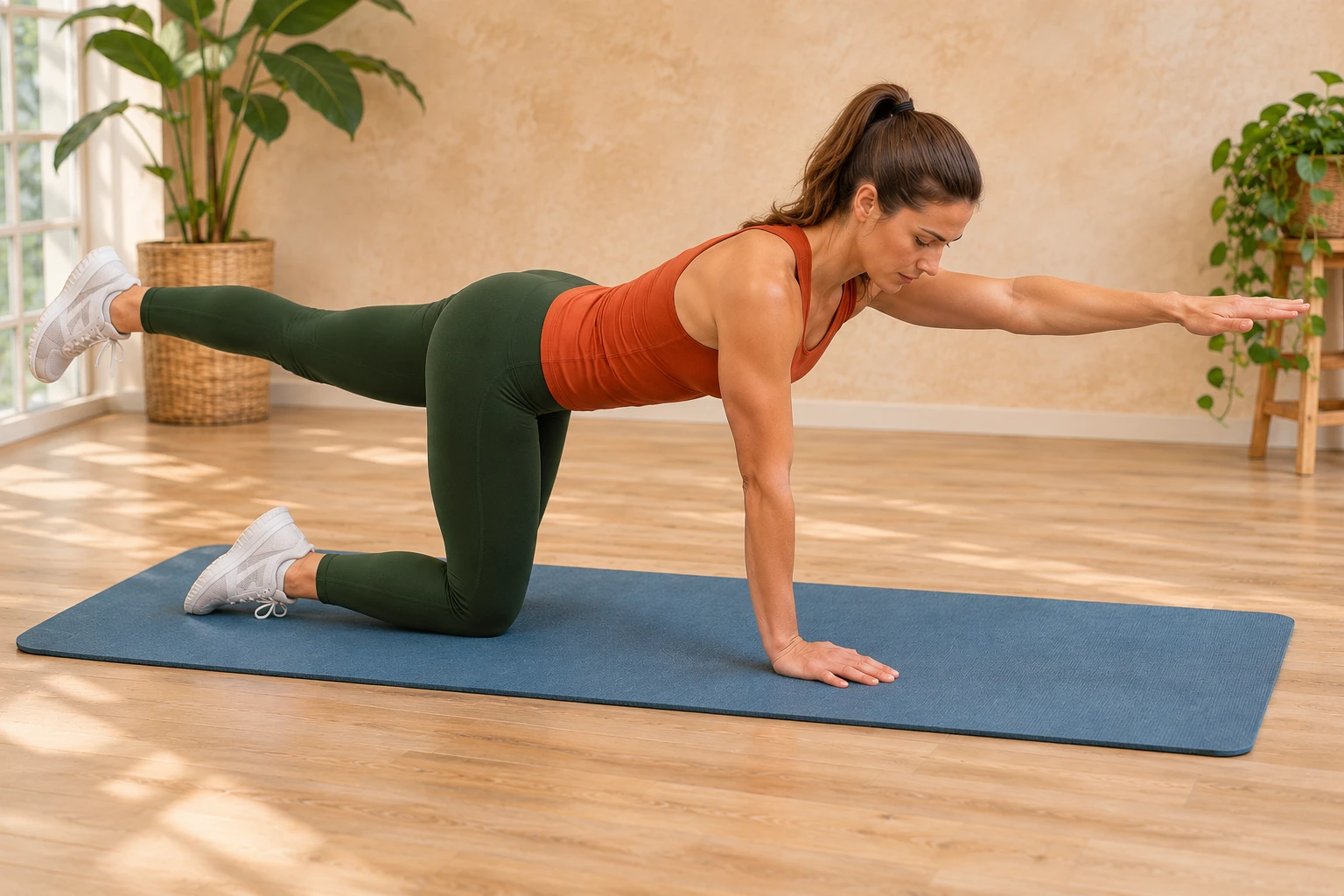
Scale it: which version suits you?
Start with a shorter arm and leg reach if the full movement makes you wobble. For more support, keep both hands down and slide one foot backwards along the floor before returning it beneath your hip; alternate legs for the same total. You can also use 20 sets of five reps, continuing the side alternation across sets. If 100 controlled reps is too much today, stop at a manageable total and record it honestly. To increase difficulty without adding load, extend the pause to three seconds.
Coaching tips: how do you stay steady?
Think long, not high: reach through your fingertips and heel rather than lifting either limb above your trunk. Keep your ribs and pelvis facing the floor, press through the supporting hand and avoid holding your breath. Rest when your back starts arching or your hips repeatedly rotate; end the challenge if a shorter reach does not restore control. Stop for sharp or increasing wrist, knee or back pain, tingling or dizziness. Padding can improve knee comfort, but do not push through pain. If a medical condition affects your ability to exercise, seek clinician review before attempting this challenge.