
Challenge · 2026
100-Second Palm Press: Can You Keep Breathing?
Today’s RB100 challenge is a 100-second palm press: accumulate five controlled 20-second holds with your palms pressing together at chest height. Use moderate pressure, breathe normally and rest between sets. No equipment is needed, and you can sit or stand. Finish with consistent effort rather than maximum force.
By Richard Branson ·
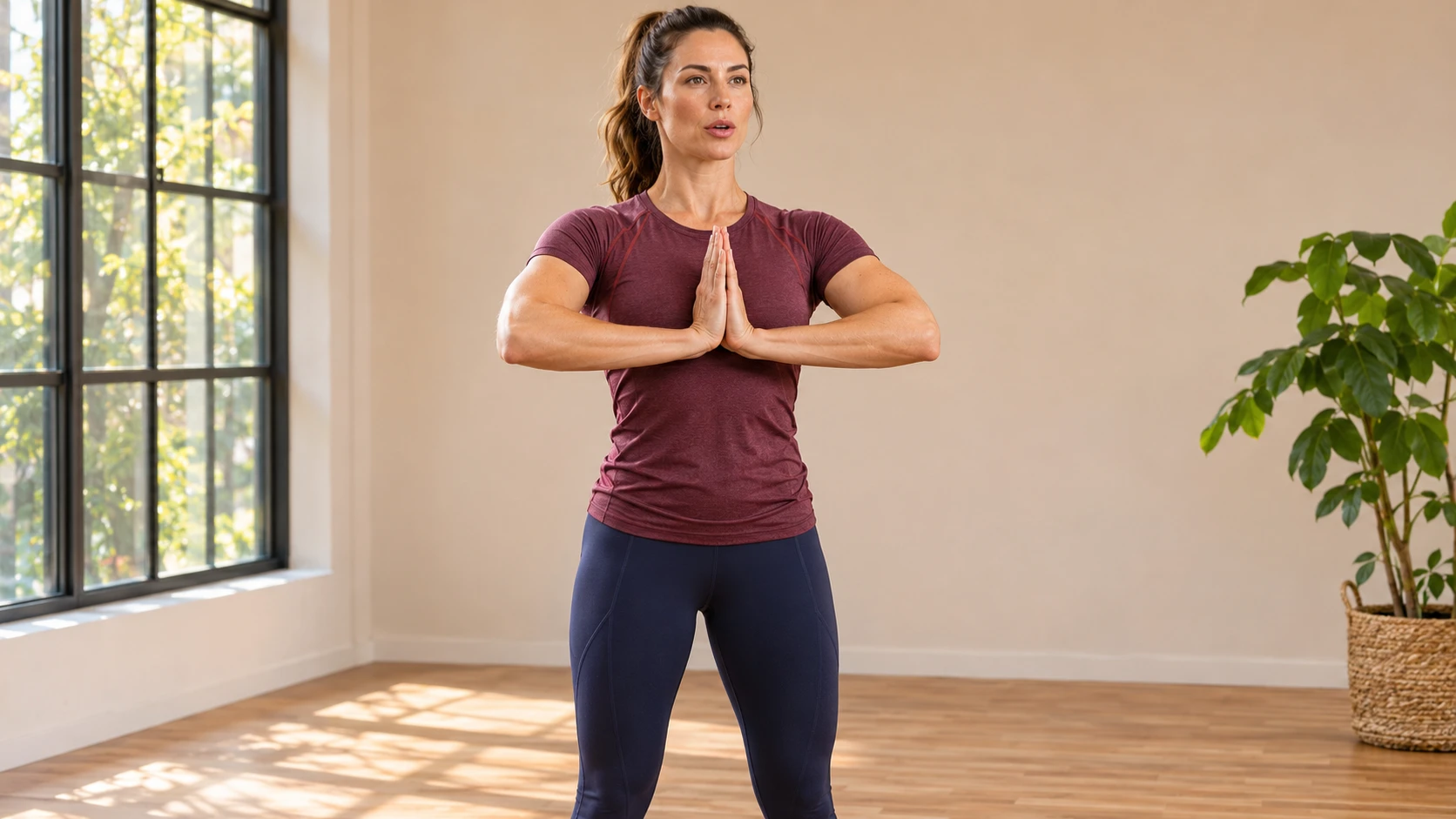
The challenge: can you complete the 100-second palm press?
For 20 April 2026, your RB100 target is five 20-second palm presses. Place your palms together at mid-chest height and press evenly without letting your hands move. Rest for 20 seconds between holds. Aim for repeatable, moderate effort: the final hold should look like the first. There is no extra credit for squeezing harder or skipping recovery.
How to do it: what are the exact steps?
- Stand with your feet comfortably apart, or sit on a stable chair with your feet supported. Let your arms hang and gently move your shoulders before starting.
- Bring your palms together at mid-chest height, fingers pointing upwards. Keep your elbows below shoulder height and your wrists in a comfortable position.
- Try a gentle five-second practice press, then release. This preparation does not count towards the target.
- Press both palms together evenly for 20 seconds. Keep your hands centred, shoulders relaxed and breathing continuous.
- Release the pressure fully and rest for 20 seconds. Lower your arms if that feels more comfortable.
- Repeat until you have completed five working holds: 5 × 20 seconds = 100 seconds. Pause the working timer whenever you release the pressure.
- Record your completed seconds and hold format. Finish by relaxing your hands and arms.
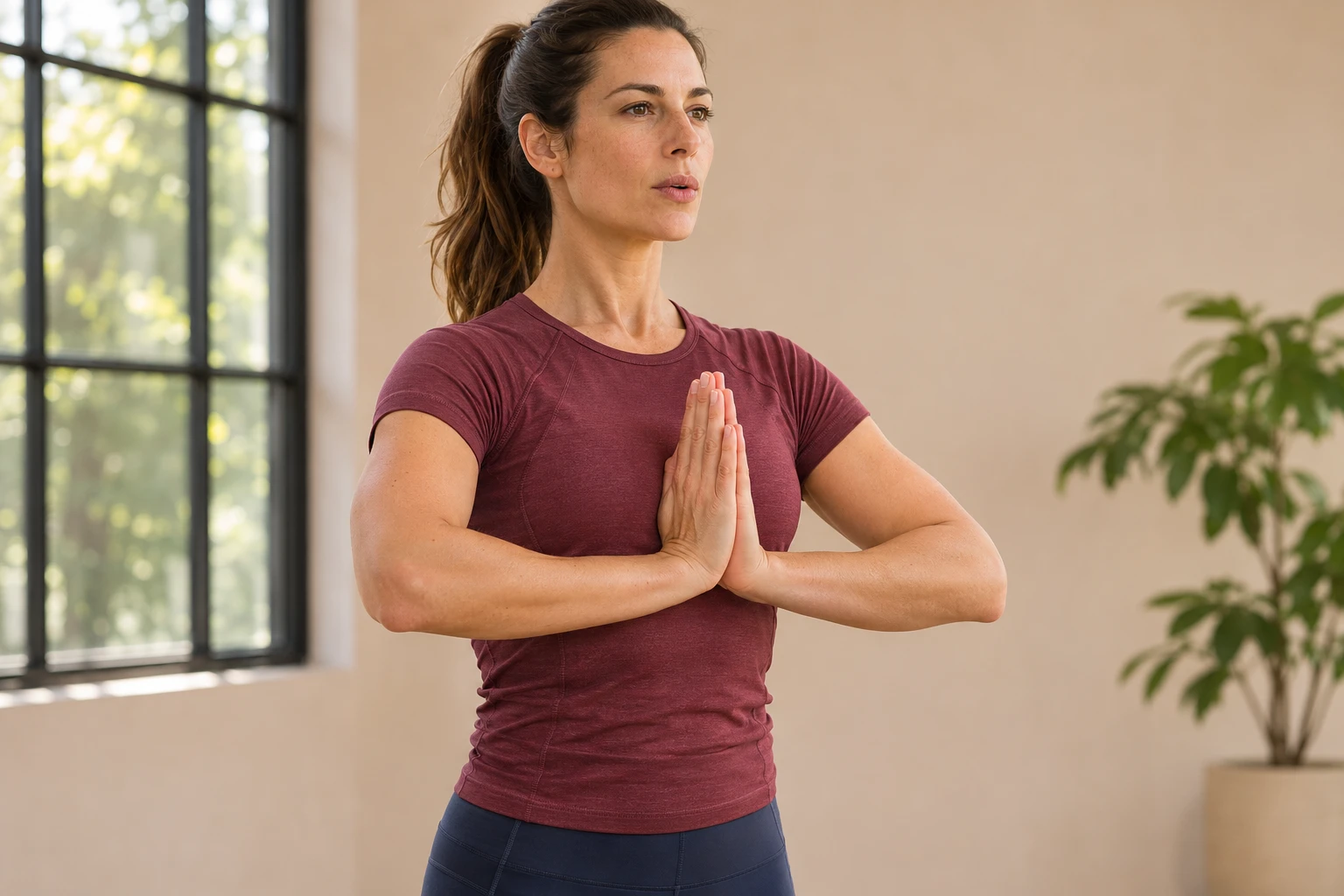
Scale it: how can you make the holds manageable?
Start by reducing palm pressure, not by forcing your position. If 20 seconds feels too long, complete ten 10-second holds with 10–20 seconds of rest between them. Sit down if standing distracts from your upper-body control. If the standard version feels easy, make the pressure more consistent rather than turning it into an all-out squeeze. Only accumulate seconds while you can breathe normally and keep your shoulders relaxed.
Coaching tips: what should stay steady, and when should you stop?
Keep your ribs comfortably over your pelvis rather than leaning backwards. Avoid clenching your jaw, shrugging or driving one hand across your body. Your palms provide the resistance; your fingers do not need to grip. End the hold if you start holding your breath or cannot maintain position. Stop the challenge for wrist, elbow or shoulder pain, tingling, dizziness, chest discomfort or unusual breathlessness. Do not force your wrists into the palm-to-palm position. If you have a medical condition or exercise restrictions, these instructions are educational only; ask your clinician to review suitability before attempting sustained isometric holds.