
Challenge · 2026
100-Second Hamstring Stretch: Can You Ease In?
Today's RB100 challenge is a 100-second hamstring stretch, split into four gentle 25-second seated holds. Complete two holds per leg using a stable chair, keeping the sensation mild rather than chasing depth. It is a short mobility challenge for home or the gym, with no speed target.
By Richard Branson ·
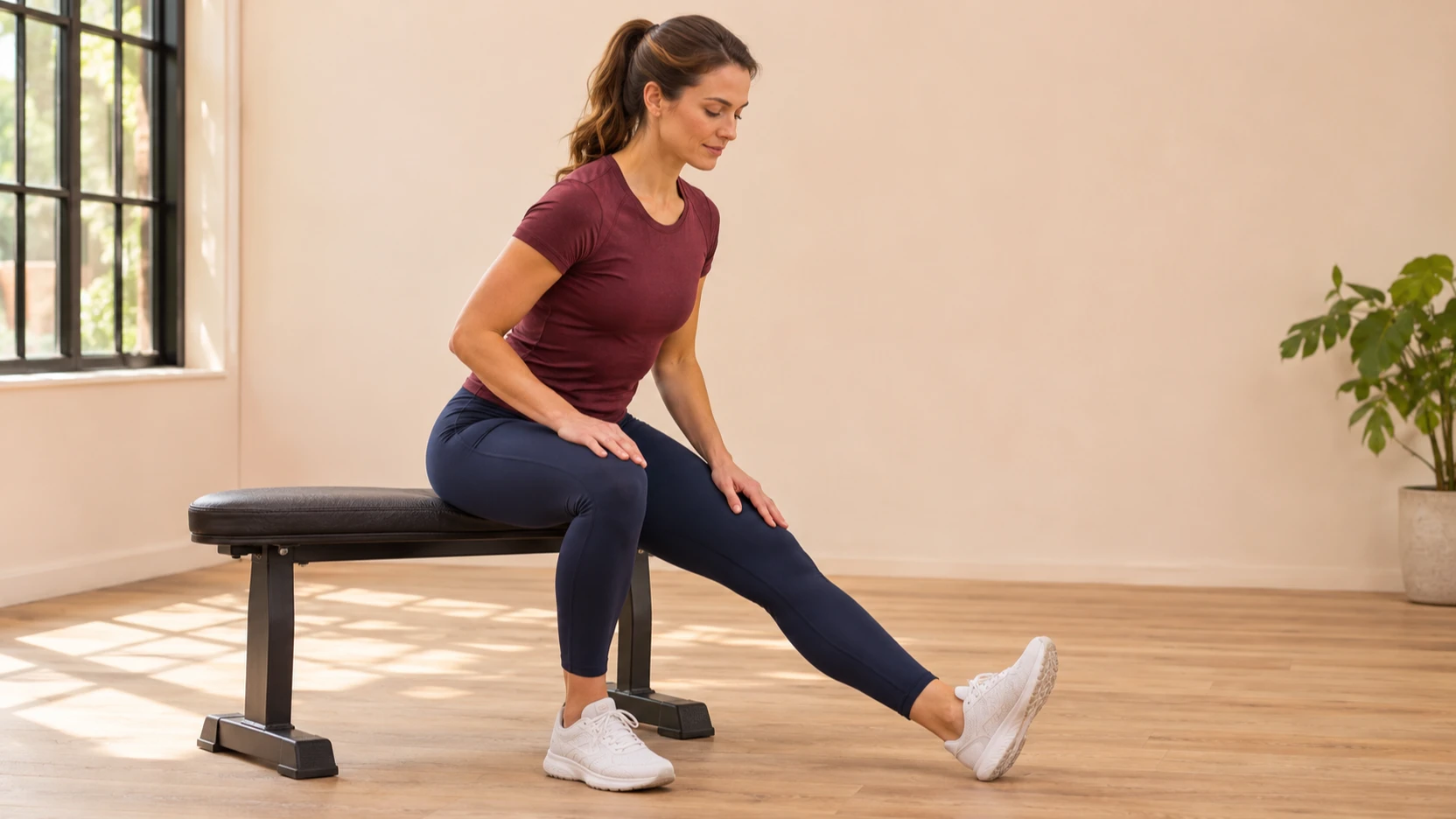
The challenge: can you complete a controlled 100-second hamstring stretch?
For 23 April 2026, your RB100 target is four seated holds of 25 seconds, alternating legs. This is a mobility task, not a race or a test of how far you can reach. Aim for a mild stretch through the back of the working thigh while keeping your breathing relaxed. Each leg gets 50 seconds in total; transitions do not count.

How to do it: what are the exact steps?
- Walk comfortably for 60–90 seconds, then position your chair on a surface where it cannot slide.
- Sit towards the front of the seat, with both sitting bones supported. Keep your left foot flat beneath or slightly ahead of your knee.
- Place your right heel a little further forwards, with your toes pointing upwards and your right knee slightly bent.
- Lengthen your back and tip forwards gently from your hips. Rest your hands on the supporting thigh, without pushing down on either knee.
- When you feel a mild pull through the back of your right thigh, start the timer. Hold for 25 seconds while breathing normally.
- Sit upright, switch legs and repeat for 25 seconds on the left. Pause timing while changing position.
- Repeat the right and left holds once more: 25 + 25 + 25 + 25 = 100 seconds. Finish by sitting upright and bringing both feet beneath you.
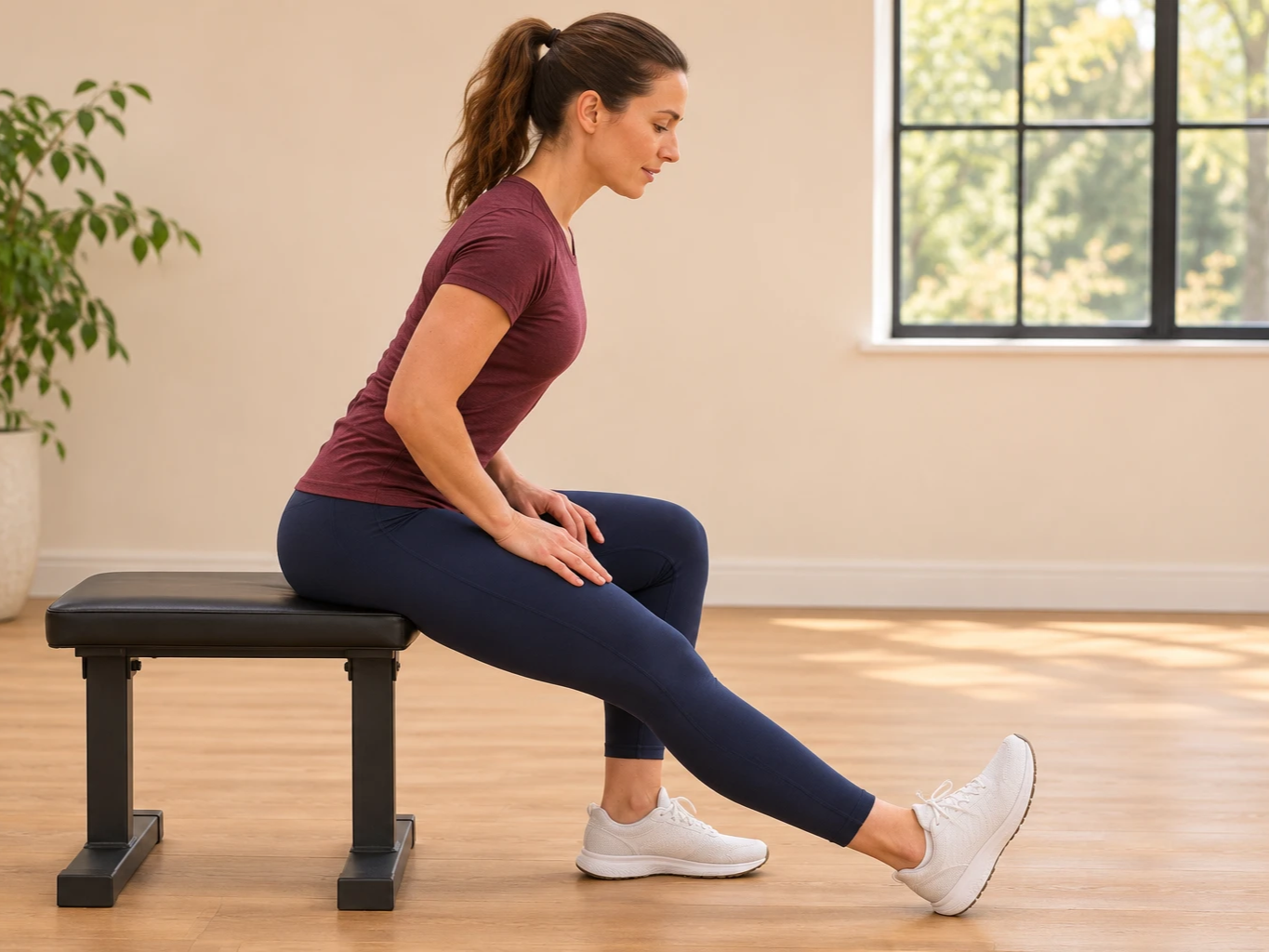
Scale it: how can you make the position easier?
Bend the working knee more, bring the heel closer or reduce your forwards lean. If 25 seconds feels too long, use five 10-second holds per leg, resting between them. You can also finish below 100 seconds and record that total. If the position feels easy, hinge slightly further only while the sensation stays mild. Do not add weight, pull on your toes or seek a maximum stretch.
Coaching tips: what should you feel, and when should you stop?
Think chest forwards rather than head towards knee. Keep your shoulders relaxed and avoid rounding your back to manufacture extra reach. A mild muscular pull is enough; more intensity does not earn a better score. Stop the hold for sharp pain, tingling, numbness, pain behind the knee or discomfort in your back. Do not push through those sensations to finish the target. If an injury or medical condition affects this movement, have a clinician review its suitability before attempting it.