
Challenge · 2026
100-Second Front Rack Hold: Can You Stay Tall?
Can you hold a front rack position without leaning back? Today’s challenge is to accumulate 100 seconds holding two light weights at shoulder height. Split the work into manageable sets, keep breathing and prioritise posture over load. Use dumbbells or securely closed water bottles at home.
By Richard Branson ·

The challenge: can you complete a 100-second front rack hold?
RB100 daily challenge — 19 March 2026. Accumulate 100 seconds with two light weights held at the fronts of your shoulders. Your default format is five 20-second holds. This is a stationary control test, not a carry, press or race. Choose a load that lets you finish each set without leaning backwards, clenching your jaw or holding your breath.

How to do it: what are the exact steps?
- Clear a stable, level space and place your timer where you can see it without turning your head. Spend about a minute marching gently and moving your arms through comfortable, unloaded movements.
- Pick up two light weights and bring them carefully to shoulder height, one at a time if needed. If getting them into position is difficult, use lighter weights.
- Stand with feet roughly hip-width apart and knees softly unlocked. Keep palms facing inward, wrists straight and elbows beneath or slightly forward of your hands. Let dumbbells rest lightly against the fronts of your shoulders.
- Start the timer. Hold for 20 seconds with your ribs stacked over your pelvis, eyes forward and breathing continuous. Avoid sinking your elbows into your abdomen for support.
- Lower the weights under control and rest for 30 seconds. Repeat until you have completed five holds: 5 × 20 seconds = 100 seconds.
- If posture slips before 20 seconds, end that set and record only the controlled seconds. After resting, use shorter holds to complete the remaining total. Do not chase the target through discomfort.
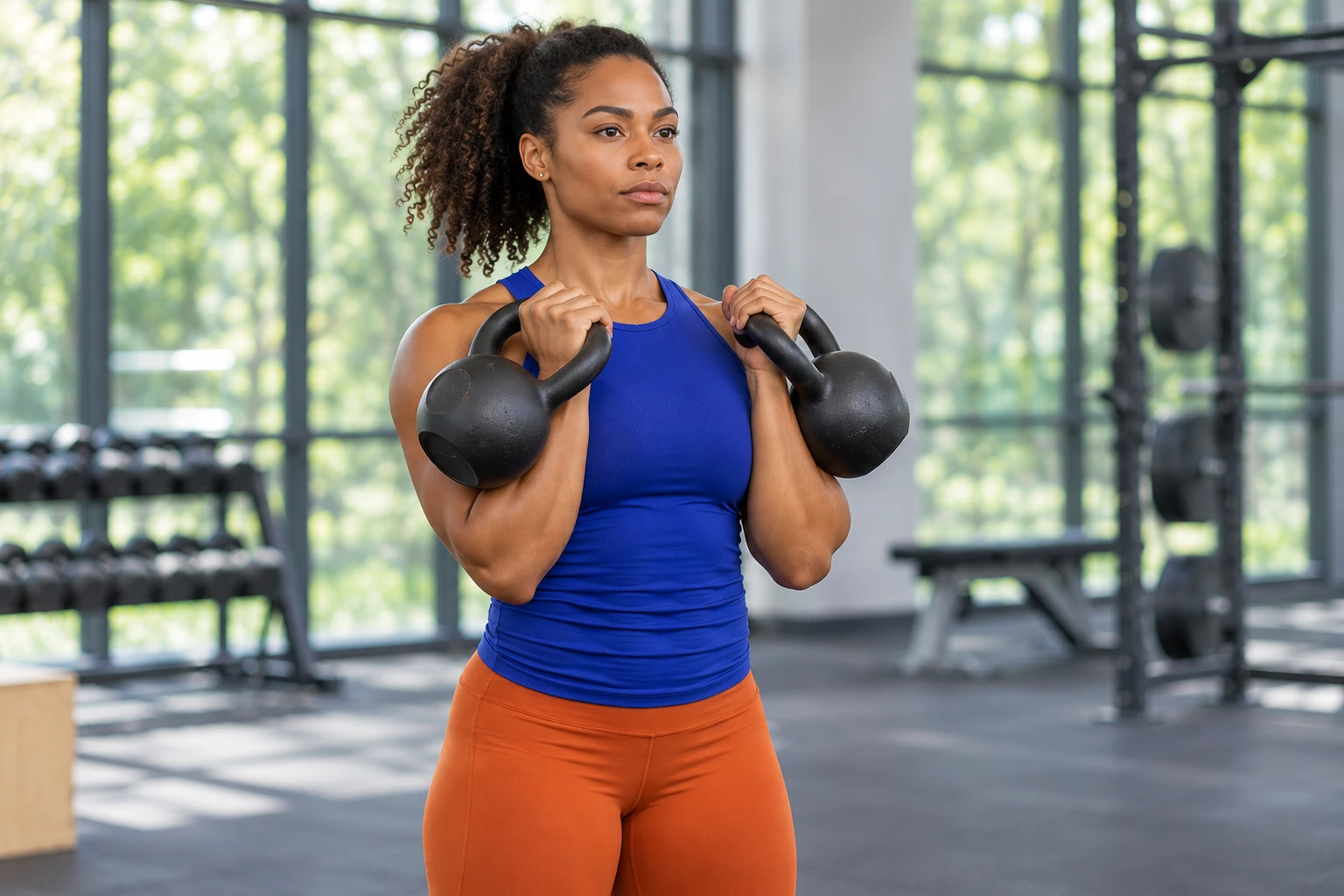
Scale it: how can you adjust the difficulty?
Make it easier with lighter bottles or ten 10-second holds, resting 20–30 seconds between them. You can also sit on a sturdy chair with both feet flat and your torso upright if standing balance limits you. Practise unloaded if necessary. For a harder version, keep the same light load and try four 25-second holds. Change only one variable at a time; extra weight is unnecessary for completing this challenge.
Coaching tips: what should you feel, and when should you stop?
Aim for steady effort through your arms, shoulders and trunk. Keep your neck relaxed rather than deliberately shrugging. End the set if your wrists fold backwards, your lower back arches noticeably or the weights start slipping. Stop the challenge for sharp or increasing pain, numbness, dizziness or unusual breathlessness, and lower the weights safely. If a medical condition or current injury affects loaded holds, seek clinician guidance before attempting this test.