
Challenge · 2026
100 Heel-to-Toe Steps: Can You Stay on Line?
Today's RB100 challenge is 100 heel-to-toe steps, accumulated in short lengths on a clear, level floor. Place each heel just ahead of the opposite toes, stay upright and count every forward placement. Use light support or widen your stance if needed: controlled steps matter more than speed.
By Richard Branson ·
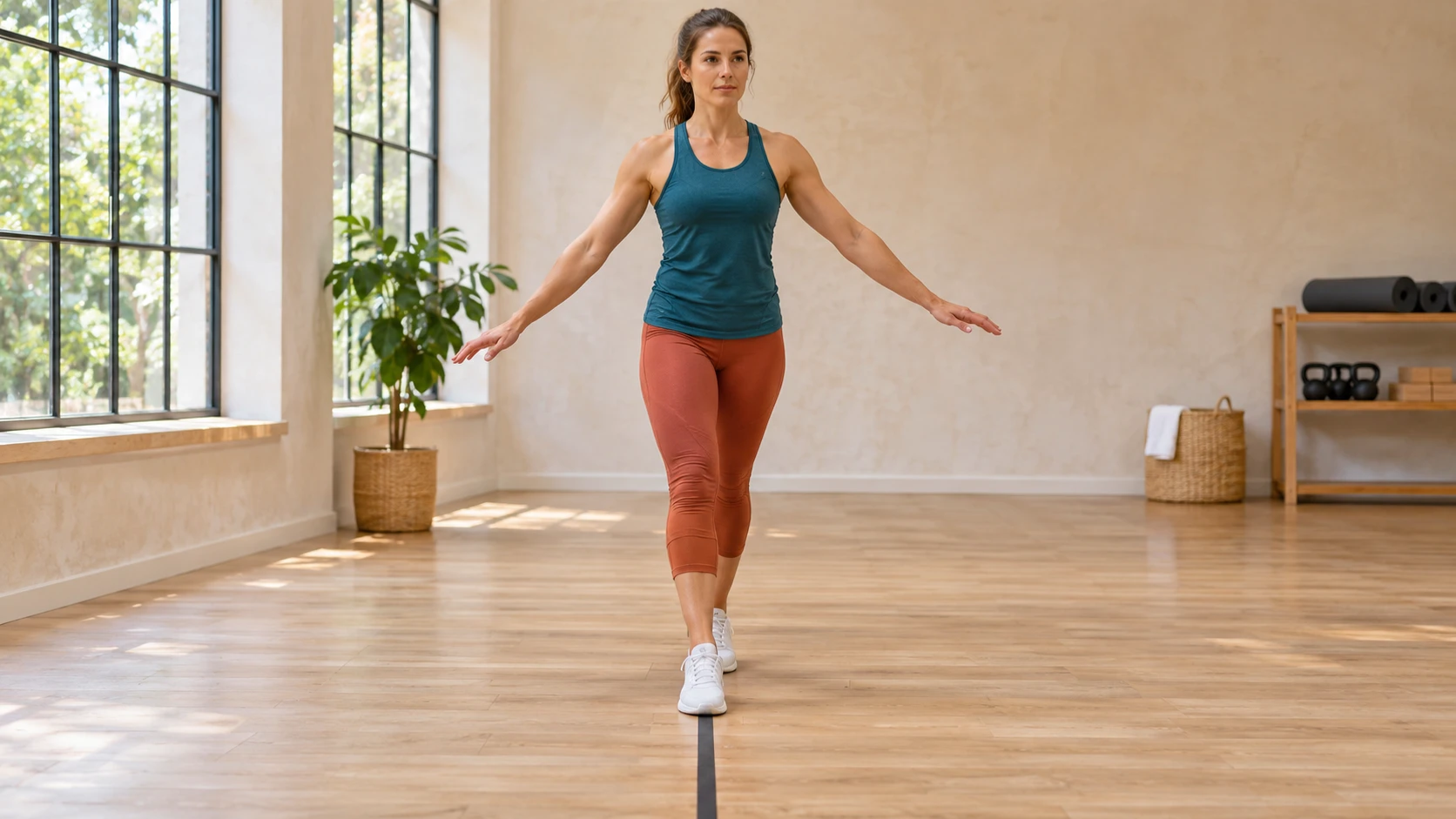
The challenge: can you complete 100 heel-to-toe steps?
For 16 March 2026, RB100 is testing precision rather than pace. Accumulate 100 forward steps with your feet following one narrow line, placing each heel just ahead of the opposite toes without overlapping them. Work in five sets of 20, resting between sets as needed. You can turn around within a set when you reach the end of your clear space. The aim is steady weight transfer, not an unbroken effort.

How to do it: what are the exact steps?
- Clear a short walking lane of rugs, cables and other obstacles. Stay away from stairs and use footwear that grips the floor.
- Walk 10 ordinary steps to prepare, then practise a few narrow steps beside a wall. These preparation steps do not count towards 100.
- Stand tall, soften your knees and look towards a fixed point ahead. Briefly check your foot position when needed.
- Advance one foot and place its heel just ahead of the other foot's toes. Settle your weight before moving again. That is one step.
- Alternate feet and count each controlled forward placement. If you step sideways to recover balance, pause and reset without counting that recovery step.
- At the end of your lane, stop and turn using ordinary, comfortably spaced steps. Do not count the turn or attempt a tight pivot.
- Accumulate 20 counted steps, then rest until steady. Repeat for five sets to reach 100, noting any scaling used.

Scale it: how can you make the steps manageable?
Make the task easier by leaving a small sideways gap between your feet instead of placing them directly in line. Use light fingertip contact against a wall or secure worktop, and split the total into 10 sets of 10 if concentration fades. Count these as scaled steps and record your chosen setup. To increase difficulty, gradually narrow the gap or reduce fingertip support only when you feel stable. Keep your eyes open; there is no need to add weights or speed.
Coaching tips: how do you keep every step controlled?
Keep your shoulders relaxed and let your arms help you balance. Place your foot quietly rather than reaching far forwards or gripping the floor with your toes. Breathe normally and pause whenever you need to regain control. Stop the set if you develop pain, feel dizzy or repeatedly stumble or grab for support. Do not push on towards 100 while unsteady. If you have a medical condition affecting balance or a history of unexplained falls, seek clinician guidance before attempting this narrow-base walking test.