
Challenge · 2026
100-Second Foot Arch Hold: Can You Keep Control?
Today’s RB100 challenge is a 100-second foot arch hold, completed as ten controlled 10-second efforts. Sit barefoot with both feet planted, gently shorten each foot without curling your toes, then relax between holds. Count both feet together: the aim is steady arch control, not maximum tension or speed.
By Richard Branson ·
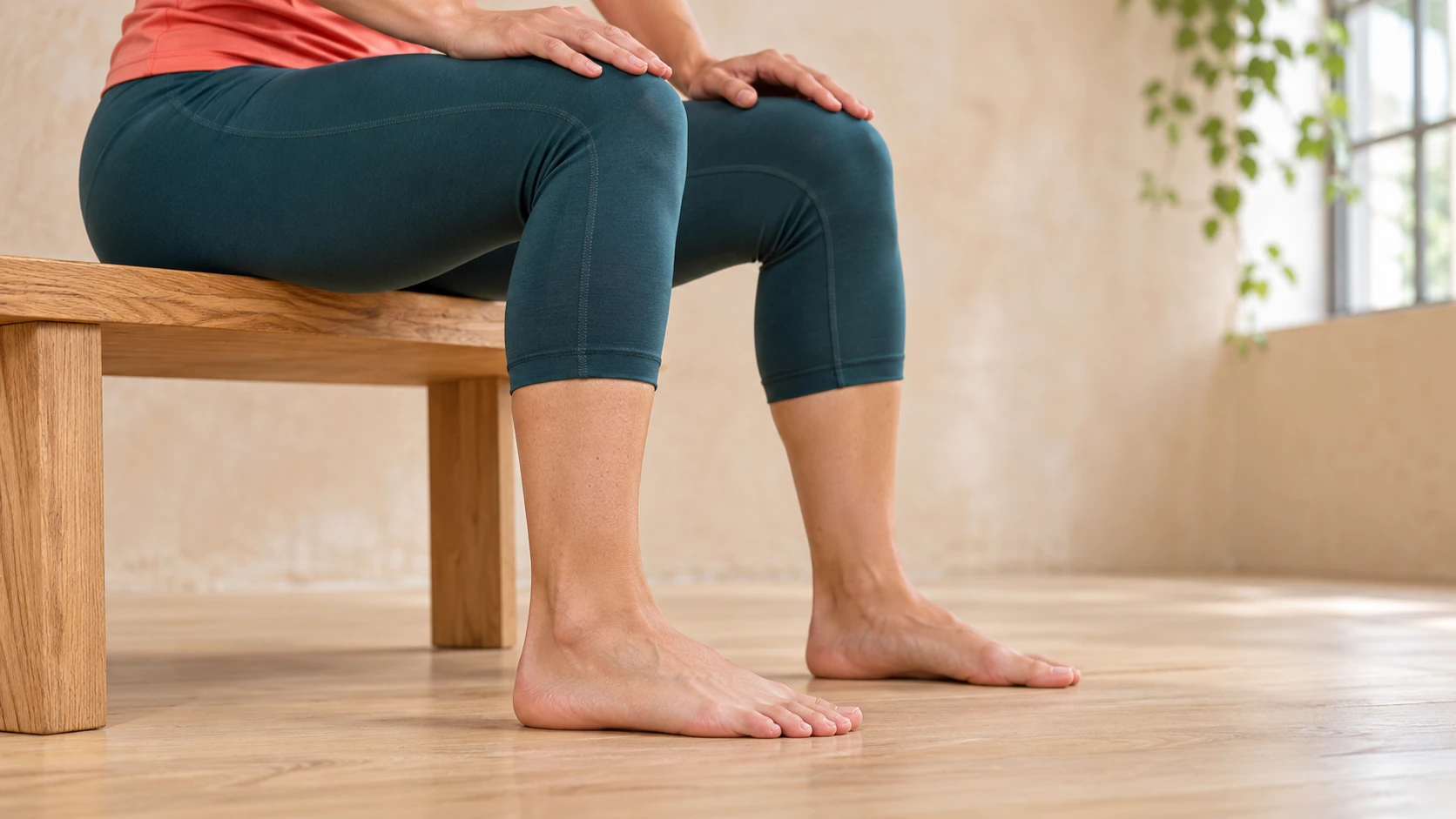
The challenge: can you accumulate a 100-second foot arch hold?
For 13 April 2026, RB100’s daily challenge focuses on a small, deliberate movement: gently lifting your foot arches while keeping your toes relaxed. Complete ten 10-second holds with both feet working together. Each simultaneous hold counts as 10 seconds, not 20. This is a control test, so a subtle lift with clean contact beats a bigger movement made by clawing your toes.

How to do it: what are the exact steps?
- Sit on a stable chair, barefoot, with knees roughly above your ankles and feet hip-width apart on a firm, non-slip floor.
- Find three contact points on each foot: the heel, the base of the big toe and the base of the little toe. Keep all three grounded.
- Practise two gentle contractions. Draw the ball of each foot slightly towards its heel to lift the arch, without sliding the foot or curling the toes.
- Start your timer once you can maintain that position. Hold gently for 10 seconds while breathing normally.
- Relax fully for 5–10 seconds, or longer if needed. Reset your contact points before the next hold.
- Complete 10 holds to reach 100 seconds. If your toes claw or your foot rolls outwards, release and count only the controlled seconds before that happened.
- Log your completed seconds and whether you used the seated, alternating or supported standing version.
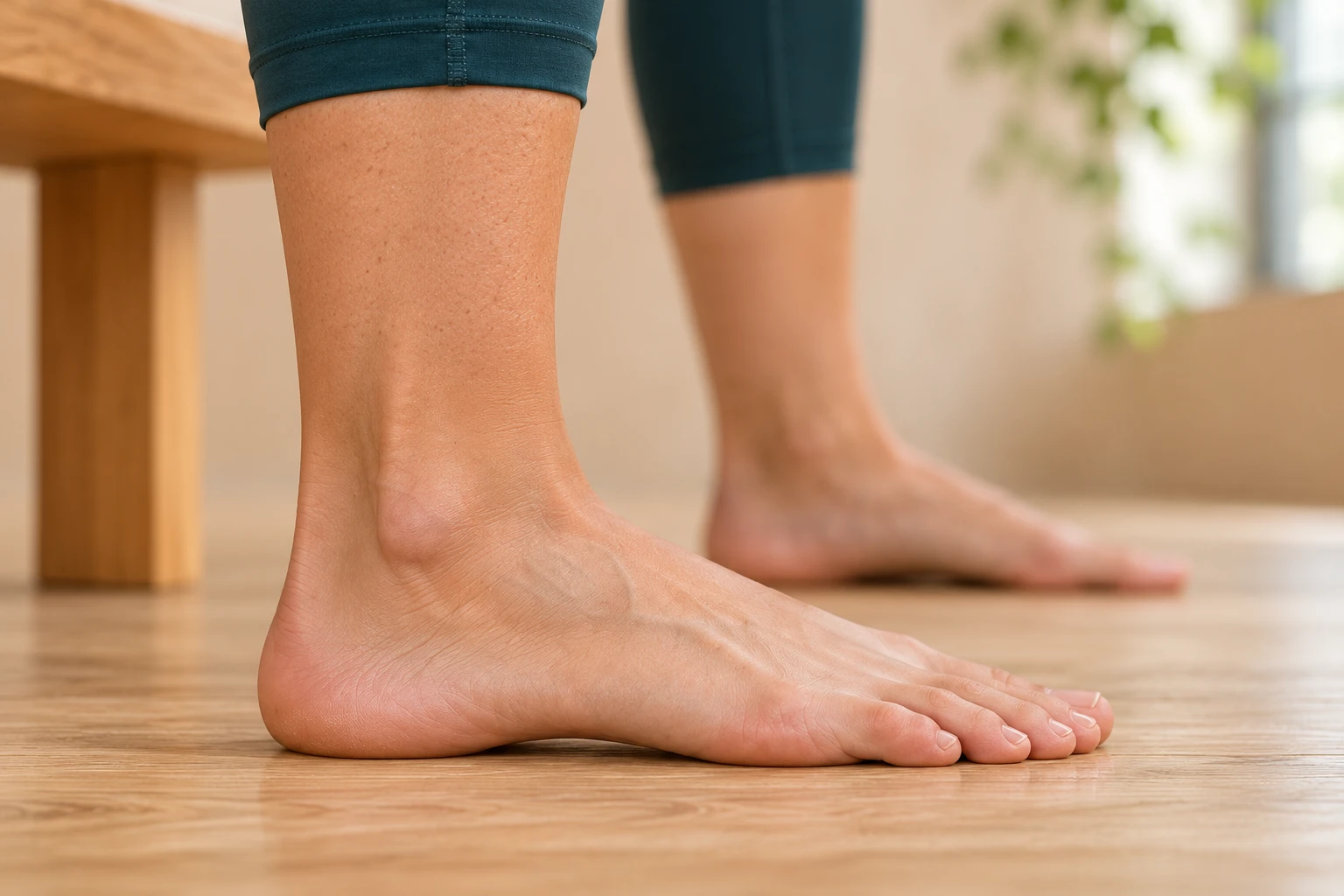
Scale it: how can you adjust the difficulty?
Make it easier with twenty 5-second holds and longer rests. If coordinating both feet is difficult, alternate feet for 50 seconds per side. A smaller arch lift is fine; do not force the shape. For a harder version, stand with weight shared evenly between both feet and fingertips on a fixed support. Keep your knees soft and use the same ten 10-second holds. Progress through control, not added load.
Coaching tips: what should you feel, and when should you stop?
Think ‘shorten the foot’, not ‘scrunch the toes’. Keep your heel down, toes long and pressure through both sides of the forefoot. Avoid tipping your ankles outwards to manufacture an arch lift. Gentle muscular effort is enough. Release immediately if cramping starts; resume only when comfortable and with less tension. End the challenge if cramping returns, or if you notice pain, tingling or numbness. If an existing foot condition affects your movement, seek clinician guidance before attempting the test.