
Challenge · 2026
100 Seated Marches: Can You Stay Tall?
Today's RB100 challenge for 26 March 2026 is 100 seated marches: lift and lower one foot at a time while keeping your torso steady. Complete 50 lifts per side in manageable sets. You need only a sturdy chair, making this a controlled, low-impact test for home or the gym.
By Richard Branson · · Updated
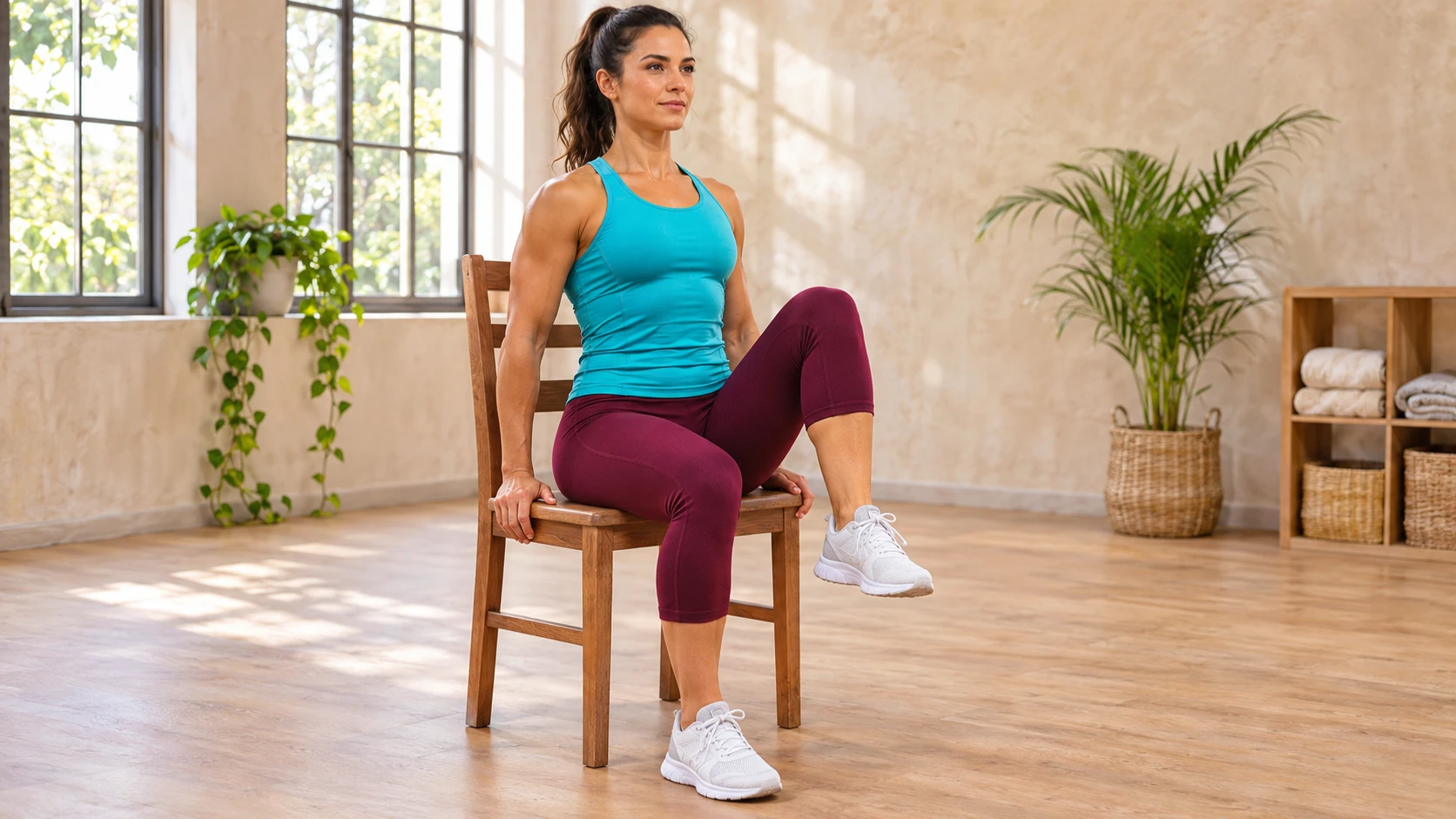
The challenge: can you complete 100 seated marches without rocking?
For 26 March 2026, your target is 100 alternating seated marches. Each lift and return of one foot counts as one rep. Keep the movement small enough that your shoulders stay above your hips rather than drifting backwards. The aim is controlled hip movement, not high knees or speed. Start with 10 sets of 10 reps, giving each leg five lifts per set.
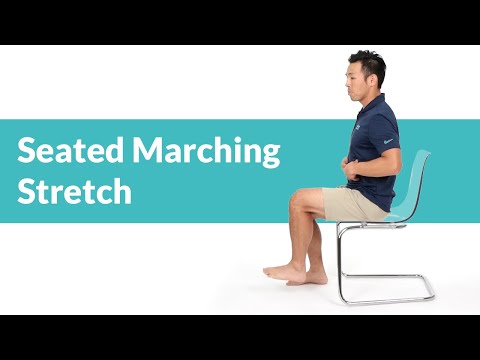
How to do it: what are the exact steps?
- Check that your chair cannot slide or tip. Sit securely with both feet flat, roughly hip-width apart, and your knees bent comfortably.
- Place your hands lightly on the sides of the seat. Sit tall without forcing an arch through your lower back.
- Prepare with six gentle alternating lifts. These practice reps do not count towards the challenge.
- Lift your right foot just clear of the floor, keeping the knee bent. Lower it quietly to complete rep one.
- Repeat with the left foot for rep two. Keep alternating, taking roughly one second to lift and one second to lower.
- Stop at 10 reps and rest for 15–30 seconds, or longer if needed to regain comfortable control.
- Repeat for 10 working sets. Record 100 total reps, your set sizes and any support used.
Scale it: how can you adjust the movement?
Make it easier by lifting only a little, using the backrest for support and taking shorter sets. Keep your hands on the seat if that helps you stay steady. If lifting the whole foot is not manageable, keep the toes touching and lift one heel at a time; log this as the supported version. Make it harder by adding a one-second pause with each foot lifted, without increasing knee height. If 100 controlled reps are too much today, choose a smaller total and record it honestly.
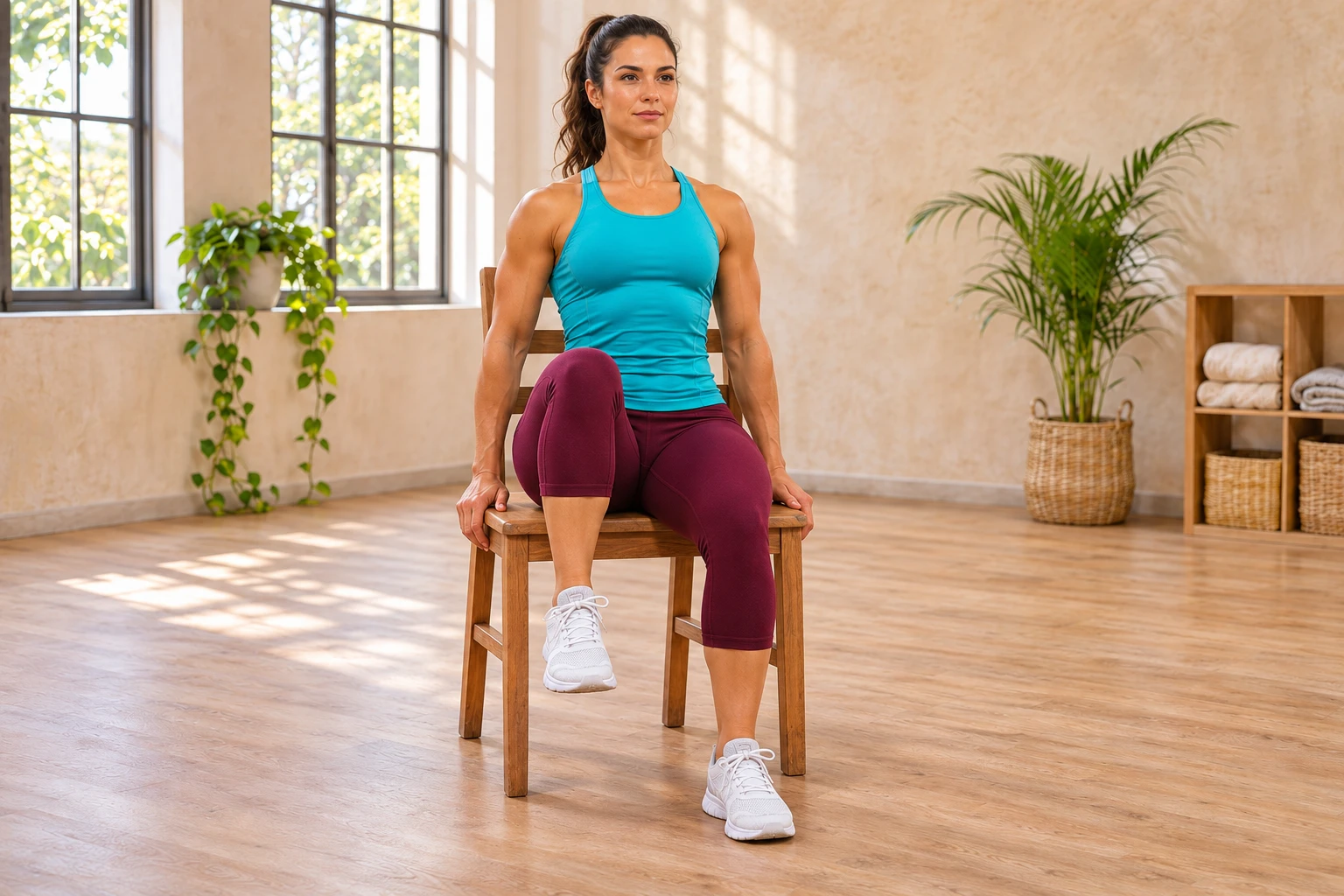
Coaching tips: what should you watch for?
Breathe normally and keep your jaw and shoulders relaxed. Think of lifting the thigh rather than swinging the foot. Avoid pushing hard through the opposite leg or rocking sideways to create clearance. If your posture changes, end the set and rest before continuing. Stop the challenge for sharp or increasing hip, knee or back pain, dizziness, or a chair that shifts beneath you. Do not force your knee higher to chase a rep. If an existing condition or recent surgery affects seated exercise, ask your clinician whether this movement is appropriate before attempting it.