
Challenge · 2026
100 Clamshells: Can You Keep Your Hips Still?
Today's challenge is 100 clamshells: 50 controlled repetitions on each side, split into manageable sets. Lie on your side with bent knees, keep your feet together and open your top knee without rolling backwards. Use a small, comfortable range and rest whenever your position starts to slip.
By Richard Branson · · Updated
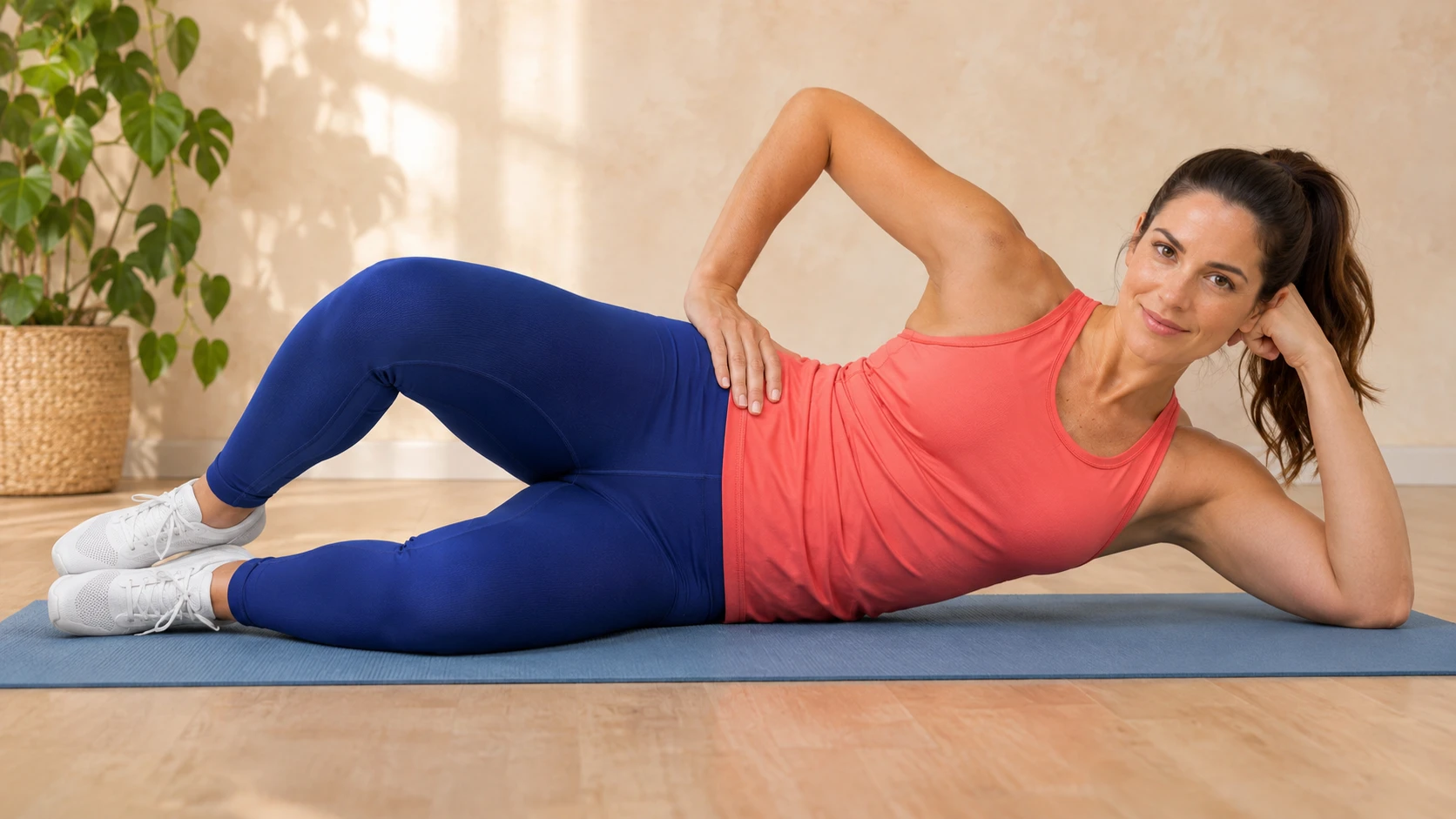
The challenge: can you complete 100 clamshells?
For 30 March 2026, RB100's daily challenge is five rounds of 10 clamshells per side: 100 repetitions altogether. This is a floor-based control test, not a race. Unlike a straight-leg side raise, the clamshell uses a bent knee and hip rotation, with your feet staying together throughout. Your target is a repeatable movement without rocking your pelvis to lift the knee higher.

How to do it: what are the exact steps?
- Prepare with three gentle practice repetitions on each side. These do not count towards your challenge total.
- Lie on one side with your head supported, shoulders and hips stacked, and knees comfortably bent. Keep your heels roughly in line with your bottom.
- Rest your top hand on your pelvis to check that it stays still. Keep your feet touching and gently brace your middle without holding your breath.
- Lift your top knee only as far as you can without rolling backwards. Keep your lower leg resting on the floor.
- Lower the knee smoothly to the starting position. Take roughly one second to open and two seconds to close. This is one repetition.
- Complete 10 repetitions, then change sides for another 10. Rest for 20–30 seconds after both sides, or longer if needed.
- Repeat for five rounds to reach 50 repetitions per side. Log your completed total and any changes to the plan.
Scale it: how can you match your ability?
Make it easier by opening the knee less and using sets of five per side. You can accumulate 100 in smaller sets, but a reduced total is also valid: try 40 or 60, divided equally between sides. If bodyweight feels comfortable throughout, add a light loop band just above the knees. Keep the same controlled range rather than chasing band tension. If lying on your side is uncomfortable despite padding, skip this test rather than forcing the position.
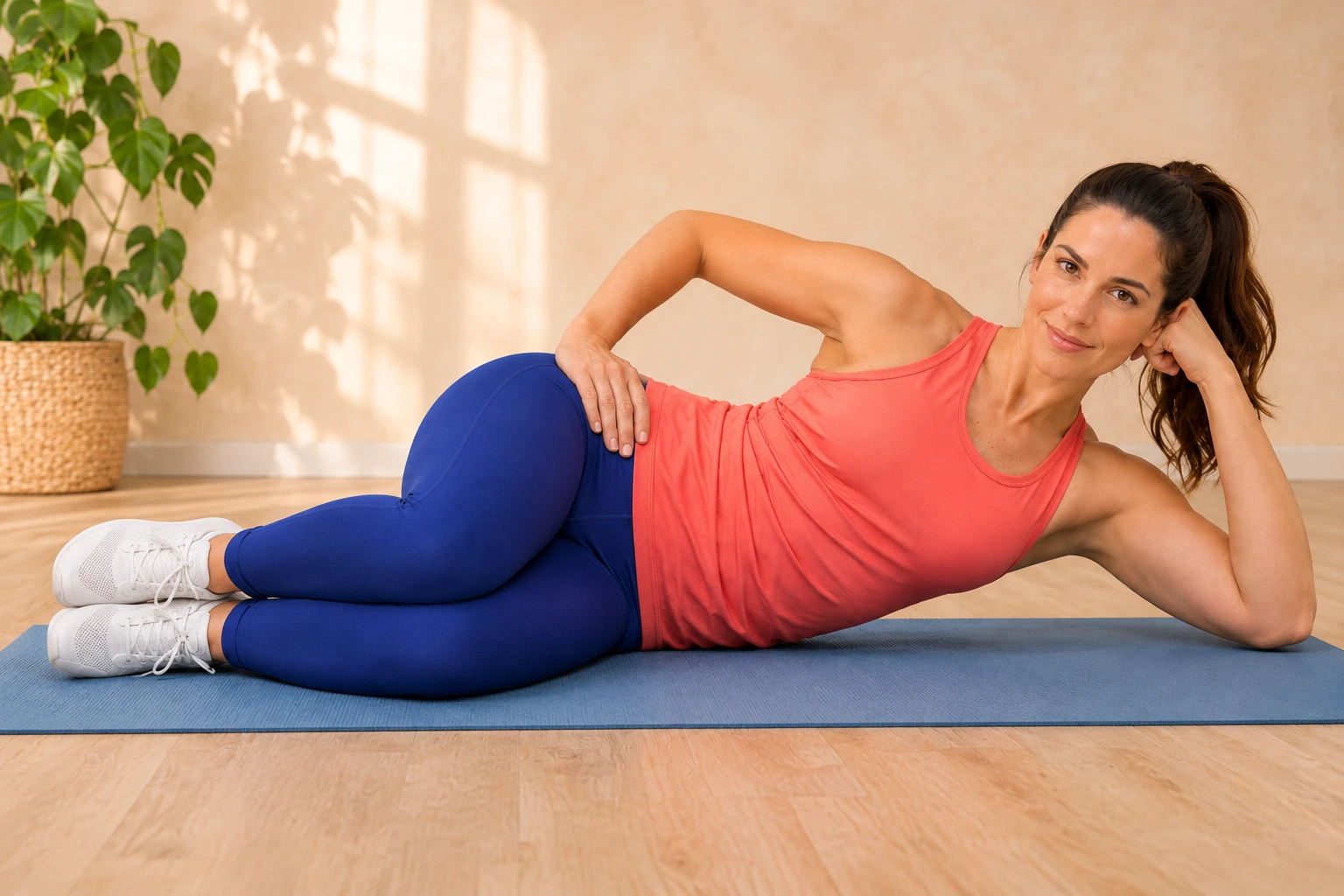
Coaching tips: how do you keep each rep honest?
Think 'knee opens, belt buckle stays facing forwards'. A modest lift with a quiet pelvis is better than a wide opening created by rolling backwards. Keep your neck relaxed and breathe normally. Pause the set if your feet separate, your pelvis rocks or you cannot lower smoothly. Resume only when control returns. Stop the challenge for sharp pain, hip pinching, knee or back pain, or persistent cramping. If an existing medical condition or injury affects this movement, seek clinician guidance before attempting the test.