
Challenge · 2026
100 Dead Bug Heel Taps: Can You Stay Steady?
Today's RB100 challenge for 22 October 2026 is 100 dead bug heel taps: 50 per side, completed in controlled sets. Lie on your back, alternate lowering one heel towards the floor and keep your trunk steady. This equipment-free test rewards controlled movement rather than speed, with a feet-down option for beginners.
By Richard Branson · · Updated
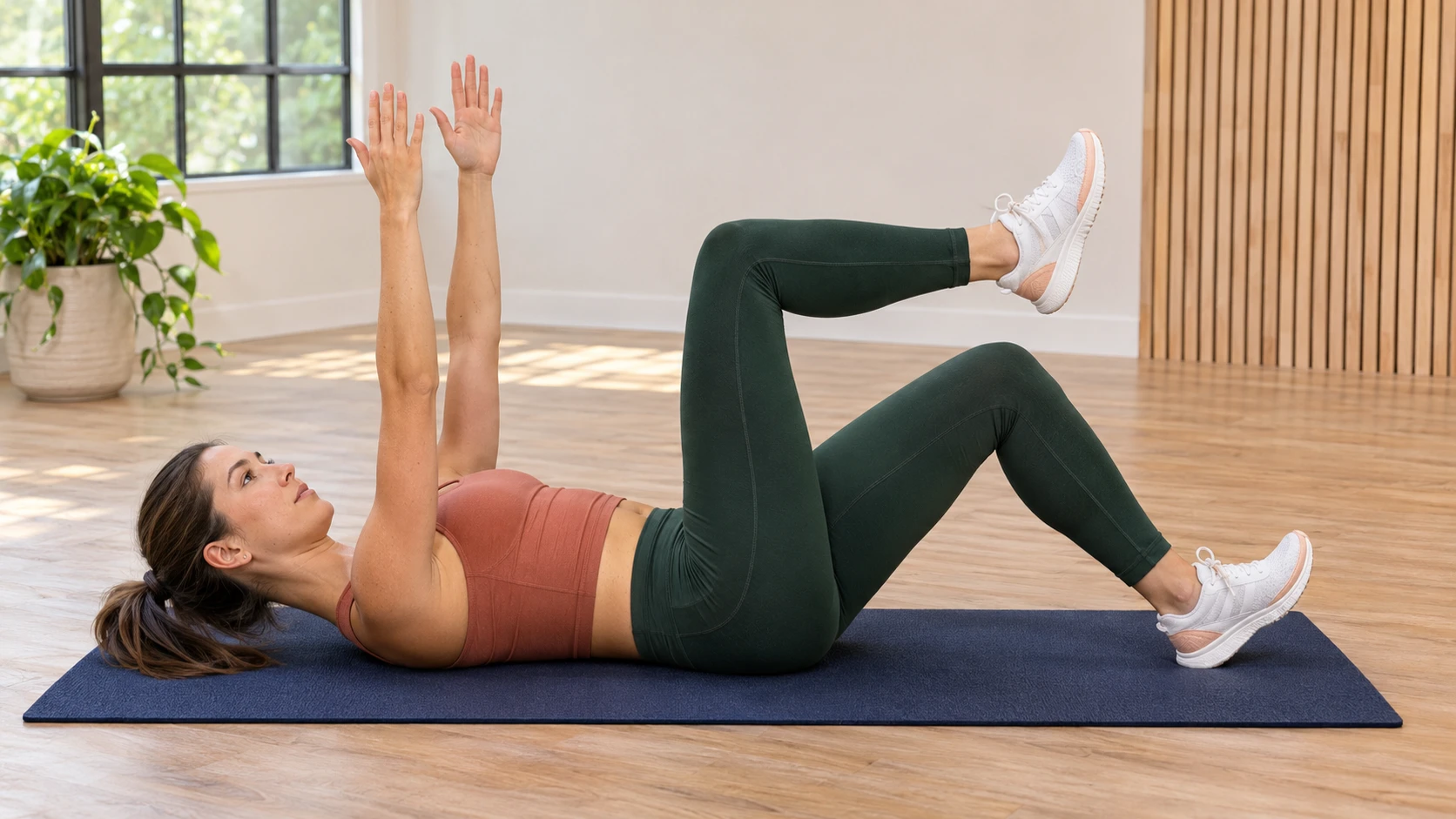
The challenge: can you complete 100 dead bug heel taps?
For 22 October 2026, your task is 100 alternating heel taps from a dead bug position. Keep your arms resting on the floor so the focus stays on leg movement and trunk control. Break the total into five sets of 20, with 10 repetitions per side in each set. This is a control test, not a race: finish each set before fatigue changes your position.
How to do it: what are the exact steps?
- Lie on your back with your head relaxed and arms by your sides. Bend your knees and place both feet on the floor.
- Gently brace your abdomen, then lift one leg at a time until your knees are above your hips and bent to roughly 90 degrees. Keep your lower back position comfortable and steady.
- Practise four alternating taps before starting your scored repetitions. Lower one heel towards the floor by moving at the hip, keeping the knee bent. Lightly touch down, then return the knee above the hip.
- Repeat with the other leg. One lowering-and-return cycle counts as one repetition. Avoid pushing off the floor with the tapping heel.
- Complete 20 repetitions, alternating sides. Take roughly two to three seconds per repetition and breathe throughout.
- Rest with both feet down for 20–40 seconds, or longer if needed. Repeat for five sets to reach 100 total repetitions.
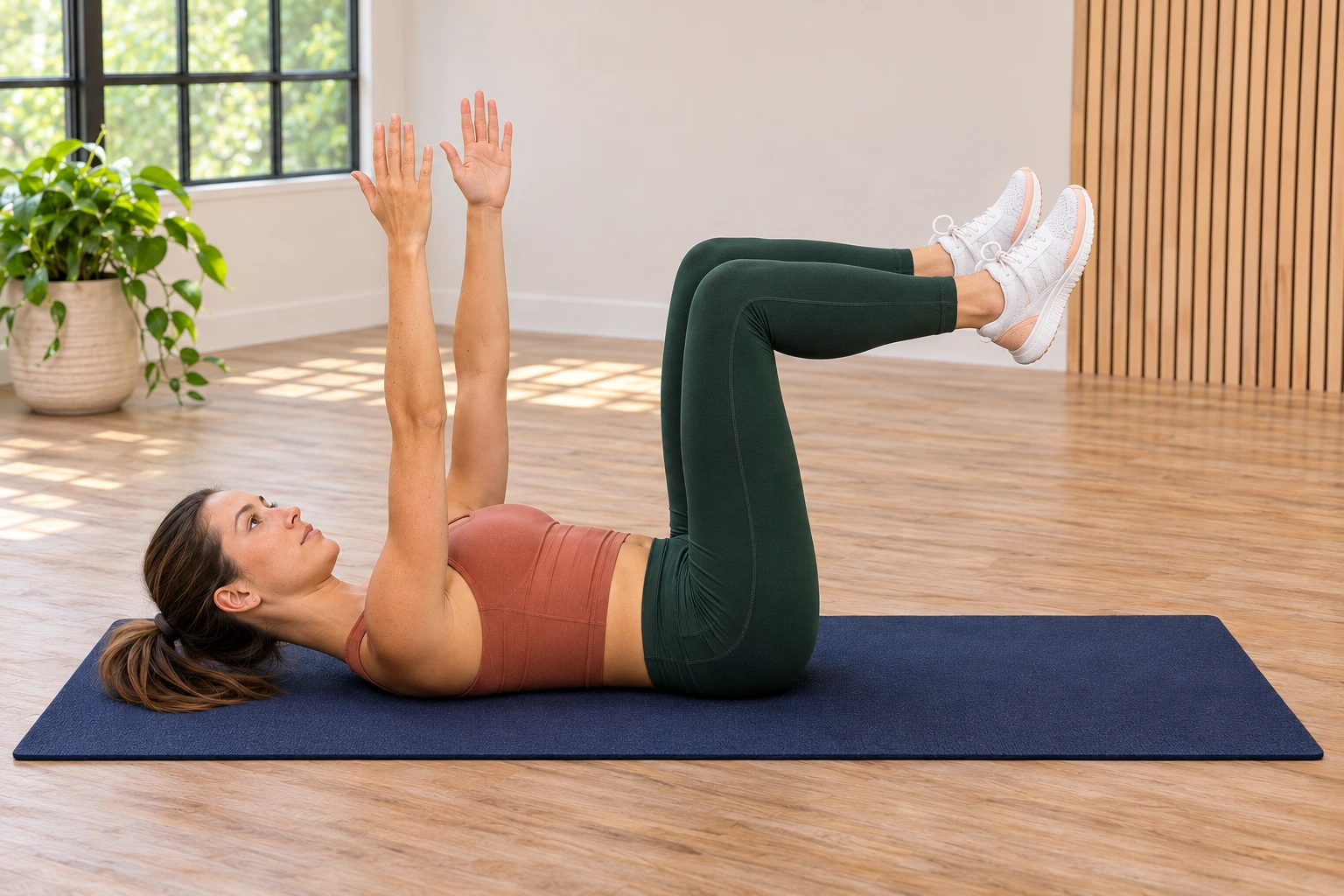
Scale it: how can you keep the movement controlled?
Make it easier by lowering each heel only as far as you can without your back arching; floor contact is optional for this variation. For more support, start with both feet grounded, lift one bent knee towards your hip, then replace that foot before switching sides. Count each lift-and-return as one repetition. Use ten sets of 10 if shorter sets help. For a harder version, take three seconds to lower each heel without changing your trunk position. Record which version you use.
Coaching tips: what should stay still, and when should you stop?
Keep your pelvis quiet and shoulders relaxed. Exhale gently as the heel lowers; do not hold your breath or force your back hard into the floor. If your back starts arching, your pelvis rocks or you need momentum, end the set and rest or scale down. Stop the challenge for sharp or increasing pain, particularly in your back, hips or neck, or if you feel dizzy. If a medical condition affects your ability to exercise, seek clinician guidance before attempting the test.
Tagged