
Challenge · 2026
100 Wall Slides: Can You Keep Control?
Today’s RB100 challenge is 100 wall slides, completed in small sets with controlled movement. Use a clear wall to practise raising and lowering your arms without shrugging or arching your back. Work within a comfortable range, rest between sets and count only reps you can control.
By Richard Branson ·
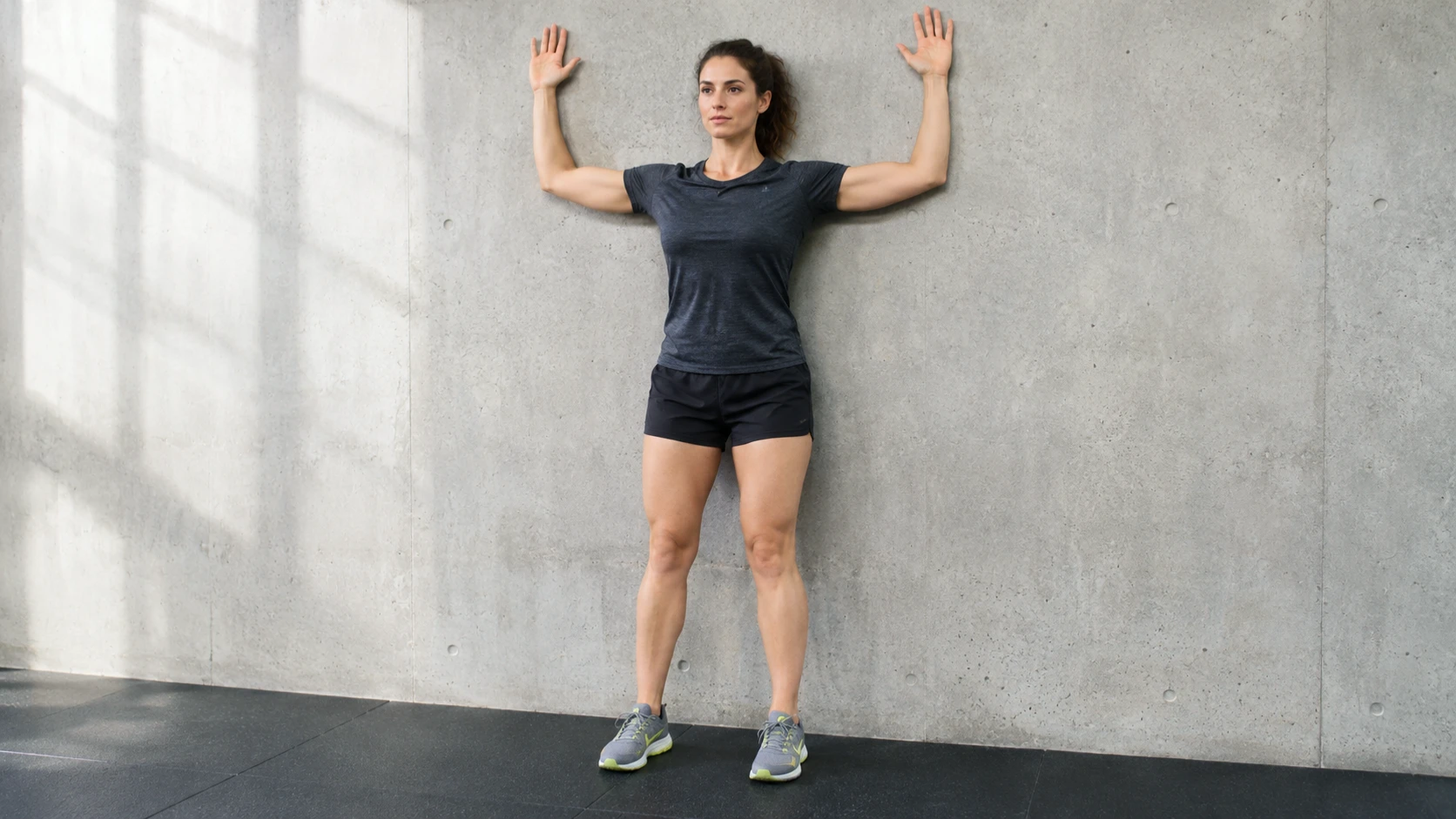
The challenge: can you complete 100 wall slides?
For 19 October 2026, your RB100 daily challenge is a standing shoulder-control test: complete 10 sets of 10 wall slides. Both arms move together throughout. The wall provides feedback about your position, but you do not need to flatten yourself against it. Your aim is repeatable, comfortable movement not maximum height or the quickest finish.

How to do it: what are the exact steps?
- Prepare with 30–60 seconds of relaxed shoulder rolls and easy arm raises. Then try five gentle wall slides to find your comfortable range; these are practice reps.
- Stand with your back towards a clear wall, feet about hip-width apart and slightly forward. Keep your knees soft and let your upper back rest lightly against the wall.
- Bend your elbows into a comfortable W shape, with your hands above your elbows. Keep your lower back’s natural curve rather than pressing it flat.
- Slide both arms upwards for roughly two seconds. Stop before you need to flare your ribs, lean backwards or force the movement.
- Lower your arms to the starting position over roughly two seconds. That complete up-and-down movement is one rep.
- Complete 10 reps, then rest for 15–30 seconds or longer if needed. Repeat for 10 sets, logging each set so your total reaches 100.
- Finish when you reach 100 controlled reps or earlier if you meet any stop condition below. Record your total and set breakdown.
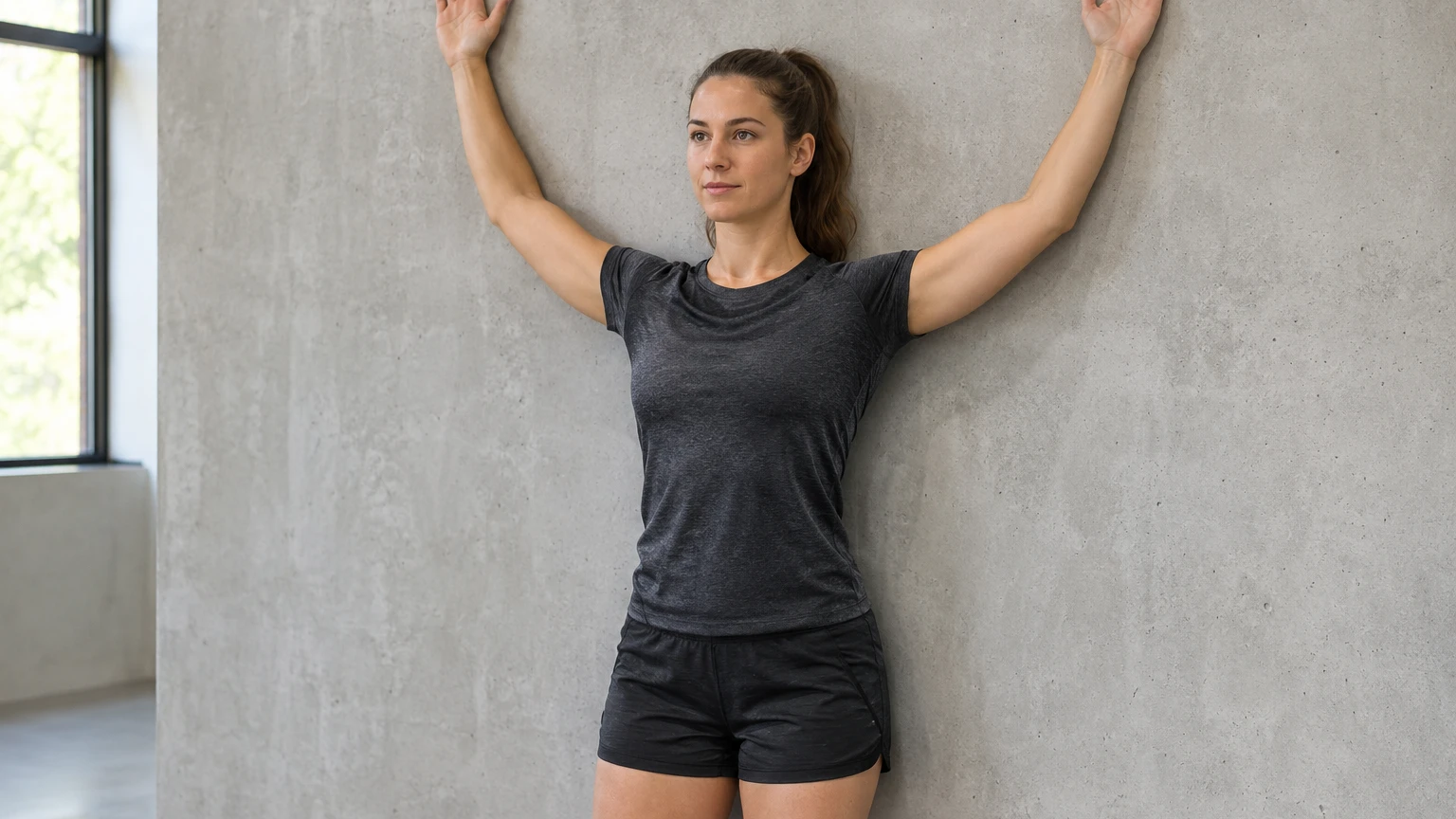
Scale it: how can you adjust the movement?
Make it easier by using 20 sets of five and sliding only through a smaller, comfortable range. Your wrists and elbows may float away from the wall; do not force contact. If standing is difficult, use a stable chair with your back near a wall and your feet supported, provided you have clear space for your arms. If 100 reps exceeds your current capacity, stop at a lower total and log it honestly. For more control rather than more load, add a brief pause at your highest comfortable position without changing your posture.
Coaching tips: what should you feel, and when should you stop?
Keep breathing and let your s
Tagged