

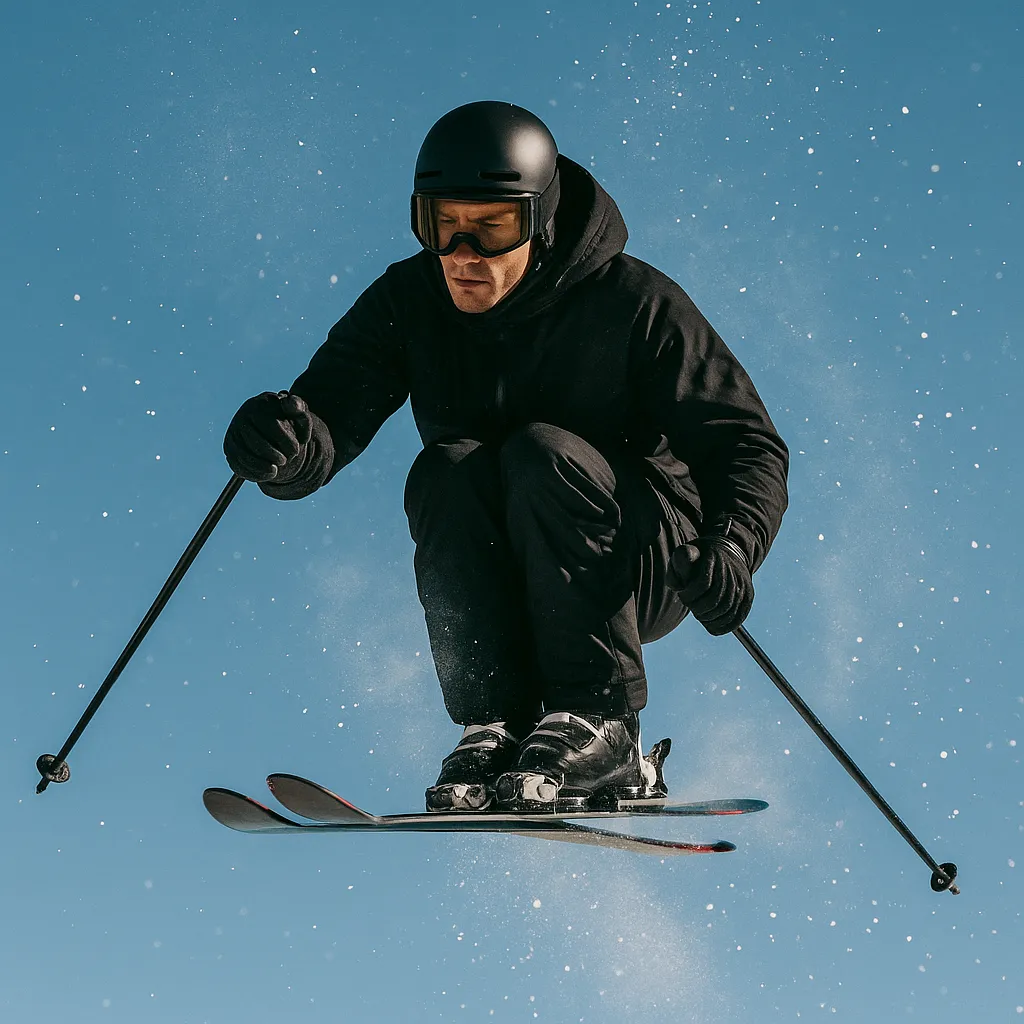
Standing at the top of an Olympic jump, 20 metres of icy ramp below you and 15 metres of air ahead, your mind goes quiet. It has to. That silence — that moment of total presence — is what mental toughness really feels like.
I learned that in Nagano, Japan, at the 1998 Winter Olympics, where I represented Great Britain in freestyle skiing. My event, men’s aerials, demanded both physical skill and complete psychological control. The athletes who excelled weren’t always the most gifted; they were the ones who could stay calm in chaos.
The psychology of pressure
Mental toughness isn’t about being fearless. It’s about managing fear. In training, I learned that anxiety doesn’t disappear before big moments it sharpens. The trick is to channel that energy, not fight it.
In sports psychology, this is known as arousal control the ability to operate at an optimal level of physiological readiness. Too much tension and you freeze; too little and you underperform. The sweet spot lies in self-awareness, breath control, and mental rehearsal.
“Data doesn’t lie.” — RB100.Fitness. Track your performance, learn your triggers, and repeat until composure becomes instinct.
Applying it beyond sport
You don’t have to be an Olympian to benefit from mental training. In the gym, workplace, or daily life, the same principles apply:
- Visualise success before it happens. Create clarity under pressure.
- Embrace discomfort. Growth lives on the edge of challenge.
- Recover as hard as you train. Rest, nutrition, and sleep underpin resilience.
Even during my post-competition career in experiential and sports marketing, I’ve leaned on these habits. Deadlines, presentations, and high-stakes pitches can evoke the same physiological response as competition. Control your breath, rehearse your performance, and trust your preparation.
The resilience reset
When I now work with athletes and professionals alike, I tell them: resilience isn’t built in the easy moments; it’s refined in recovery. Every setback is a data point. You either learn, or you repeat the same mistakes under greater pressure.
To go further on this topic, I’d recommend reading the Science of Mental Toughness here on RB100.Fitness, or exploring external resources such as the British Psychological Society’s guide to performance mindset.

Final thoughts
Olympic sport teaches you that the body follows the mind. Whether it’s a barbell, a deadline, or a personal challenge, resilience is a trained response. Build your habits, control your inner dialogue, and you’ll find that same quiet moment at the edge of fear and step forward anyway.