

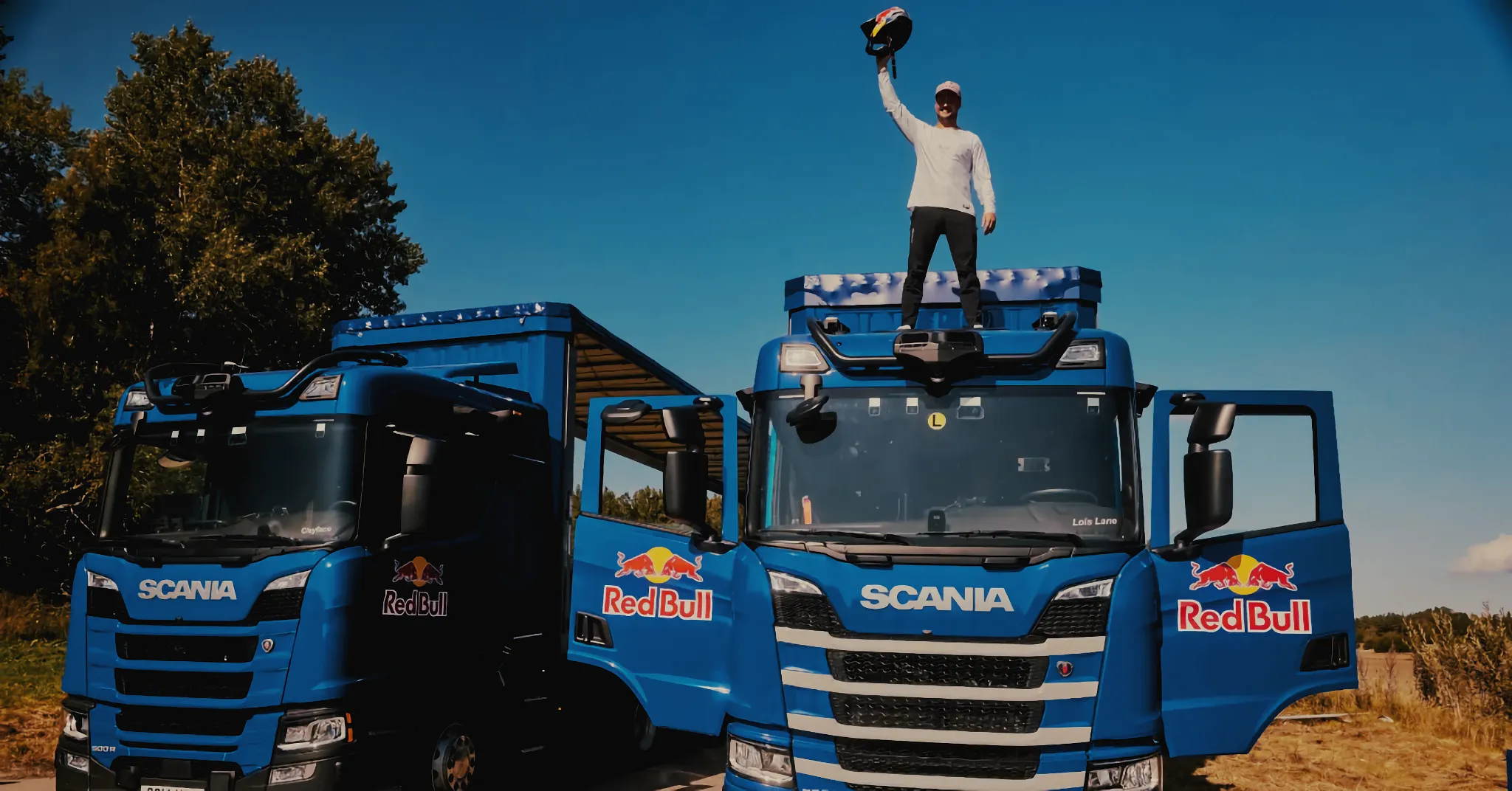
When Red Bull and Scania set out to engineer a stunt built on the smallest possible margin for human survival, only one rider was ever going to take it on. Matt Jones has built a career on precision, creativity and fear control, but this challenge was on another level. The impossible gap stunt required him to jump his bike through a window that would exist for less than a second as two autonomous Scania trucks crossed paths at speed.
This was no cinematic trick or cleverly edited illusion. It was physics, data and risk intersecting at a single point. As Matt described it in the opening moments of the film, “I’m about to jump my bike through these two moving trucks through a gap that will only exist for less than a second.” That statement alone set the tone for what would become one of the most extreme mountain bike experiments ever captured on camera.
The Setup: One Chance, Zero Exit Strategy
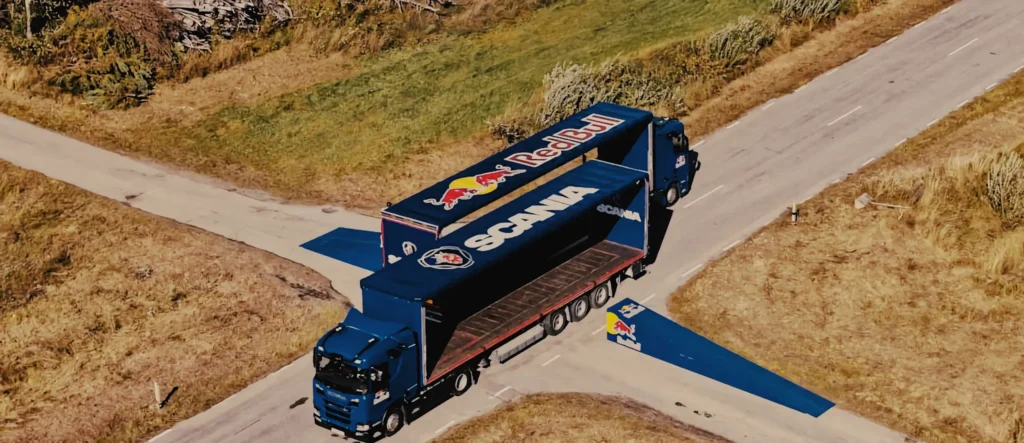
To prepare, Matt first tested the jump through stationary trucks to check head clearance. Even standing still, the space was uncomfortably tight. From there, the team turned to autonomous systems. Scania’s precision-controlled driverless trucks were essential to remove human error. Their combined movement created a gap that existed for roughly 0.8 seconds, closing at 11 metres per second.
This meant Matt couldn’t go too high, too low, too fast or too slow. Any deviation would end with him hitting the side of a truck.
For readers interested in hybrid athletic precision, this type of problem-solving shares similar mental load to pacing a HYROX race. The psychological pressure of timing your output is something we explore in articles like
The Psychology of Pacing on RB100.Fitness:
One Truck, 1.6 Seconds, and a Near Miss
Before attempting the full stunt, the team ran tests with a single moving truck. This gave Matt a window of 1.6 seconds to pass through. Even then, the first attempt went wrong. A handlebar snag shook his confidence. The emotional honesty in the footage shows how quickly doubt can creep in when precision is everything.
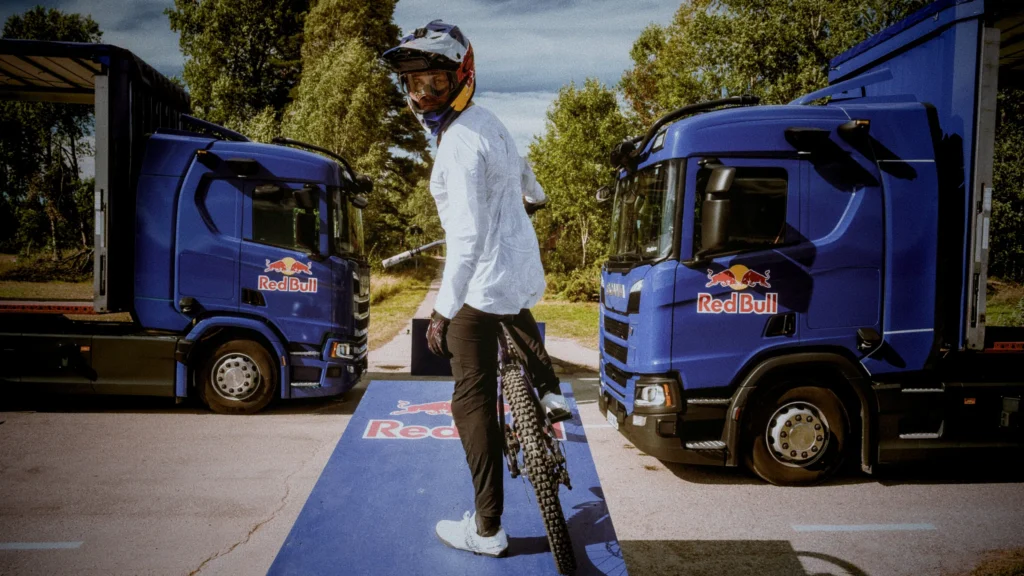
But as with any elite athlete, Matt reset, refocused and cleared the single truck cleanly on his next attempt.
The Real Challenge: Two Moving Trucks and a Fraction of a Second
The two-truck setup required perfect alignment between Matt’s approach speed, the trucks’ crossing point, GPS timing and Scania’s newly programmed traffic light system. Green meant go. Red meant guaranteed danger.
As the sun dropped, multiple runs ended with red lights. Some were within 0.02 seconds of being green. That level of precision would challenge even the most disciplined endurance athletes. At RB100.Fitness we talk often about how data doesn’t lie. And in this scenario, data was the only thing keeping Matt alive.
For other high-stakes performance breakdowns, readers can explore our conditioning articles.
The Attempt That Mattered
On the final day, with the final chance, Matt rolled in with one mission. When the light finally turned green, he committed. No hesitation. No backup plan.
He sailed cleanly through the impossible gap.
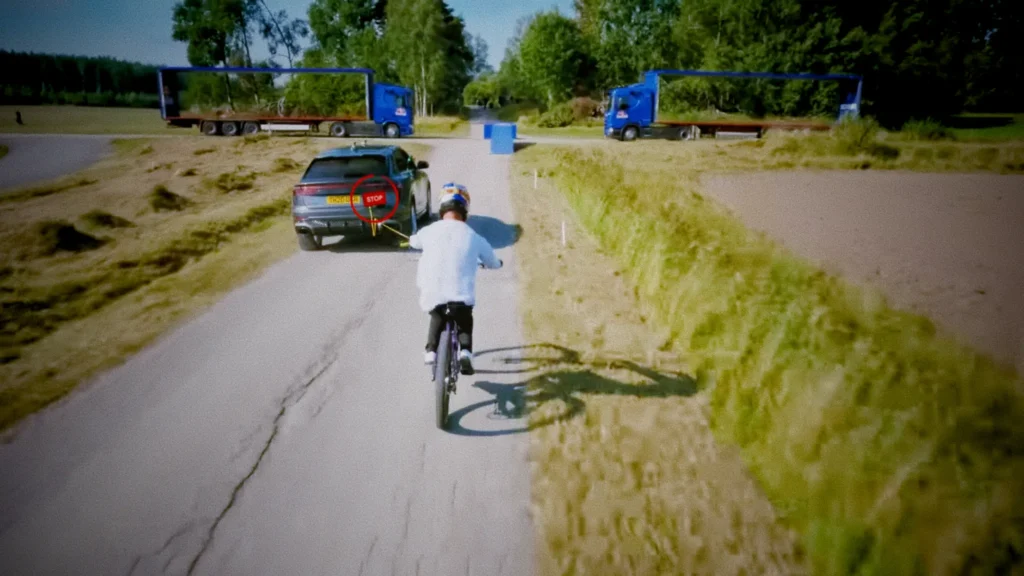
The explosion of emotion from the team says everything. Months of planning, millimetre accuracy and one athlete willing to trust the process.
This stunt was more than entertainment. It was mechanical engineering, human psychology and athletic precision combining in a single moment.
If you want to understand what separates elite performers from the rest, this is it.