

The 100 Pull Rep Workout Explained
The 100 pull rep workout exists to correct a common imbalance in modern training. Many athletes press far more than they pull, often without realising it. Over time, this leads to shoulder discomfort, reduced performance, and inefficient movement patterns under fatigue.
This challenge asks you to accumulate 100 pulling reps, split across horizontal and vertical pulling patterns if possible. Reps may be completed in as many sets as needed. Rest whenever quality begins to drop.
The emphasis is not volume for its own sake. The emphasis is controlled, repeatable pulling with intent.
Why Pulling Balance Matters
Pulling movements play a critical role in:
- Shoulder stability
- Scapular control
- Postural strength
- Injury prevention
When pulling capacity is underdeveloped, pressing movements become less efficient and more stressful on the joints. This imbalance is often exposed during longer workouts or competition environments.
In hybrid fitness formats such as HYROX, athletes must repeatedly stabilise the upper body under fatigue. Strong pulling mechanics help maintain posture during carries, wall balls, and running transitions.
Choosing Your Pulling Movements
You may use one movement or a combination, provided quality stays high.
Horizontal Pull Options
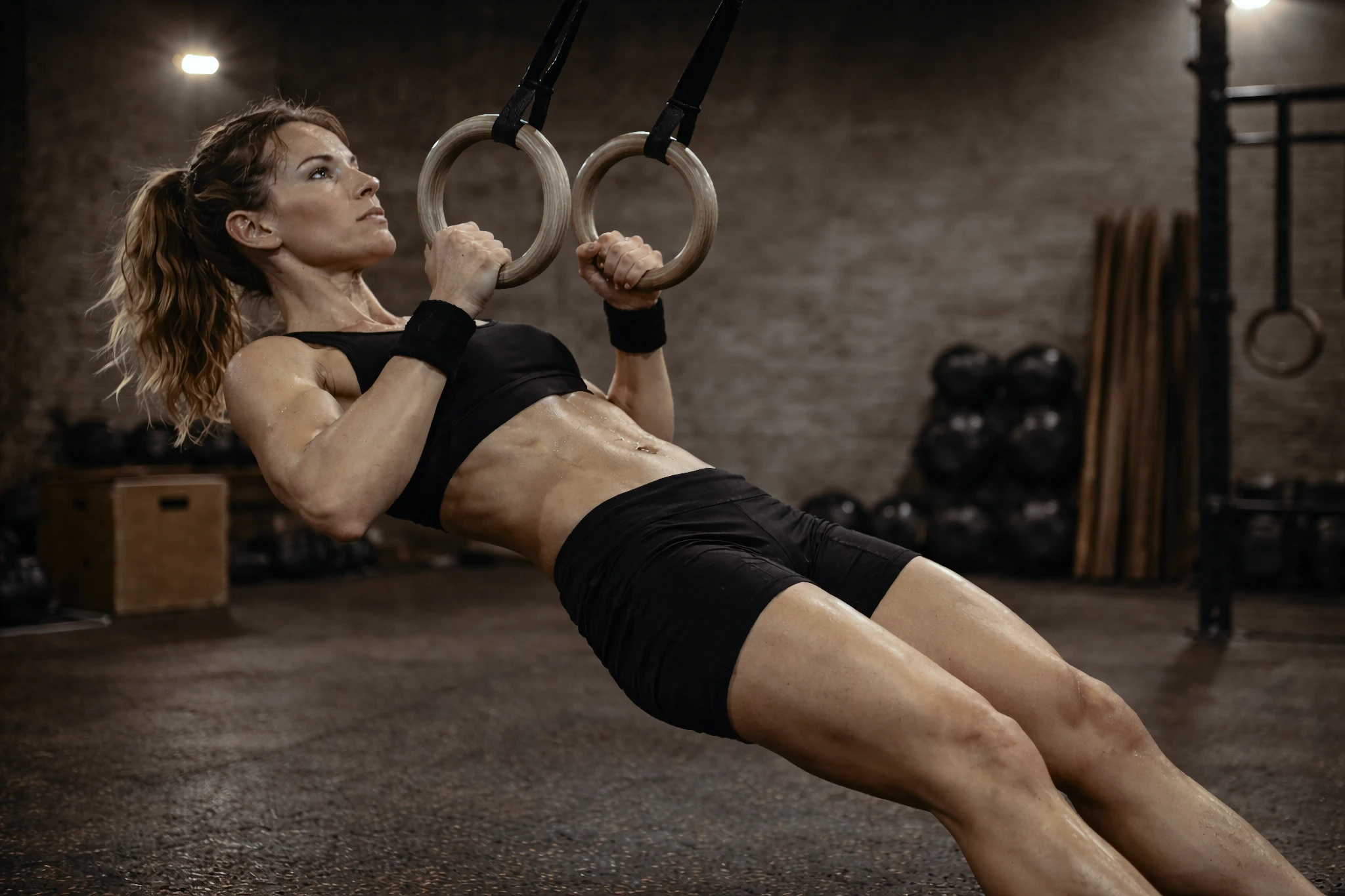
- Ring rows
- TRX rows
- Dumbbell rows
- Resistance band rows
Vertical Pull Options
- Band-assisted pull-ups
- Lat pulldowns
- Strict pull-ups or chin-ups
Choose movements that allow full range of motion without momentum.

How to Structure the 100 Reps
There is no required rep scheme. Structure your sets to maintain consistent mechanics.
Beginner Example
- 10 sets of 10 ring rows
- Full rest between sets
Intermediate Example
- 5 sets of 20 mixed rows and pulldowns
Advanced Example
- Alternating strict pull-ups and rows
- Smaller sets to preserve quality
If grip or posture breaks down, stop and rest.
Technical Standards to Maintain
Every rep should include:
- Full extension at the start
- Controlled pull without jerking
- Active shoulder engagement
- Smooth return to the start position
If you rely on momentum, the load or variation is too demanding.
Common Mistakes to Avoid
- Rushing reps to finish sooner
- Using excessive momentum
- Ignoring scapular control
- Treating pulling as secondary work
This challenge rewards patience and attention to detail.
How This Supports Hybrid Fitness Training
The 100 pull rep workout improves:
- Shoulder durability under fatigue
- Postural strength during long efforts
- Grip endurance
- Movement balance across the upper body
Balanced athletes move more efficiently and recover better. Pulling strength supports pressing, running posture, and loaded carries throughout training.
At RB100.Fitness, longevity matters. Data does not lie. Athletes who train balance stay consistent longer.
Progressions and Scaling Options
Beginner
- Ring rows or bands only
- Elevated feet avoided
Intermediate
- Mix of rows and vertical pulls
Advanced
- Strict pull-ups
- Slower tempo or pauses
Progress by improving control before adding volume or load.
Frequently Asked Questions
Yes, but mixing patterns is encouraged.
Not for this challenge. Control comes first.
Every 6 to 8 weeks works well for reassessment.