
Challenge · 2026
100 Thoracic Rotations: Can You Move Smoothly?
Today’s RB100 challenge is 100 thoracic rotations: complete 50 controlled repetitions per side from an all-fours position, resting whenever needed. Open your chest without forcing your range or shifting your hips. This is a movement-quality test, not a race, with a seated option if floor work does not suit you.
By Richard Branson · · Updated
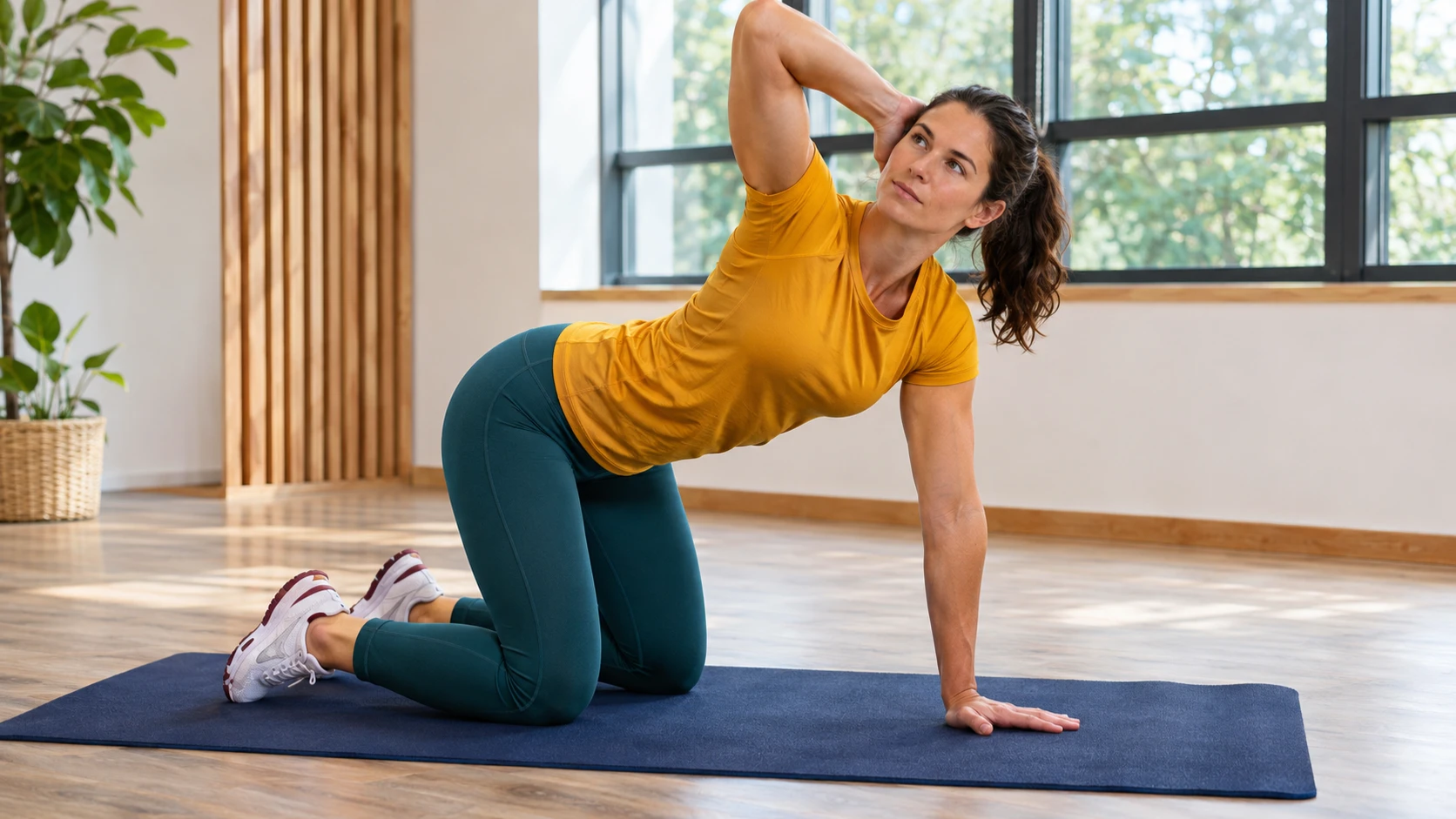
The challenge: can you complete 100 thoracic rotations?
For 16 February 2026, accumulate 100 controlled upper-back rotations: 10 rounds of five repetitions on each side. Keep the movement comfortable and your hips as still as possible. The target is repeatable control, not the biggest twist or the quickest finish. Rest between rounds, and finish early if you cannot maintain the same quality.

How to do it: what are the exact steps?
- Clear enough floor space to open your elbow without hitting anything. Start on hands and knees, with hands beneath shoulders and knees beneath hips.
- Try two gentle practice repetitions per side before starting your count. Check that your wrists, knees, shoulders and back feel comfortable.
- Place your right fingertips lightly behind your right ear. Keep your left hand planted and avoid pulling on your head.
- Turn your chest to the right, allowing your right elbow to open towards the ceiling. Stop before your hips roll or your lower back arches to gain extra range.
- Return your elbow gently towards your supporting arm. Opening and returning equals one repetition. Complete five on the right.
- Swap hands and complete five on the left. You have now completed one round of 10 repetitions.
- Rest for roughly 15–30 seconds, or longer if needed. Repeat for 10 rounds to reach 100: 50 per side. Record your total and variation.
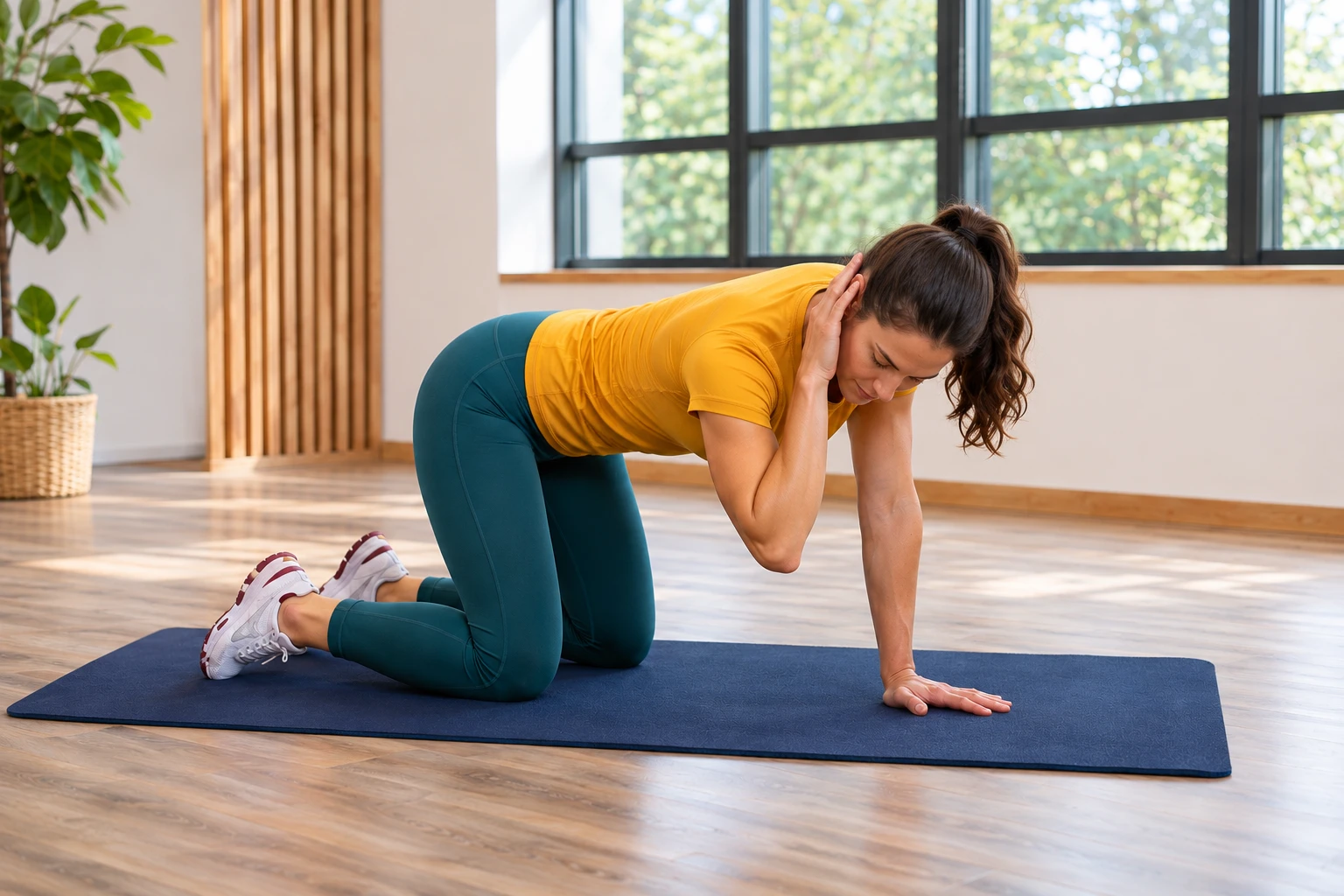
Scale it: how can you keep the movement accessible?
Reduce the opening range first; your elbow does not need to point straight upwards. If kneeling or supporting your weight through one hand is uncomfortable, use the seated version: feet grounded, arms crossed over your chest, pelvis facing forwards. Turn gently to one side and return to centre for one repetition, following the same five-per-side pattern. Start with four to six rounds if 100 repetitions is too much today. For more control rather than more volume, add a brief pause at your comfortable open position without holding your breath.
Coaching tips: what should you feel, and when should you stop?
- Let your chest lead the turn. Move your head comfortably with it rather than twisting your neck to chase a higher elbow.
- Keep gentle pressure through your supporting hand and avoid sinking into that shoulder. Shorten the set if the support position starts to collapse.
- Breathe out gently as you open and breathe in as you return. Do not force the breath or brace so hard that you cannot breathe normally.
- A mild stretching sensation can be acceptable; sharp, pinching or increasing pain is not. Stop for wrist, shoulder or back pain, tingling, numbness or dizziness.
- Pause when your hips repeatedly roll or you start using momentum. Resume only if a smaller range or easier version restores comfortable control.
- If you have a relevant medical condition, recent injury or surgery, seek clinician guidance before attempting this test. These instructions are general training education, not individual medical advice.