
Challenge · 2026
100-Second Side Plank: Can You Stay Level?
Today's 100-second side plank challenge asks you to accumulate 50 seconds on each side in controlled holds. Start with your knees supported, alternate sides every 10 seconds and rest whenever your position slips. Your target is 100 quality seconds, not the longest hold or the fastest finish.
By Richard Branson · · Updated
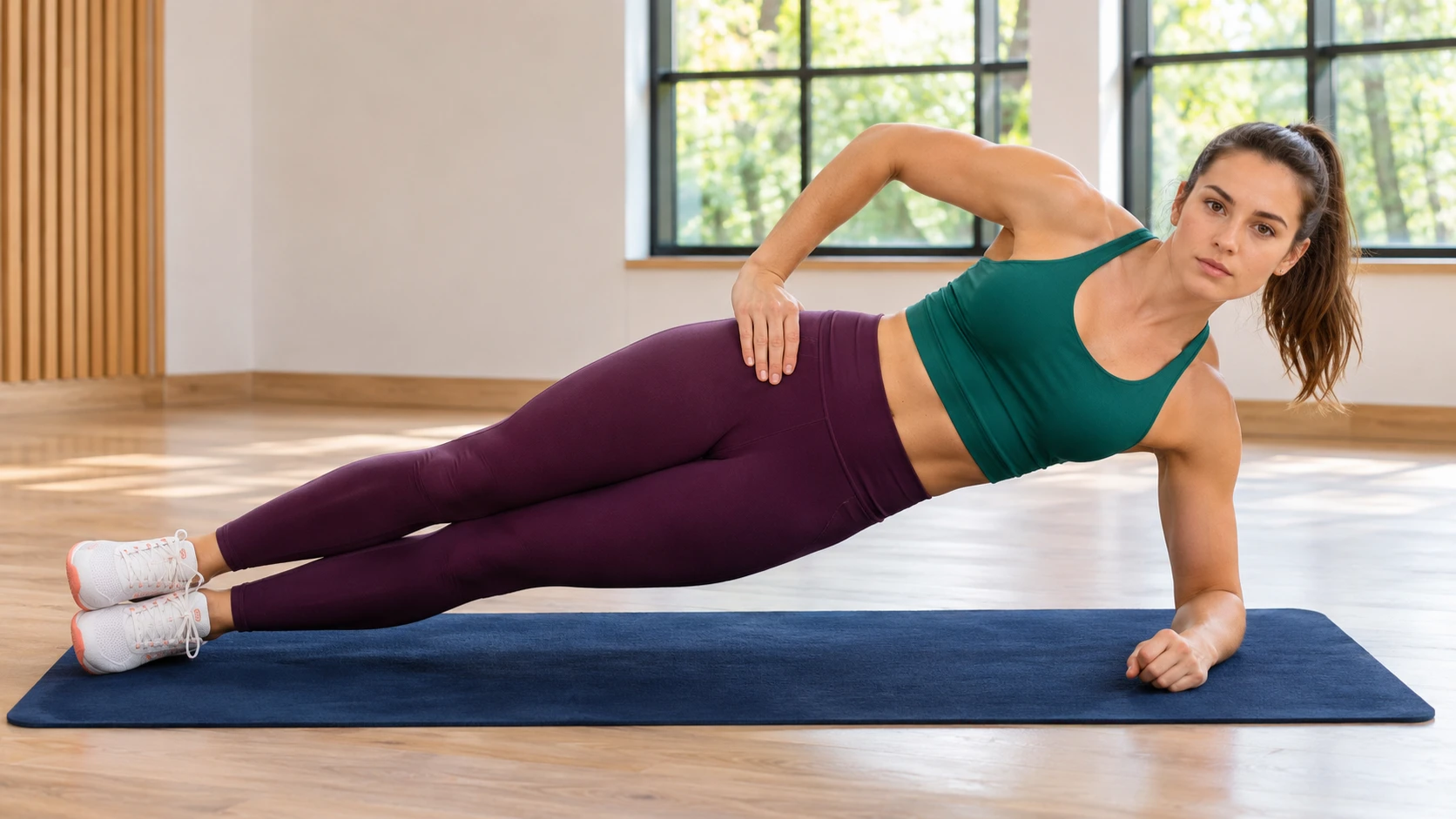
The challenge: can you complete a 100-second side plank?
For 12 February 2026, your RB100 target is 100 accumulated seconds of side-plank work, split evenly between sides. This is a position test, not a race. Use ten alternating 10-second holds and take enough rest to make each one controlled. Begin with the knee-supported version unless you already practise full side planks comfortably.

How to do it: what are the exact steps?
- Prepare with 30 seconds of easy marching and five gentle shoulder circles in each direction.
- Lie on your left side with your knees bent and feet behind you. Place your left elbow directly beneath your shoulder, with your forearm resting on the floor.
- Stack your hips and knees. Rest your right hand on your hip, press through your left forearm and lower knee, then lift your hips until your shoulders, hips and knees form a straight line.
- Start the timer once you are steady. Hold for 10 seconds while breathing normally, then lower gently.
- Change sides and repeat for 10 seconds. Rest between holds whenever needed; pause the timer during rest and transitions.
- Complete five holds per side: 10 holds × 10 seconds = 100 seconds. Log your variation and any additional breaks.
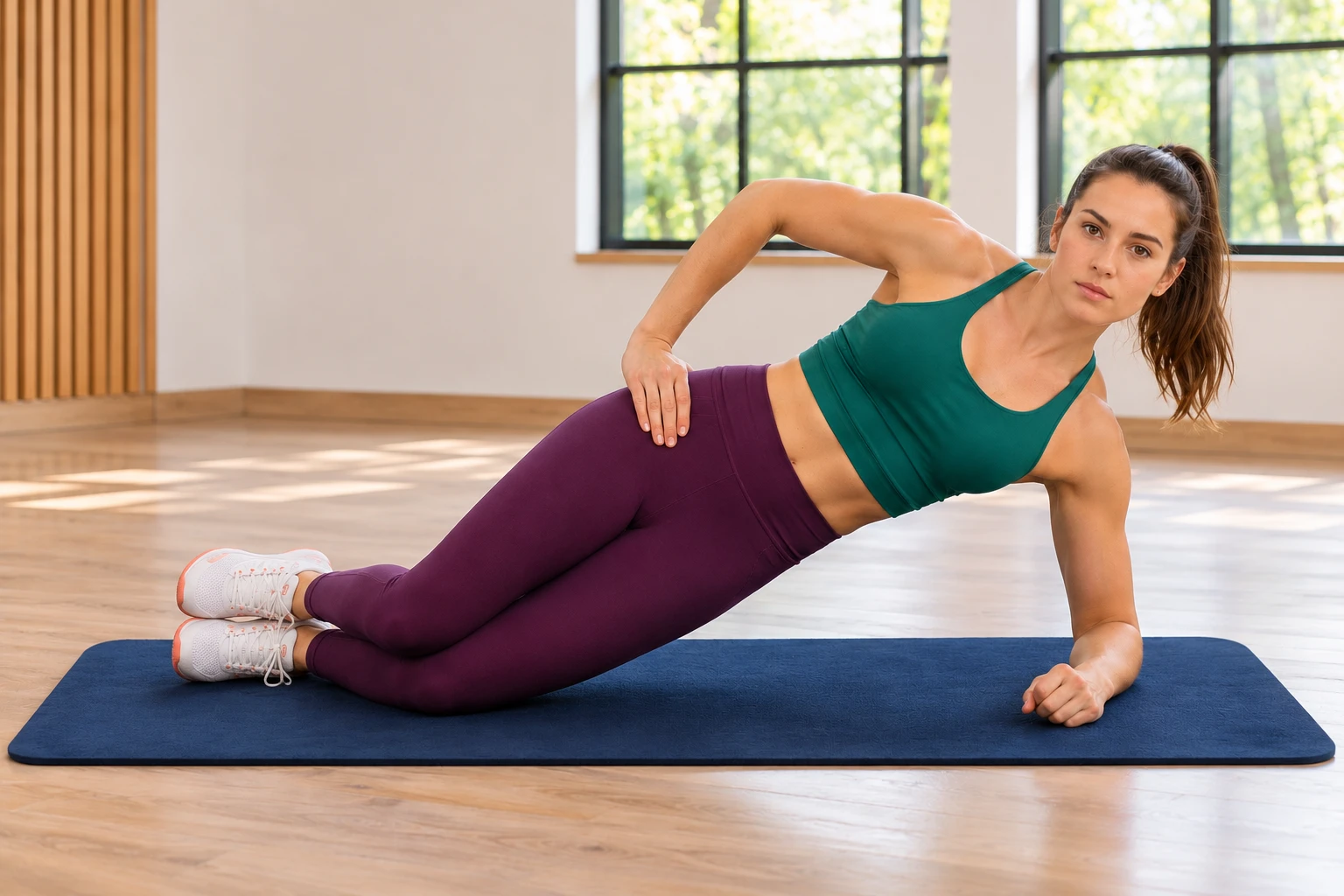
Scale it: which version can you control?
Make it easier with five-second knee-supported holds, alternating sides until you complete ten holds per side. Rest freely. If that is still too demanding, stop below 100 seconds and log your total. For a harder version, straighten both legs and stagger your feet for support. Keep the same time target rather than adding load or lifting the top leg.
Coaching tips: when should you reset or stop?
Press the floor away through your forearm and keep your neck relaxed. Face your chest forwards rather than rolling towards the floor. Breathe throughout. If your hips sag, your supporting shoulder collapses or you cannot breathe normally, lower down and pause the clock. Resume only with control, using a shorter hold or easier version. Stop the session for sharp or increasing pain, numbness or dizziness; do not chase the remaining seconds.