
Challenge · 2026
100-Second Quad Stretch: Can You Stay Tall?
Today’s RB100 challenge is a 100-second quad stretch: accumulate 50 seconds per leg, split into four controlled holds. Use a sturdy support, keep the stretch gentle and breathe normally. The aim is steady positioning rather than maximum range, with a side-lying option if standing balance gets in the way.
By Richard Branson ·
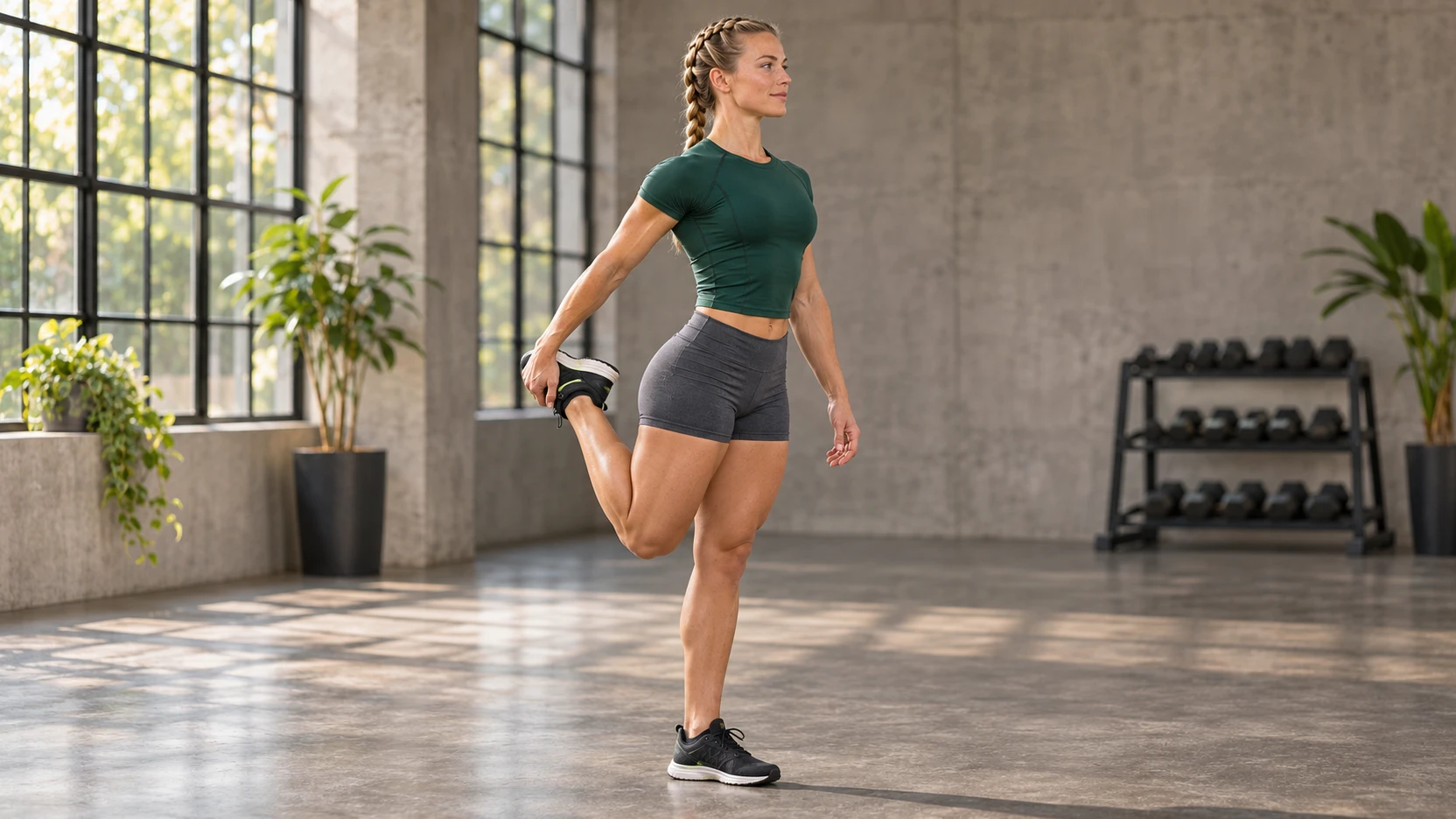
The challenge: can you complete the 100-second quad stretch?
For 21 May 2026, accumulate four 25-second quadriceps stretches, alternating legs. That is 50 seconds on each side and 100 seconds altogether. This is a positioning challenge, not a pain-tolerance test. Finish each hold with the same relaxed breathing and upright posture you started with. Allow extra time between holds whenever you need it.

How to do it: what are the exact steps?
- Walk gently around your space for a minute, then stand beside a fixed worktop or a sturdy chair secured against a wall.
- Place your left hand on the support. Keep your left knee softly unlocked, bend your right knee and take your right ankle with your right hand.
- Bring your right heel towards your bottom only as far as comfortable. Keep your torso upright and your bent knee pointing towards the floor, without forcing your knees together.
- Once you feel a gentle stretch along the front of your right thigh, hold for 25 seconds while breathing normally. Release your foot slowly.
- Change sides and hold the left thigh stretch for 25 seconds, using your right hand for support.
- Repeat once on each side. Stop at 100 accumulated seconds, or earlier if you cannot maintain a comfortable position.
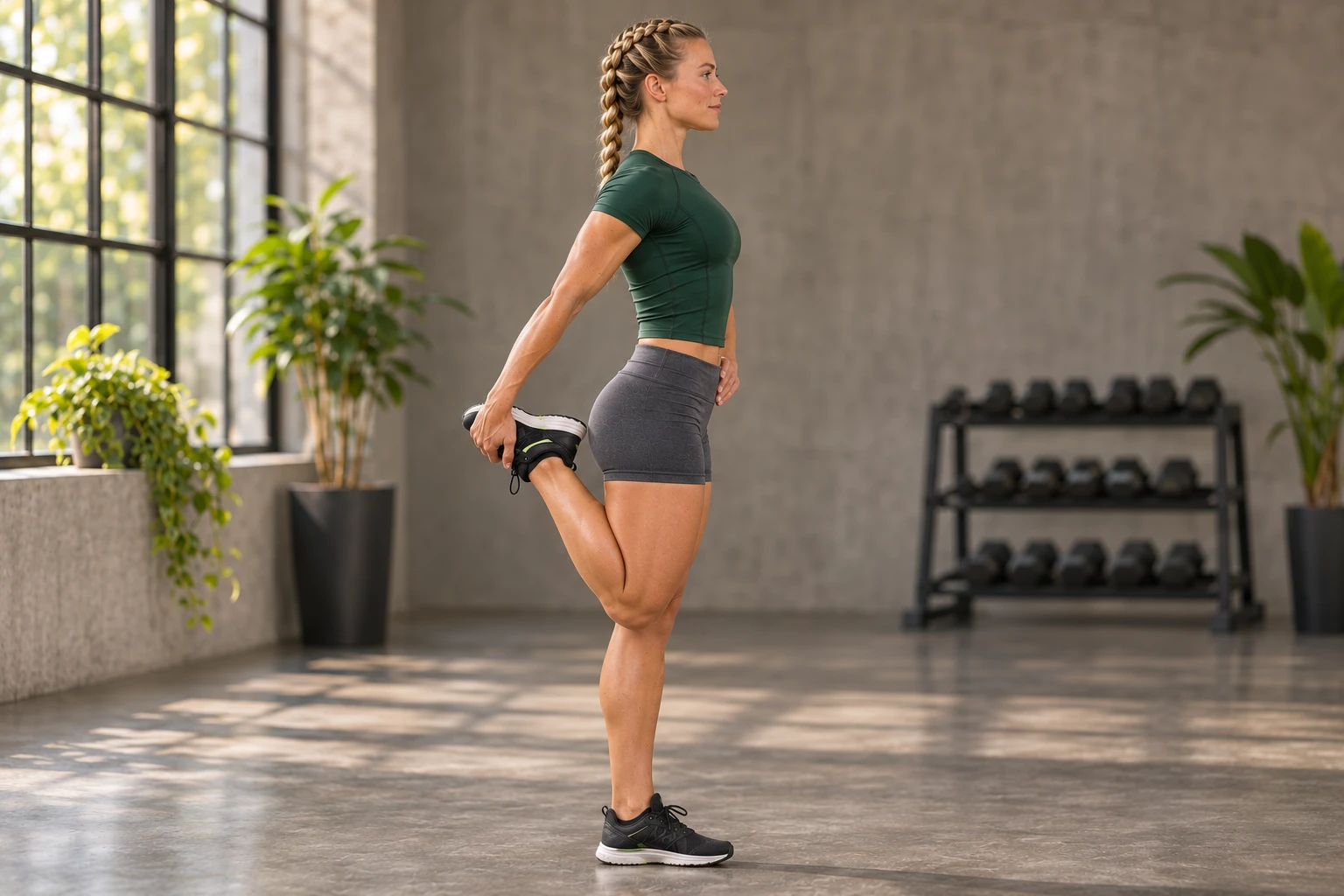
Scale it: how can you make the position easier?
If balance is the limiting factor, lie on your side on a mat, support your head and bend the bottom leg for stability. Bend the top knee and gently hold that ankle behind you. A towel around the ankle can extend your reach; do not use it to pull harder. Alternatively, use five 10-second holds per leg instead of two 25-second holds. Reduce the knee bend if needed. There is no requirement for your heel to touch your bottom.
Coaching tips: what should you feel, and when should you stop?
Keep your ribs over your pelvis rather than arching your lower back to bring the heel closer. Avoid bouncing, twisting or holding your breath. Aim for mild tension through the front of the thigh. Release immediately for sharp pain, knee-joint discomfort, tingling, numbness or dizziness. Reset if you wobble or lose your grip; do not count that time. If you have an existing knee or hip condition, or a recent injury or operation, get clinician guidance before attempting this stretch.