
Strength & Conditioning
100-Second Plank: Can You Hold It?
Test your core, posture, and patience with this deceptively simple challenge: a 100-Second Plank hold. Find out how to do it right, scale it up, and track your time.
By Richard Branson · · Updated
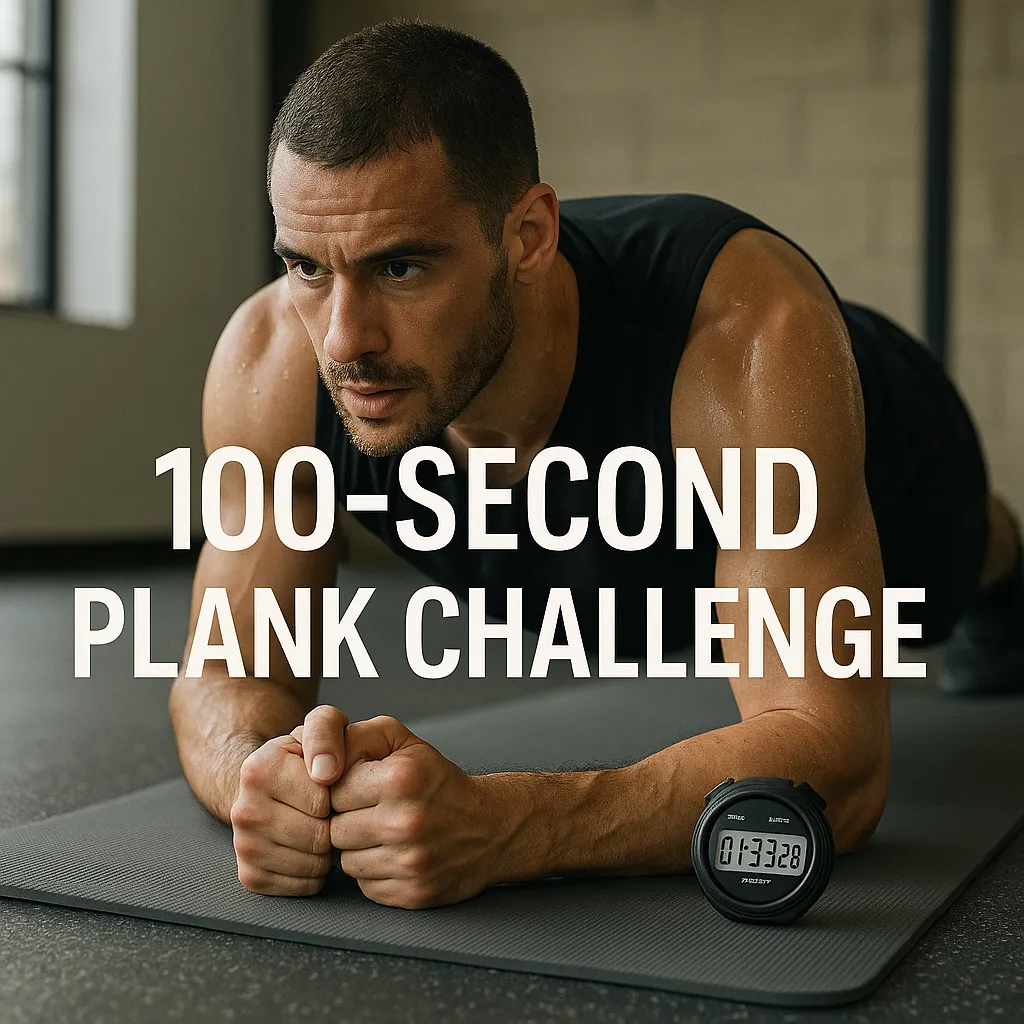
Intro: The plank is one of the most effective isometric core exercises in fitness. It’s used in physical therapy, military testing, and elite training plans — and yet it still humbles even the fittest athletes. Holding a plank for 100 seconds might sound easy, but don’t underestimate it.
This test builds strength, reinforces posture, and strengthens your mental focus. No reps. No movement. Just you and the clock.
How to Do a Proper Plank
- Elbows directly under shoulders
- Back flat, hips in line with shoulders
- Feet hip-width apart, neutral neck
- Engage glutes, quads, and abs — stay solid
Use a timer or stopwatch and aim to hold without dropping. If your form breaks, the clock stops.
Scaling Options
- Beginner: 3 sets of 30–40 seconds with rest between
- Intermediate: 2 x 60 seconds
- Advanced: Full 100 seconds unbroken
Add difficulty by elevating feet, switching to side planks, or wearing a weight vest.
Why It Matters
- Develops deep core stability (especially transverse abdominis)
- Reinforces good posture and breathing control
- Supports lower back health and full-body tension
- Mental discipline under fatigue
Graphic illustration of correct plank form with labels Stopwatch next to water bottle on gym floor, showing 1-40
Track Your Progress
Repeat weekly and log your best hold time. Go on give the 100-Second Plank challenge a go.
You can even use this as a baseline to unlock other RB100 challenges.
Pair it with:
External Sources:
- Wellbeing Magazine: Why Core Stability Is Essential
- Harvard Health: Want a stronger core? Skip the sit-ups

Tagged