
Articles
L-Theanine for Hybrid Athletes: Tea or Tablets?
L-theanine may offer modest benefits for attention and calmness, but the evidence does not establish better HYROX performance. Men’s Health’s dietitian-led explainer suggests tea as a cheaper alternative to supplements, while highlighting inconsistent sleep findings, possible side effects and medication interactions that warrant professional advice.
By Relentless Bravery · · Updated
A supplement promising greater focus alongside a calmer mind has an obvious appeal to athletes preparing for HYROX or hybrid racing. But L-theanine deserves a closer look before it earns a place in your routine: the evidence is more limited than the marketing might suggest.
In a Men’s Health explainer, dietitians Kate Ingram and Perri Halperin examine the compound’s potential benefits, uncertainties and risks. Their message is measured rather than dismissive. Some findings support improvements in attention and stress, but supplements are not the only option. Tea already contains L-theanine, at a substantially lower dose.
What does the evidence say about L-theanine?
L-theanine is a compound found in tea that can cross the blood-brain barrier. Supplement companies market it for cognitive performance, and the research discussed by Men’s Health offers some support for that narrower claim.
Clinical trials using 100–400mg reported small, statistically significant improvements in visual-attention tasks. The article also describes better cognitive performance when L-theanine was combined with caffeine. In another finding, a single 200mg dose taken 30–60 minutes before a cognitive test was associated with higher attention scores.
Those details matter, but so does the outcome being measured. An attention test is not a hybrid race. The source provides no evidence that L-theanine improves running performance, strength or HYROX results. The amounts and timings reported are research details, not an athlete-specific dosing plan.

Could it help with calmness or sleep?
The case for calmness is promising rather than settled. One review cited in the article suggested that 200–400mg could help people who regularly face stressful situations. Ingram also points to tea’s combination of caffeine and L-theanine as a potential way to feel alert without the jitteriness associated with coffee.
Sleep claims need more caution. Halperin stresses the tentative nature of suggestions that L-theanine might improve sleep or protect against mental decline. Reviews examining claims about brain alpha waves and sleep quality have found inconsistent results.
For athletes, that means keeping the distinction between a possible calming effect and a dependable recovery benefit. The source does not establish improved recovery from training. It also reports that the immunity and cancer-related findings discussed came from animal research, not proof of benefits in people.
Should hybrid athletes choose tea or supplements?
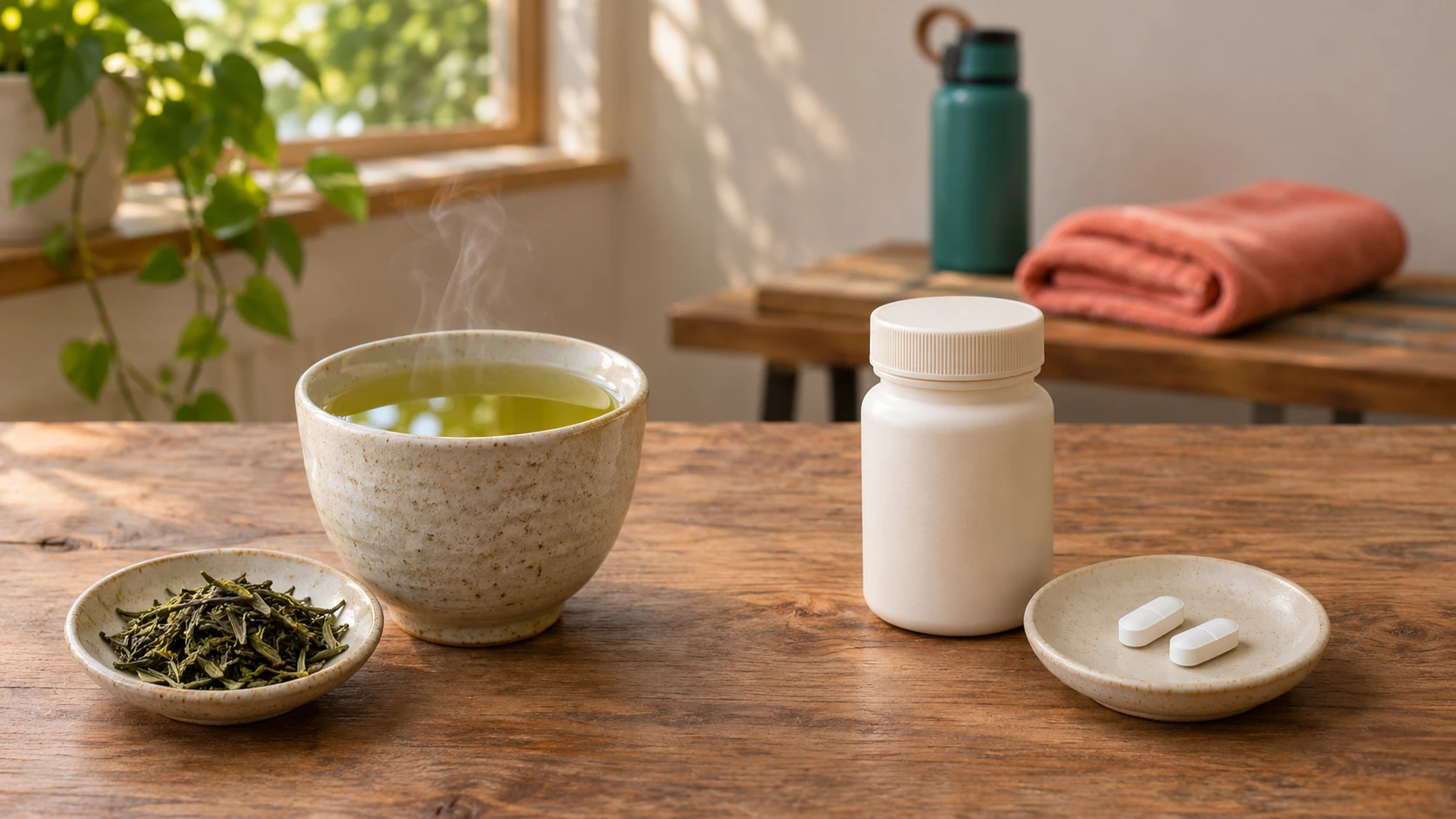
Men’s Health puts a typical supplement serving at around 200mg, compared with approximately 6mg in a cup of tea. Tea is therefore not a dose-for-dose substitute for the products or trials described. It is, however, the less expensive option highlighted by Ingram for someone curious about the compound.
A more consistent supplement dose does not automatically make supplementation necessary. Ingram recommends consulting a healthcare professional before starting, especially with existing medical conditions or medication use. Possible interactions include some anxiety, blood-pressure and sleep medicines. Reported side effects include headaches, dizziness, nausea and jitteriness.
- Separate focus claims from performance claims: the attention findings do not justify expecting faster racing or heavier lifting.
- Keep running pace and strength loads within your existing tolerances; do not increase them because a supplement promises greater focus.
- Do not push through dizziness or nausea during running or loaded movements. Stop the session and seek clinical advice about suspected supplement effects.
- Discuss suitability with a doctor or registered dietitian rather than turning the study doses into a self-prescribed protocol.
The practical conclusion is straightforward: L-theanine has some evidence behind modest cognitive benefits, but no demonstrated hybrid-racing advantage in the material reviewed. Tea offers a lower-cost route, while supplement decisions need individual scrutiny rather than assumptions about recovery or performance. This feature draws on the research discussion and dietitian guidance in Men’s Health.
+Can L-theanine improve HYROX performance?
+Does tea provide as much L-theanine as a supplement?
+What should I check before taking L-theanine?
This story is based on reporting from the original source.