
Articles
HYROX Hamburg Results: Adami Improves, Maurer Resets
HYROX Hamburg results saw Benny Adami and Kim Isabel Drews finish Mixed Doubles in 1:07:30, while Marcel Maurer completed Pro Men in 1:13:59. Their races on 30 October 2026 highlight two different measures of progress: improving after setbacks and adjusting expectations when training demands become too much.
By Relentless Bravery ·
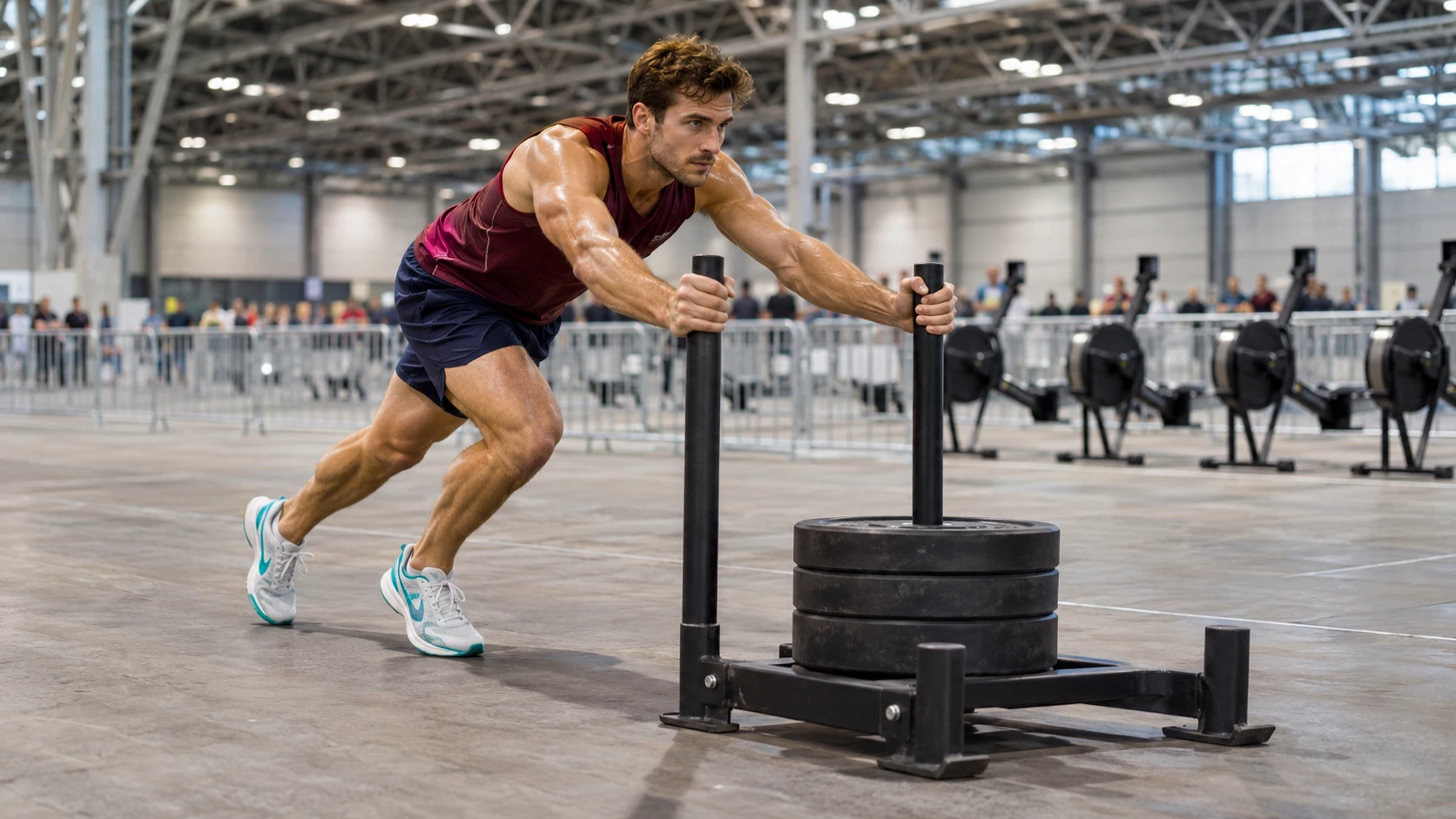
Peloton instructors Benny Adami and Marcel Maurer left HYROX Hamburg with different results and different reasons to value them. Racing on Friday 30 October 2026, Adami partnered Kim Isabel Drews to a 1:07:30 Mixed Doubles finish, while Maurer completed Pro Men in 1:13:59 at his tenth HYROX.
For hybrid athletes, the interest goes beyond the finishing times. Adami’s race followed injury setbacks and an earlier withdrawal; Maurer arrived having reduced his training demands and accepted that a personal best was unlikely. Both results offer context that a finishing position alone cannot provide.
What do the HYROX Hamburg results show?
Adami and Drews placed 29th overall and 11th in the 35–39 age group, with no penalties recorded. Their coach reported on Instagram that they were four minutes quicker than the previous year, an improvement Adami acknowledged while celebrating their finish.
Their running total was 37:13, with their quickest lap coming on the final run at 3:55. The strongest station rankings also came late: 25th for sandbag lunges and 15th for wall balls. That gives athletes reviewing the performance more to consider than the overall time alone.
The result carried additional significance after Adami’s recent health concerns and withdrawal from a HYROX earlier in the year. Maurer’s public congratulations referred to the injury setbacks Adami had faced over the preceding months. The report does not detail those injuries or his rehabilitation.
- SkiErg: 4:12; sled push: 2:05.
- Sled pull: 3:30; burpee broad jumps: 2:53.
- Row: 4:27; farmer’s carry: 1:38.
- Sandbag lunges: 3:05; wall balls: 3:39.
Why did Maurer adjust his race plan?
Maurer finished 194th of 653 overall and 22nd in the Pro Men 40–44 age group. His result included a 15-second burpee broad jump penalty. The reported breakdown was 33:35 of running, 34:44 on stations and 5:40 in the Roxzone.
He had wanted to break 70 minutes. Instead, Hamburg followed a 1:10:36 finish in London in March and 1:12:31 in Istanbul during the summer. There was still a positive comparison: his Hamburg time was two minutes and 30 seconds faster than his 1:16:29 there the previous year.
Maurer explained that adding heavier training to his job teaching eight to 10 Peloton classes each week had become too much. Around six weeks before Hamburg, he changed his plan and cancelled his November Barcelona race. Racing in his home city still mattered, even without a likely personal best.
What can hybrid athletes take from these performances?
These were different categories, so the two headline times should not be treated as a direct contest. The useful comparison is how each athlete’s result related to their own circumstances: Adami and Drews improved year on year, while Maurer revised his expectations before racing.
For athletes balancing HYROX preparation with other commitments, Maurer’s account is a practical example of changing a plan rather than continuing to add work. It does not establish a universal training limit or recovery timetable.
His race also retained value beyond the clock. His best friend travelled from Munich for a 24-hour visit, and Peloton members came to support him. Maurer emphasised those shared memories rather than making the result his only measure of the day.
Following Hamburg, Maurer said he was giving his body a break, although both instructors had returned to teaching. Results, split times and the athletes’ social-media reflections in this report are drawn from Elizabeth Schlosberg’s coverage for The Clip Out, updated on 2 November 2026.
+How did Benny Adami and Kim Isabel Drews finish in Hamburg?
+Why did Marcel Maurer change his training before Hamburg?
+How can a recreational athlete scale burpee broad jumps in training?
This story is based on reporting from the original source.