



Introduction: Reflection turns effort into progress
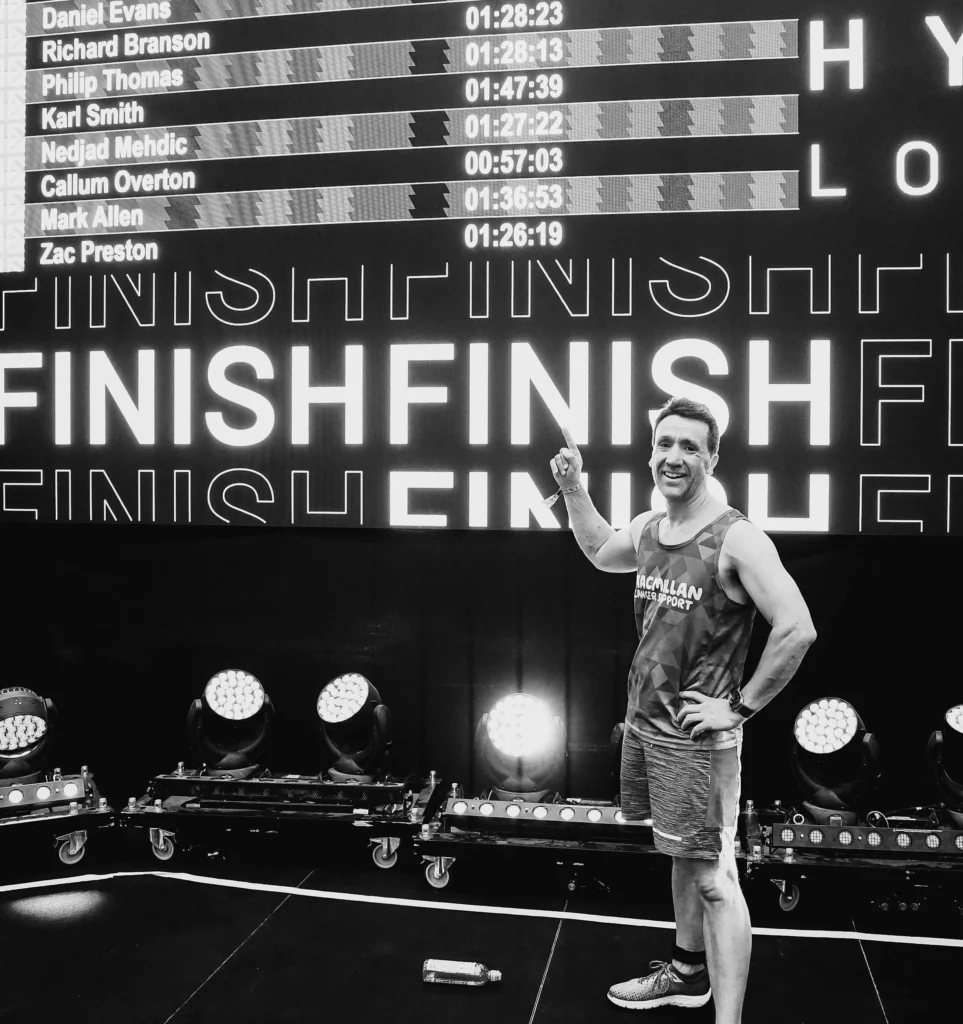
Crossing the HYROX finish line is a powerful moment. It brings relief, pride and sometimes frustration. However, the true value of any HYROX event comes after the race. Reflection converts your experience into knowledge. It shows you what worked, what needs refinement and what should be repeated in training.
Without reflection, every race becomes a disconnected event. With reflection, each one builds on the last and moves you toward consistent improvement across the 2025/2026 Season.
“Racing gives you data. Reflection gives you direction.” – RB100.Fitness
Linked reading:
Why reflection matters in hybrid racing
HYROX is unique. Every event features the same format but different surfaces, lane lengths, congestion patterns and equipment variations. Because of this, performance is shaped by your decisions, not only your fitness.
Reflection helps you understand:
- How well your pacing matched your ability
- Whether station strategies held under fatigue
- How your mental responses shaped your race
- What training prepared you well and what did not
- Which mistakes were physical, technical or emotional
Reflecting turns individual races into a progression system.
The three levels of post-race reflection
1. Physical assessment: The body tells the truth
Start with objective physical feedback. Notice how your body responded during and after the race.
Ask yourself:
- Where did fatigue appear first
- Which muscles failed early or unexpectedly
- Did you recover well between stations
- How was breathing control from start to finish
- Did your engine feel steady, inconsistent or overwhelmed
Pair this with training notes to see patterns.
Linked reading:
2. Technical assessment: How well the race plan executed
Each station teaches you something.
Review your performance with clarity:
- SkiErg: Was your rhythm consistent
- Sled Push: Did technique change under load
- Sled Pull: Did footwork or grip break
- Burpee Broad Jumps: Did cadence fall apart
- Row: Was stroke rate steady
- Farmer’s Carry: Did posture or grip collapse
- Lunges: Did stride length shorten
- Wall Balls: Did you lose accuracy or breathing pattern
Technical weaknesses are easier to fix than general fitness. They respond well to targeted practice.
Linked reading:
3. Mental assessment: The most important insights
Your mindset shapes your race more than you realise.
Reflect on:
- Where your focus was strongest
- Where anxiety or panic appeared
- How you responded to problems
- Which self talk worked well
- When you lost rhythm and why
This step matters most because the mental game is what separates finishing from performing.
Linked reading:

How to structure your post-race reflection
Use this simple three-part template within 24 hours of your event.
1. What went well
List everything that felt smooth, strong or repeatable. Many athletes skip this step, but your strengths show you which habits should stay in your training.
2. What needs development
Be objective but not harsh. Focus on details such as pacing errors, transition timing, technique breakdowns or mental dips.
3. What to change for next time
Turn insights into actions:
- Change one element of your station strategy
- Adjust pacing on early kilometres
- Add one resilience session per week
- Practice transitions under fatigue
- Improve technique on your weakest station
Small refinements produce major progress over a season.
Using reflection to plan your next training cycle
Once you have captured your insights, integrate them into your programming. Reflection is only useful if it shapes the next step.
For example:
- If sleds felt heavy, increase strength and power blocks
- If running faded, improve threshold and Zone 2 consistency
- If mindset cracked mid race, add resilience sessions
- If wall balls collapsed, practice breathing cadence
- If transitions were slow, incorporate brick workouts
Reflection turns experience into strategy.
Linked reading:
Summary: Every HYROX race is a lesson
With structured reflection, each HYROX event becomes part of your long-term progression. You learn what your body needs, what your technique requires and how your mindset responds to pressure. When you collect these lessons across Season 2025/2026, your performance becomes more consistent and your confidence grows.
“The race lasts an hour. The lesson lasts a lifetime.” – RB100.Fitness