


In the last few years, “evidence-based training” has become a badge of honour in the fitness world.
Citations, study screenshots, biomechanics diagrams and buzzwords appear everywhere. The problem is not the science itself. The problem is how the industry talks about it.
Eugene Teo’s video “Social Media Fitness is Messed Up” highlights a growing issue. Many lifters now treat single studies as gospel, creators chase scientific-sounding content because it performs well online and people end up training for research papers rather than results.
The goal of this article is simple. To show you how to use research intelligently and avoid the traps of becoming science-obsessed.
When One Study Breaks The Internet
Every few months a new study hits the algorithm and the fitness world erupts.
The most recent example is the now-viral debate over full range of motion versus lengthened partials. YouTube creators covered it, Instagram threads dissected it and Reddit debates stretched on for weeks.
Yet the study itself was never claiming what people said it did.
Eugene Teo’s analysis of the study highlights what most viewers never see:
- Participants with inconsistent technique
- Poor equipment setups
- Tension profiles that contradict the intended stimulus
- Movements that were not truly lengthened-biased despite the name
- Supervision that allowed flawed execution
- A range of human error that no study design can fully control
The takeaway is not that the study was useless.
It is that research only provides insight into specific conditions, setups and participants. It does not overwrite fundamental training principles.
“Research adds tools. It does not replace the core principles that build 95 percent of your progress.” – RB100.Fitness
Why Even Well-Designed Studies Have Real-World Flaws
At first glance, controlled research appears perfect. Conditions standardised, participants supervised, variables measured. In practice, fitness research is extremely challenging to control.
Consider some of the flaws Eugene highlighted in the lengthened partials research:
1. The movement setup dictated the result
During the biceps curl test, the cable passed directly through joint alignment. This meant there was almost zero tension in the supposed lengthened position.
Participants could relax in the bottom range for long periods, eliminating the intended training stimulus entirely.
2. Even trained participants performed reps inconsistently
Body adjustments such as shoulder hiking, hip shifting and partial rotation changed tension across the set. This variation is part of real-world lifting but introduces noise into controlled research.
3. Some exercises were poor choices for testing the concept
For example, the dumbbell row offers very limited resistance in the lengthened position. Using it to assess lengthened-biased training inevitably disadvantaged the partial-range group.
.
4. Lack of specialised equipment changed the nature of the test
Had researchers used machines with rear-loaded weight arms or adjustable resistance curves, the results may have been very different.
These issues are not criticisms of the researchers. They are reminders that even high-quality studies have constraints that limit how broadly their findings can be applied.
What Research Is Actually Good For
Research is incredibly valuable when used for the right things. It gives us:
1. More tools, not replacements
Studies highlight methods that can be effective, such as lengthened partials, but they do not eliminate traditional approaches like full range of motion.
2. Insight into mechanisms
Research can help explain why certain cues, tempos or intensities work, improving coaching clarity.
3. Guidance for programming decisions
Volume thresholds, recovery windows, hypertrophy ranges and conditioning zones can be fine-tuned using scientific data.
4. A starting point for personal experimentation
Studies provide direction, not destiny. They show what is worth testing in your own training environment.
Where research becomes harmful is when people treat it as a checklist or religious doctrine instead of a flexible toolkit.
The 95 Percent Rule: Why Effort Still Wins
Eugene summarises the situation perfectly.
If you simply train hard, apply progressive overload and stay consistent, you will achieve 95 percent of all possible gains. The remaining 5 percent can be nudged by technique tweaks, resistance profiles and optimised programming.
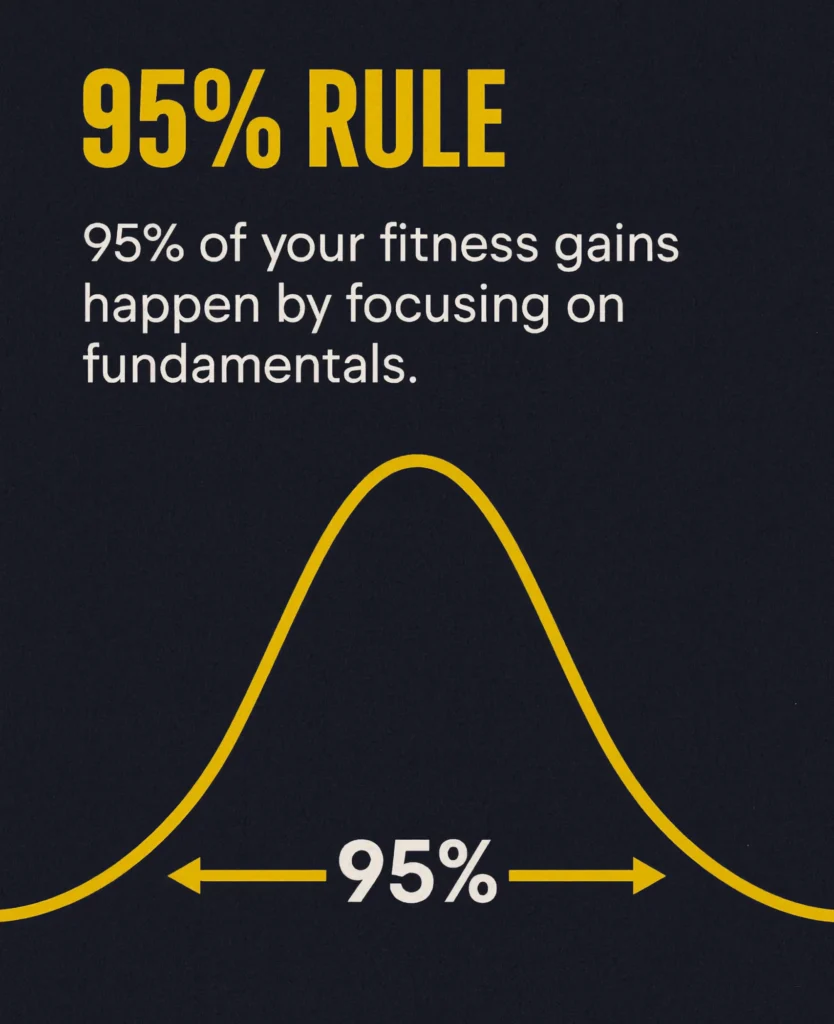
They chase the 5 percent while ignoring the 95 percent.
This is where many lifters go wrong.
Examples include:
- Switching exercises weekly based on new evidence
- Obsessing over small technique variations
- Changing rep ranges because a study suggested a tiny benefit
- Reducing volume or intensity due to fear of being “non-optimal”
- Trying to mimic lab conditions inside a real gym
The body adapts to tension, effort and progression.
It does not adapt to abstract debates about optimal ranges.
A Practical Hierarchy for Lifters
To protect your training from becoming warped by research trends, use this simple hierarchy.
1. Consistency
The foundation. No study can outperform regular, repeatable sessions completed for months at a time.
2. Effort and progression
If you are adding reps, load, range or quality over time, you are progressing.
3. Good-enough exercise selection
You do not need the perfect lengthened-biased machine.
You need movements that allow stability, tension and repeatability.
4. Fine-tuning with research
Use studies to adjust flavour, not fundamentals.
This hierarchy is the same approach we use within RB100.Fitness, particularly across hybrid performance pieces like:
The Problem With Science-Based “Schools of Thought”
Just as nutrition has competing philosophies, strength and conditioning research now features multiple groups:
- Full ROM purists
- Lengthened partials proponents
- High-volume theorists
- Low-volume minimalists
- Velocity-based devotees
- Tempo disciples
The issue is not that any of these methods are wrong.
It is that each claims superiority despite only working better for certain individuals, contexts or goals.
Social media amplifies these schools of thought because extremes drive engagement.
This creates the illusion that the industry is in constant conflict, when in reality most experienced lifters use a blend of methods.
How To Use Research Without Losing Your Mind
Here are practical ways to integrate science without derailing your training.
1. Treat studies as experiments, not commandments
If you want to try lengthened partials, test them for eight to twelve weeks. Compare progress, assess soreness, evaluate technique consistency.
2. Do not change everything at once
One variable at a time.
Small adjustments create clear feedback.
3. Look for long-term themes across multiple studies
Single studies create more noise than clarity.
Meta-analyses and repeated findings matter far more.
4. Match research to your environment
Most lifters do not have access to specialised machines or controlled conditions.
Use principles, not exact protocols.
5. Stay focused on your real goal
If you are preparing for HYROX, for example, your priority is engine development, strength endurance and strategic pacing.
Not microscopic differences in hypertrophy technique.
What Most Lifters Want To Know
Not always, but it is a reliable default for most exercises. Lengthened partials can be valuable but require stability and correct resistance profiles.
No. Beginners should prioritise movement quality, consistency and full range control.
Yes. The most muscular and athletic people in history built their physiques long before modern research existed.
Because training variables, participants, equipment setups and methods vary widely. The body is complex and real-world lifting is difficult to standardise.